
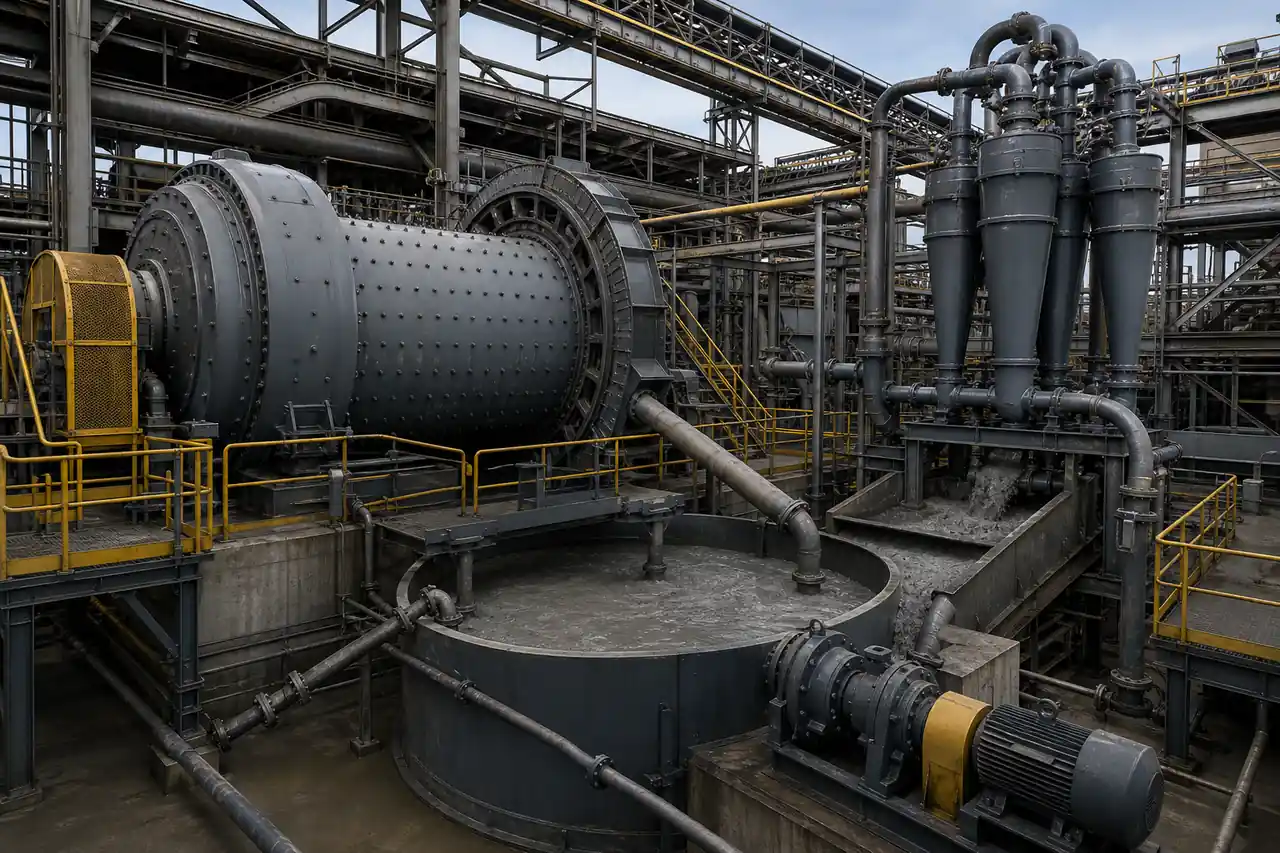
A ball mill classification circuit separates mill discharge into a fine product stream and a coarse return stream. The classifier sends particles that meet the process size requirement toward mineral separation, while coarser particles return to the mill for further grinding. This closed material path helps the grinding stage deliver controlled feed to flotation, magnetic separation or other beneficiation equipment.
What Is a Ball Mill Classification Circuit?
The circuit combines a ball mill, a discharge collection point, slurry transfer equipment and a classifier. In wet grinding, the mill product normally enters a sump before a pump transfers the slurry to hydrocyclones or another classification unit. The classifier then separates particles according to their settling or flow behavior under the selected operating conditions.
Fine material leaves through the product stream because it has reached the size range required by the next stage. Coarse material leaves through the return stream and re-enters the mill. Donc, the classifier controls which particles receive additional grinding and which particles move forward through the plant.
This arrangement is one part of the wider ball mill grinding circuit. The full circuit may also include crushed-ore storage, controlled feeding, water addition, pumps, launders, instruments and downstream separation equipment.
How Classification Directs Fine and Coarse Particles
Classification does not grind the ore. Plutôt, it divides the mill discharge so that grinding power remains focused on particles that still require size reduction. A correctly connected return path carries the coarse fraction back without mixing it into the final fine-product stream.
Fine Product Stream
The fine stream contains the material selected to leave the grinding loop. Its required particle size depends on mineral liberation, the ore type and the following beneficiation method. Par conséquent, the classifier product should match the feed conditions expected by the next process stage rather than follow one universal size target.
Coarse Return Stream
The coarse stream contains particles that the classifier directs back for additional grinding. This stream joins new mill feed and passes through the grinding chamber again. Because the return material remains inside the circuit, its flow affects the duty of the mill, pump, sump and classifier together.
Classification Equipment in Closed-Circuit Ore Grinding
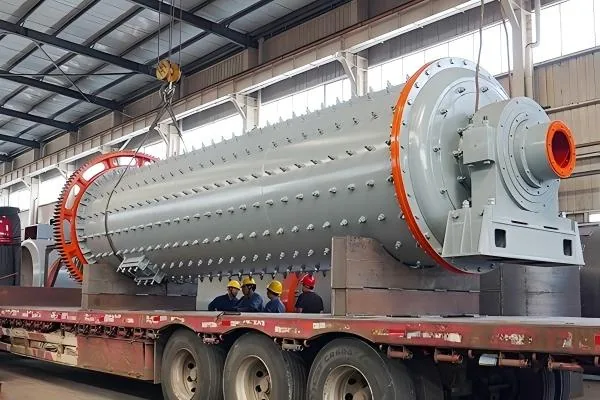
Wet mineral processing plants commonly connect ball mills with hydrocyclones or mechanical classifiers. Both arrangements separate a fine product from a coarse return, although they use different equipment structures and material movement. Vanore Mining considers the complete process connection when matching grinding equipment with classification and downstream plant stages.
| Équipement | Classification Action | Typical Circuit Connection | Configuration Factors |
|---|---|---|---|
| Hydrocyclone | Uses slurry flow and centrifugal action to separate fine and coarse fractions. | A pump transfers mill discharge slurry from the sump to the cyclone feed point. | Ore density, slurry condition, taille du produit cible, pump duty and cyclone arrangement. |
| Spiral classifier | Uses settling behavior and mechanical conveying to separate overflow from settled coarse solids. | Mill discharge enters the classifier pool; coarse solids move back toward the grinding stage. | Material settling behavior, pool condition, spiral arrangement, plant space and process target. |
| Fine screen | Separates particles around a selected aperture where the material and circuit suit screening. | Screen undersize or oversize follows the selected product and return arrangement. | Aperture, humidité, screening area, wear condition and feed distribution. |
Return Load and Circuit Stability
Return load describes the coarse classified material that circulates back to the mill. It is not an isolated setting. Ore hardness, new feed rate, feed particle distribution, mill condition, water balance and classifier behavior all influence how much material moves around the loop.
A stable circuit keeps the sump, pump, classifier and mill working as one connected system. Par exemple, uneven feed can change mill discharge conditions. In turn, the sump level and slurry transfer can vary, which changes the classifier feed. Consistent material handling therefore supports more predictable classification and downstream feed.
- New feed condition: crushed feed size and ore competence influence the grinding duty entering the loop.
- Mill condition: doublures, grinding media, discharge components and drive operation affect size reduction and discharge movement.
- Water balance: slurry condition influences pumping, classification and material transport through a wet circuit.
- Pump and sump: stable transfer supports consistent classifier feed and prevents the units from operating as disconnected stages.
- Classifier condition: porter, blockage, feed distribution and mechanical condition can change the split between product and return streams.
- Downstream requirement: the selected product size must support mineral liberation and the following separation method.
Connection to Flotation and Magnetic Separation
The classified fine product forms the feed for the next beneficiation stage. In a flotation circuit, the material enters conditioning and équipement de flottaison after the required slurry preparation. In a magnetic circuit, suitable ore can move toward a wet magnetic separator. Other plants may connect the grinding product to gravity concentration, thickening or additional classification.
Classification protects this connection by limiting the amount of unsuitable coarse material that advances. Cependant, the required product is ore-specific. Mineralogy and liberation testing determine whether the selected grinding size supports the intended separation process.

Ball Mill Circuit Configuration Factors
Vanore Mining matches grinding and classification equipment around the material and process route. The review covers ore type, crushed feed size, target grinding product, service humide ou sec, downstream separation method, site layout and auxiliary equipment. This approach connects the mill to a complete équipement de traitement des minéraux flow rather than treating it as an independent machine.
Useful project information includes: representative ore information, maximum and typical mill feed size, required product-size range, planned downstream process, available water conditions, plant operating schedule and layout constraints. Testwork and process requirements should define the final equipment selection.
Ball Mill Classification Circuit FAQ
What is the purpose of classification after a ball mill?
Classification separates particles that meet the required product size from coarser material that needs more grinding. Fine material moves to the next process stage, while the coarse fraction returns to the mill.
What is return load in a ball mill circuit?
Return load is the coarse material separated from the mill discharge and directed back to the mill for additional size reduction. Its behavior depends on ore characteristics, feed conditions, classifier operation and the selected circuit.
Which equipment can classify ball mill discharge?
Wet ore grinding circuits commonly use hydrocyclones or mechanical classifiers. The suitable equipment depends on slurry behavior, taille du produit cible, process layout and downstream separation requirements.
Where does the classified fine product go?
The fine product can move to flotation, séparation magnétique, concentration gravitationnelle, thickening or another process stage according to the ore and the selected beneficiation method.