
Rotary kiln refractory damage occurs when thermal, chemical or mechanical conditions reduce the lining’s ability to protect the steel shell and maintain a stable process boundary. A local shell hot spot can indicate thinning, brick loss or coating loss, but temperature alone does not identify the root cause. Reliable diagnosis combines temperature trends, operating events, kiln geometry, shutdown inspection and, when needed, post-mortem material analysis.
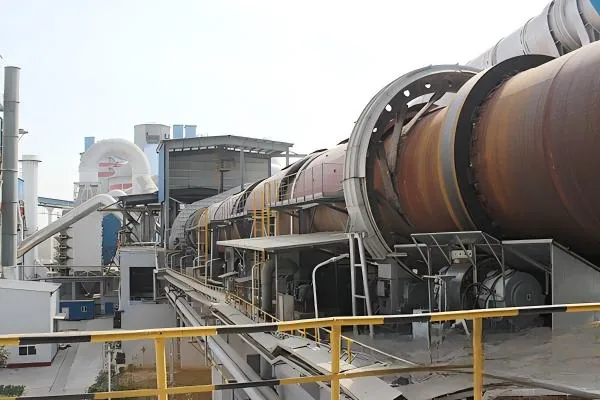
Refractory Damage Has More Than One Cause
The lining in an industrial rotary kiln is exposed to heat flow, temperature gradients, process gases, reactive solids, liquid phases, abrasion and continuous shell rotation. The dominant mechanism changes by kiln duty and axial zone. Material that performs well in one zone can fail rapidly in another if chemistry, temperature or mechanical loading differs.
Thermal damage
Rapid or uneven heating and cooling can create high temperature gradients and differential expansion. Flame impingement, unstable coating and repeated trips can concentrate thermal stress.
Chemical attack
Alkalis, sulfur compounds, fuel ash, feed impurities and liquid process phases can infiltrate or react with the refractory. The mechanism depends on lining chemistry and kiln duty.
Mechanical damage
Shell ovality, misalignment, tire and roller condition, local deformation and brick movement can open joints or load the lining unevenly. Repeated local failure requires geometric checks.
Abrasion and impact
Moving solids, dust, clinker, nodules or unstable rings can wear or strike the hot face. Abrasion patterns should be mapped against material flow and kiln rotation.
Warning Signs During Operation
| Observed Signal | Possible Meaning | Evidence Needed Before Diagnosis |
|---|---|---|
| New local hot region | Coating loss, refractory thinning, brick loss, a changed internal heat load or a measurement artifact. | Temperature history by rotation and axial position, process state, emissivity setting, viewing obstruction and confirmation measurement. |
| Hot region grows over time | Progressive lining loss or a persistent internal thermal condition. | Rate and direction of growth, feed/fuel changes, flame condition, coating behavior and shell deformation. |
| Repeating circumferential pattern | Localized brick or shell condition rotating through the scanner view. | Position synchronized to shell rotation, scanner alignment and repeatability over several revolutions. |
| Cold band or irregular cool area | Coating or buildup, surface cooling, weather exposure, shadowing or a blocked thermal view. | Process trend, visible inspection, ambient conditions and scanner field of view. |
| Noise, vibration or drive-load change | Ring movement, material buildup, support condition or another mechanical change affecting the kiln. | Drive trend, support and tire inspection, axial migration, shell runout and material condition. |
Use Shell Temperature as a Trend, Not a Standalone Verdict
Thinner refractory generally reduces thermal resistance and can raise the external shell temperature, but the measured value also changes with internal temperature, coating thickness, airflow, weather, shell surface condition and the thermal instrument. A thermal map becomes more useful when compared with the same kiln zone under a comparable operating state.
Infrared temperature measurement depends on surface radiation and emissivity. NIST’s work on high-temperature surface measurement illustrates why emissivity information is part of an accurate radiometric result. Rust, polished areas, dust deposits, wet shell surfaces and changed viewing geometry can alter apparent temperature.
- compare the same location over multiple rotations and operating periods;
- confirm scanner alignment, calibration status and clean field of view;
- record kiln load, feed, fuel, draft, speed and relevant temperatures;
- note rain, strong cooling air, dust, sunlight and nearby hot equipment;
- use an approved independent measurement method where site procedure permits.
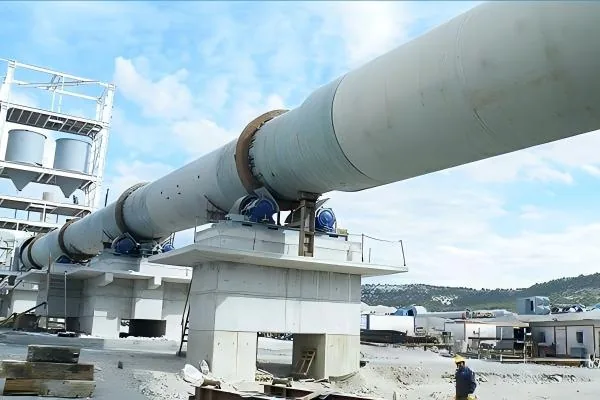
Operating Events That Accelerate Lining Damage
Heat-up and cool-down place the shell and refractory through different rates of expansion. The acceptable procedure depends on kiln design, lining system, repair extent and refractory supplier requirements. A generic heating rate should not replace the approved dry-out or start-up schedule.
Review trips, burner disturbances, feed interruptions, fuel changes, draft instability and coating loss against the first appearance of the thermal anomaly. In a lime rotary kiln, feed chemistry, fuel ash and sticking or ring formation can change the hot-face environment. In a cement rotary kiln, clinker liquid phase, alkalis, sulfur cycles and coating behavior create a different chemical and thermal exposure.
What to Inspect During a Planned Shutdown
Map the lining by zone
Record remaining thickness, cracks, open joints, spalling, hot-face wear, displaced bricks, castable separation and coating. Use a consistent axial and circumferential reference.
Inspect interfaces
Check transitions between refractory types, repaired areas, retaining systems, seals and locations near structural changes. Interfaces often concentrate differential movement or chemistry.
Check the shell and supports
Look for shell distortion, weld or plate changes, tire clearance, roller contact, axial movement and alignment evidence. The authorized mechanical inspection method must match the kiln design.
Retain representative samples
Label failed and adjacent sound material by exact location and orientation. Chemical, mineralogical and microstructural analysis can distinguish infiltration, reaction and thermal-mechanical damage.
Do not enter, cool, rotate or work inside the kiln until the plant’s isolation, confined-space, atmospheric, structural and thermal safety requirements are satisfied. Inspection evidence is not worth collecting through an uncontrolled entry.

Match the Damage Pattern to the Evidence
| Damage Pattern | Mechanisms to Investigate | Confirmation Evidence |
|---|---|---|
| Surface peeling or spalling | Thermal shock, structural change after infiltration, rapid cycling or mechanical stress. | Trip and heat-up history, fracture surface, depth profile, chemistry and surrounding crack pattern. |
| Deep chemical alteration | Alkali, sulfur, ash, slag or feed-derived liquid penetration and reaction. | Fuel/feed chemistry, deposit analysis, refractory cross-section and phase analysis. |
| Open joints or displaced bricks | Installation condition, shell ovality, thermal expansion, retaining-system or support issues. | Joint orientation, installation records, shell geometry, tire/roller condition and recurrence location. |
| Directional hot-face wear | Material abrasion, impact, gas/solids flow or local buildup movement. | Wear direction, process material, rotation, internal geometry and buildup history. |
| Repeated failure at one axial position | Persistent flame/process condition, refractory transition, shell deformation or support geometry. | Historical repair maps, thermal trend, shell survey, process profile and adjacent lining condition. |
Build a Corrective Action Around the Root Cause
- Define the symptom by exact kiln zone, time, temperature trend and operating state.
- Confirm the measurement and establish whether immediate site escalation criteria are met.
- Preserve process, burner, feed, fuel, draft, speed, support and shutdown records.
- Map lining and shell condition during a properly authorized inspection.
- Classify the dominant thermal, chemical, mechanical or abrasion mechanism.
- Review material selection, installation, dry-out, operation and kiln mechanics together.
- Define monitoring evidence that will show whether the corrective action worked.
The lime calcination process and cement clinker equipment flow articles provide process context for two different kiln duties. The rotary kiln and rotary dryer comparison explains why a refractory-lined reaction kiln should not be treated as ordinary drying equipment. Related kiln types are grouped in the kiln and dryer equipment range.
Frequently Asked Questions
What is the first sign of rotary kiln refractory damage?
A new or changing shell-temperature pattern is a common warning, but it is not conclusive by itself. Verify the measurement and compare it with process, coating and mechanical conditions.
Does every kiln shell hot spot mean refractory brick loss?
No. Brick loss or thinning is possible, but coating loss, changed internal heat load, surface emissivity, weather and scanner interference can also affect the apparent temperature.
Why does refractory damage recur in the same kiln zone?
Repeated local failure can indicate an unresolved process profile, chemical environment, refractory transition, shell deformation, tire/support condition or installation issue. Historical maps help identify recurrence.
Can one refractory material be used throughout a rotary kiln?
Not automatically. Temperature, chemistry, coating, abrasion and mechanical loading vary by axial zone and kiln duty. Material selection requires the actual service conditions and supplier engineering data.
What records should accompany a failed refractory sample?
Record its exact axial and circumferential location, orientation, service time, kiln duty, operating events, nearby thermal trend, fuel and feed changes, and the condition of adjacent lining.
For kiln configuration or replacement-equipment review, provide the thermal duty, material and fuel data, kiln dimensions, support arrangement, operating records and observed damage pattern through the Vanore Mining contact page.