
The rotary kiln and rotary dryer difference begins with process purpose. A rotary dryer removes free moisture so material can move, store or enter the next process in a controlled condition. A rotary kiln applies heat to produce a required thermal or chemical change, such as calcination, clinker formation or another mineral transformation. Their rotating shells may look similar, but the heat duty, internal construction, process controls and downstream equipment are not interchangeable.

What Is Being Compared?
An industrial rotary kiln is an inclined rotating vessel built around a defined thermal process. Depending on the application, the kiln may support calcination, roasting, reduction, sintering or clinker production. The system must coordinate material movement, heat transfer, reaction time, combustion or indirect heating, exhaust handling and product cooling.
A rotary dryer for mineral materials is an inclined rotating drum that exposes wet solids to a heated gas stream or an indirect heating surface. Its main task is evaporation. Feed rate, inlet moisture, gas flow, temperature, internal flights and residence time work together to produce the required outlet moisture and product-handling condition.
Both machines can operate continuously, move solids through a rotating cylindrical shell and use direct or indirect heat. Therefore, shell shape alone does not identify the correct machine. The required change in the material provides the decisive distinction.
Rotary Kiln vs Rotary Dryer Comparison Table
| Comparison Point | Rotary Kiln | Rotary Dryer |
|---|---|---|
| Primary duty | Produces a controlled thermal or chemical transformation. | Removes free moisture from bulk material. |
| Product change | The discharged material has a changed phase, composition, reactivity or thermal history required by the process. | The discharged material normally retains its basic identity but has a lower moisture content. |
| Heat-transfer emphasis | Radiation, convection and conduction support heating and reaction; refractory condition strongly affects performance. | Direct units rely heavily on convective contact between hot gas and a cascading material curtain; indirect units transfer heat through a surface. |
| Typical internals | Refractory lining, process zones and application-specific internals or heat-resistant components. | Flights or lifters that raise and shower material through the drying gas, plus seals and discharge arrangements. |
| Process control | Reaction temperature, atmosphere, heat profile, residence, feed chemistry and product condition. | Inlet moisture, evaporation load, gas flow, temperatures, residence, outlet moisture and product temperature. |
| Typical downstream stage | Cooling, conveying, separation, grinding or storage according to the transformed product. | Screening, storage, conveying, grinding, calcination or packaging. |
| Main project question | What reaction or thermal transformation must the material complete? | How much water must the equipment remove without damaging or entraining the material? |
The Core Difference Is Material Transformation
The most reliable comparison asks what enters the machine and what must leave it. If wet sand enters and drier sand leaves, the process objective is moisture reduction. If limestone enters and lime leaves after calcination, the objective involves a chemical transformation. Likewise, cement raw meal becomes clinker through a controlled high-temperature process rather than simple evaporation.
The US EPA mineral-industry dryer and calciner technical background distinguishes dryers that remove moisture from calciners in which heating zones lead into reaction. This distinction also explains an apparent overlap: a kiln may remove residual moisture near its feed end, yet the reaction duty still defines the machine as a kiln.
Consequently, a plant should not replace a required calcination stage with a dryer merely because both machines rotate and receive hot gas. Conversely, specifying a kiln for ordinary free-moisture removal may add process complexity that the drying duty does not require.
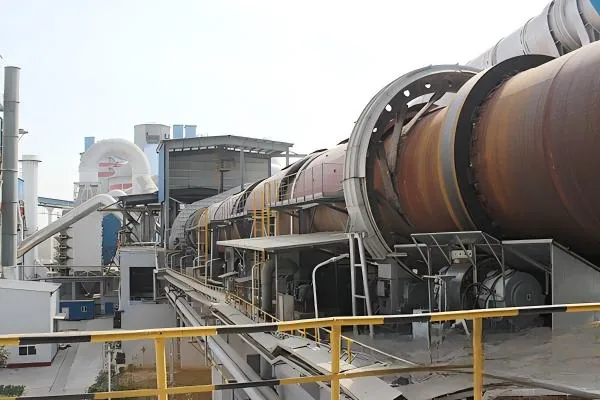
Heat Transfer and Internal Construction
A kiln must sustain the thermal environment needed for the target reaction. Therefore, many kiln designs use refractory lining to protect the steel shell, reduce heat loss and create a suitable hot face. The process may also require defined heating zones, controlled atmosphere, burner arrangement, seals and heat-resistant discharge equipment. The lining and internal design depend on material chemistry, temperature, abrasion and reaction conditions.
Direct rotary dryers usually aim to expose as much wet material as practical to the drying gas. Internal flights lift solids from the bed and release them through the gas stream. This cascading curtain increases contact for heat and mass transfer. An indirect dryer separates the process material from the heating medium, which can suit materials that should not contact combustion gas or that need controlled vapor recovery.
These design differences affect inspection priorities. Kiln maintenance emphasizes refractory integrity, thermal alignment, shell condition, seals, drive stability and the combustion or heating system. Dryer maintenance adds close attention to flights, inlet buildup, material curtain, air leakage, fan performance and moisture-measurement consistency.

Applications and Materials
Rotary Kiln Applications
A rotary kiln supports materials that need more than water removal. A lime rotary kiln processes limestone through calcination, while a cement rotary kiln forms clinker from prepared raw meal. Other kiln duties can involve mineral roasting, reduction or controlled thermal treatment when verified process data defines the required reaction.
Rotary Dryer Applications
A rotary dryer handles mineral feed, sand, aggregate-related material, ore concentrates and selected industrial bulk solids when excessive free moisture affects conveying, storage, grinding, screening or downstream heating. The configuration must match particle size, stickiness, abrasion, inlet moisture, required outlet moisture and acceptable product temperature.
When an Industrial Plant Needs Both Machines
Some production lines place a dryer before the kiln. This arrangement becomes relevant when wet feed would consume excessive kiln heat, disturb material flow or make the reaction stage difficult to control. The dryer first removes free moisture; afterward, the kiln raises the prepared material through the required heating and reaction profile.
The complete line may include a controlled feeding system, dryer, transfer equipment, kiln, cooler and product handling. Gas cleaning also needs equipment-specific design. A suitable industrial dust collector must match gas temperature, dust characteristics, pressure balance and applicable plant requirements rather than serving as a generic accessory.
However, two drums do not automatically improve a process. Material testing and a heat-and-mass balance should confirm whether separate drying reduces the kiln load enough to justify the additional equipment, controls, space and exhaust system.
Which Equipment Fits Each Process Scenario?
| Process Requirement | Likely Equipment Route | Reason | Data to Confirm |
|---|---|---|---|
| Reduce free moisture before storage | Rotary dryer | The product needs evaporation without a required reaction. | Inlet/outlet moisture, feed rate, particle size, stickiness and heat source |
| Calcine limestone into lime | Lime kiln system | The process requires thermal decomposition and controlled product quality. | Stone chemistry and size, fuel, product specification and plant flow |
| Produce cement clinker | Cement kiln system | Prepared raw meal must pass through controlled heating and clinker-forming stages. | Raw meal properties, kiln process route, fuel, cooler and grinding integration |
| Prepare wet feed before calcination | Dryer followed by kiln, when justified | Separate evaporation may stabilize feed and reserve kiln duty for reaction. | Water load, heat balance, material handling, exhaust design and economic case |
| Heat-sensitive or gas-sensitive drying | Application-specific indirect dryer or another drying technology | The material may require separation from combustion gas or tighter product control. | Thermal sensitivity, vapor composition, contamination limits and test data |
Advantages and Limitations
Rotary Kiln
Advantages: continuous thermal processing, controlled residence and the ability to support defined reaction zones for varied mineral duties.
Limitations: process success depends on material chemistry, refractory selection, heating system, atmosphere, reaction control and downstream cooling. A kiln should not be specified without verified process data.
Rotary Dryer
Advantages: continuous moisture removal, broad bulk-solids handling range and configurable direct or indirect heat transfer.
Limitations: performance changes with feed moisture, particle distribution, stickiness, airflow and internal condition. Fine-particle carryover and heat-sensitive material require careful design.
Project Data Needed Before Configuration
- Material: mineral identity, composition, bulk density, abrasion, stickiness and any hazardous characteristics.
- Feed condition: particle-size distribution, feed temperature, free moisture and expected variation.
- Required product: outlet moisture for drying or the verified thermal transformation and product specification for kiln duty.
- Production basis: dry-solids throughput, operating hours and anticipated turndown.
- Thermal system: available fuel or heat source, direct or indirect contact limits and required process atmosphere.
- Plant integration: feeding, conveying, exhaust treatment, cooling, storage, utilities and available installation space.
The broader Vanore kiln and dryer equipment range shows how individual machines connect with mineral, lime, cement and industrial processing sections. Final configuration should follow representative material data and the required process outcome, not visual similarity between equipment.
Rotary Kiln and Rotary Dryer FAQ
What is the main difference between a rotary kiln and a rotary dryer?
A rotary dryer primarily removes free moisture from bulk material. A rotary kiln primarily heats material to achieve a required thermal or chemical transformation, such as calcination or clinker formation.
Can a rotary kiln also dry material?
Yes. Wet kiln feed may pass through an initial drying zone before heating and reaction. However, the required transformation and high-temperature process duty still define the machine as a kiln rather than a dryer.
Why does a rotary kiln normally need refractory lining?
Refractory protects the steel shell from the kiln process temperature, limits heat loss and creates a durable hot face for the thermal reaction. The lining specification depends on process temperature, chemistry and wear conditions.
When should a plant use both a rotary dryer and a rotary kiln?
A plant may use a dryer before a kiln when the incoming material contains enough free moisture to disturb feeding, increase kiln heat demand or reduce process stability. The dryer removes moisture before the kiln performs the required reaction.
What information is needed to configure kiln or dryer equipment?
Useful project data includes material composition, feed moisture, particle size, bulk density, feed rate, required product condition, thermal duty, fuel or heat source, gas-handling requirements and available plant space.