
Cone crusher choke feeding means keeping an appropriately filled crushing chamber supplied with evenly distributed rock, rather than letting it run nearly empty. It supports particle-on-particle crushing and more consistent operation. However, a full chamber is not permission to exceed the machine’s power, pressure or discharge limits. The correct material level depends on the crusher model, chamber and application; use the equipment manual rather than a universal feed-height rule.
What cone crusher choke feeding changes inside the chamber
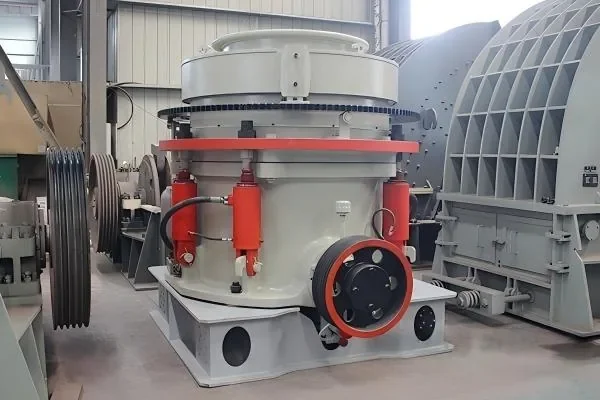
A cone crusher compresses rock between its mantle and concave. With enough material in the chamber, particles also press against one another. When the feed becomes a thin, intermittent stream, the working conditions change: chamber filling fluctuates, and the machine cannot maintain the same crushing environment throughout the cycle.
That explains the preference for a continuously supplied chamber in many cone-crushing applications. It does not mean that increasing the feed indefinitely improves performance. Material must still pass through the selected chamber and leave the machine without exceeding its operating limits.
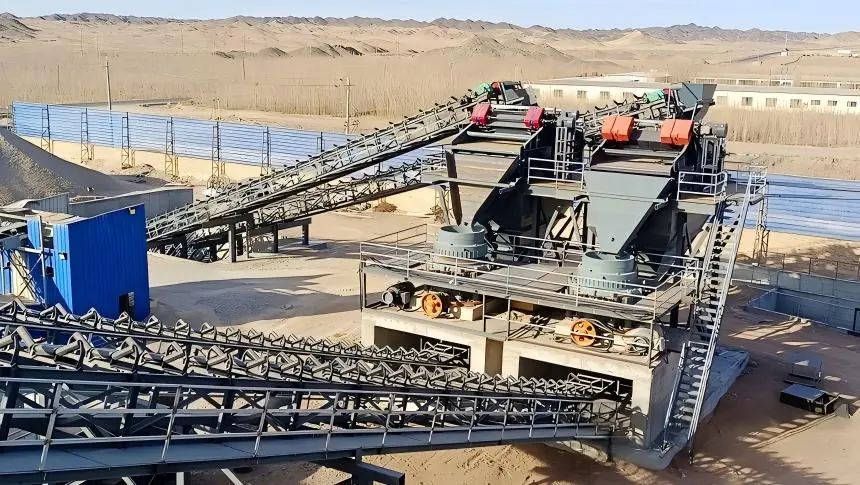
Full, starved or overloaded: distinguish the conditions
| Condition | What to look for | What the observation means |
|---|---|---|
| Appropriate choke feed | Material stays near the prescribed level and is distributed around the chamber; operating readings remain within limits. | Supply, chamber filling and machine loading are compatible. |
| Starved or intermittent feed | The chamber repeatedly empties or receives small batches separated by gaps. | Investigate supply and feeder control before treating the crusher setting as the cause. |
| Excessive loading or packing | Material accumulates abnormally, or the machine develops overload alarms, abnormal pressure or mechanical movement. | A high level is not proof of correct feeding. Follow the operating procedure and investigate the cause. |
The same distinction applies when reviewing spring cone crusher equipment and hydraulic cone crusher configurations. Their controls and protection arrangements differ, so operating limits must come from the specific machine documentation.
Start with the supply buffer, not a faster feeder
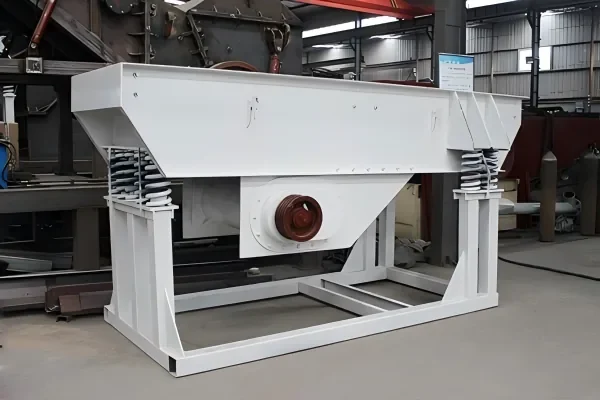
An upstream surge bin or stockpile can absorb gaps in material delivery. A controlled feeder then meters that buffered material toward the crusher. Without enough material available upstream, turning up feeder speed may only empty the hopper sooner and create another interruption.
Level sensing and feeder control can help hold the prescribed material level. Their logic must also respect the crusher and discharge-system interlocks. A high-level signal is useful only when the sensor is reliable, the feed can be regulated and the downstream equipment can receive the discharge.
First distinguish two situations: an empty buffer cannot supply the chamber, while a full buffer with unstable delivery points toward the feeder, chute or control arrangement. The corrective direction is different. The vibrating feeder is one equipment option within a feeding system; its suitability depends on the material and required duty.
A full chamber can still receive the wrong feed
Coarse particles entering one side and fine particles entering the other create segregation. Simply raising the level does not correct that uneven distribution. Review the transfer chute and feed landing point from a safe observation position, and check whether the arrangement spreads material around the chamber rather than depositing it against one side.
Feed size, grading, moisture and clay content matter as well. Oversize can interfere with entry and loading; sticky material and excessive fines can contribute to packing in unsuitable applications. The acceptable feed envelope varies with the chamber. Do not apply a fines-removal threshold from another manufacturer’s machine as a universal requirement.
Where the circuit requires undersize to bypass the cone, the upstream screening stage must perform that separation reliably. Otherwise, a feeder adjustment may conceal a material-preparation problem without correcting it.
Read material level and operating signals together
Motor current or power alone cannot show whether the chamber is correctly filled. Hardness, feed grading and setting also affect load. Conversely, a high material level alone says little about safe loading or product quality.
Review these observations together:
- Supply: Is the upstream buffer available, and does the feeder deliver continuously?
- Distribution: Is material entering around the chamber without obvious segregation?
- Machine response: Are power, pressure and other specified readings within the permitted operating range?
- Discharge and product: Is discharge unobstructed, and does the sampled product meet the required grading?
If power rises after a feed change, do not automatically tighten the setting or continue adding material. Establish which condition changed and follow the equipment procedure. The separate explanation of closed-side setting covers its relationship to product size; it is not a substitute for diagnosing the feed.
When inspection requires a shutdown
Do not reach into a hopper, clear a chute or inspect the chamber while the system can move or restart. A stopped machine can still contain stored energy and unstable material. Authorized personnel must follow the site’s isolation, verification and material-control procedures before accessing the equipment.
HSE’s equipment-maintenance guidance explains safe isolation and control of stored energy before maintenance. The applicable mine rules, local requirements and equipment instructions remain essential for the actual work.
Judge a feed adjustment by the plant result
After an approved adjustment, compare operation over representative conditions rather than selecting a single favorable moment. Record the material, chamber, setting, feed pattern, operating readings and product grading. Where practical, change one controllable factor at a time so the result can be interpreted.
In a closed circuit, more material passing through the cone does not necessarily mean more saleable product leaving the plant. Returning oversize is part of the crusher’s workload. Compare final output, recirculating material and product quality before concluding that a higher feed rate helped.
The useful outcome is appropriate chamber filling with acceptable loading and the required product, not the fullest possible hopper. If uneven distribution persists, inspect its effects during an authorized shutdown; cone liner wear patterns can provide additional evidence alongside the feeding records.