
Aliran peralatan benefisiasi bijih emas pertama-tama bergantung pada apakah umpannya berupa bijih batuan terkonsolidasi atau material aluvial yang tidak terkonsolidasi. Emas batu biasanya memerlukan penghancuran dan penggilingan bertahap sebelum konsentrasi gravitasi, flotasi atau tahap ekstraksi hilir yang dirancang secara profesional. Emas aluvial biasanya perlu dicuci, penggosokan, penyaringan, desliming dan konsentrasi gravitasi yang dikontrol ukuran. Mineralogi, kejadian emas, ukuran partikel, tanah liat dan tes menentukan sirkuit akhir.
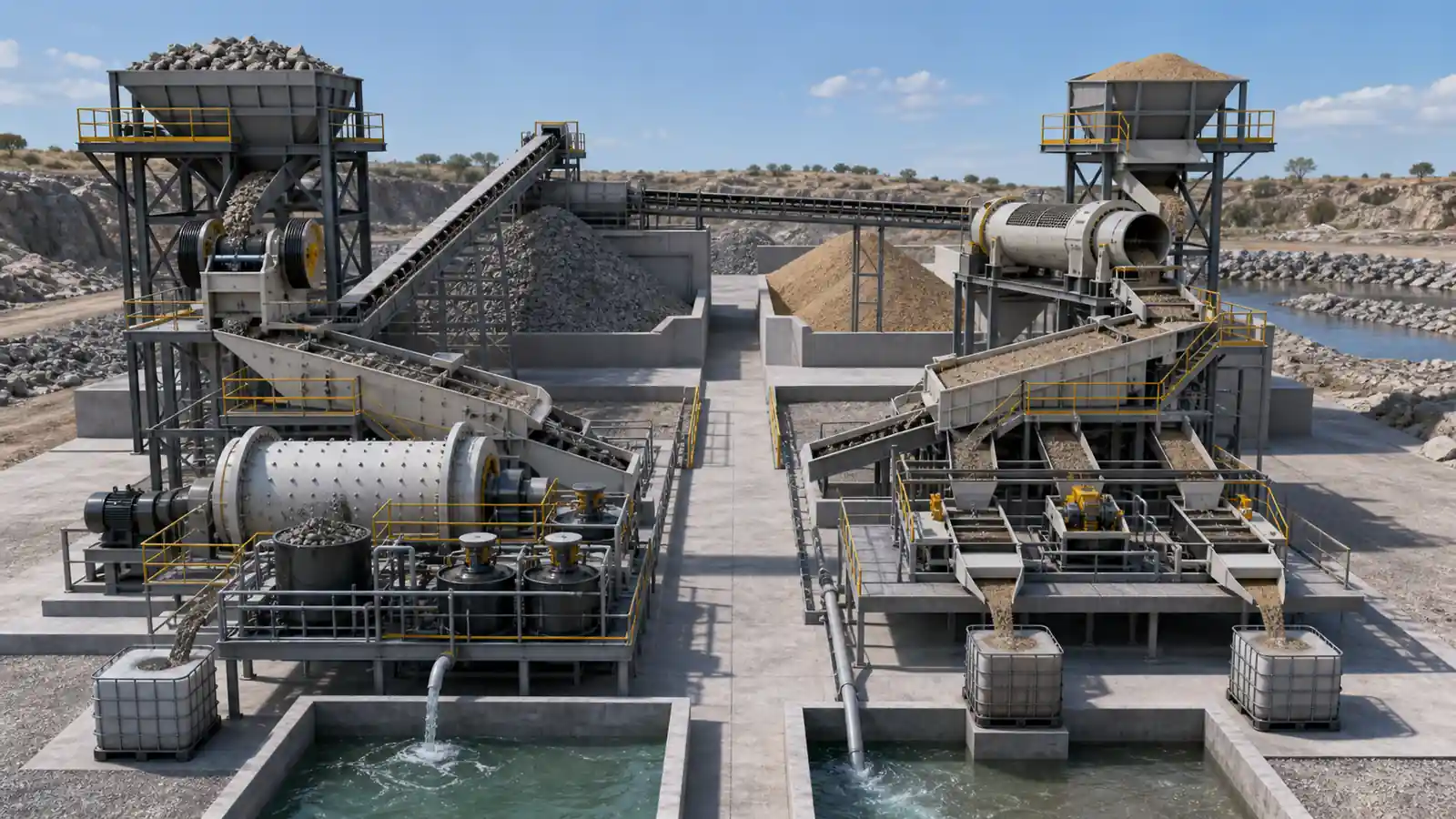
Emas Batuan dan Emas Aluvial Memerlukan Persiapan yang Berbeda
Batu, atau lode, emas terjadi dalam material mineralisasi terkonsolidasi. Emas mungkin gratis dalam ukuran yang dapat diperoleh kembali, disebarluaskan secara halus, dikunci dengan kuarsa, atau berasosiasi dengan sulfida dan mineral lainnya. Pabrik harus memecahkan batu dan memaparkan partikel-partikel yang relevan sebelum pemisahan dapat bekerja secara efektif.
Aluvial, atau penempatan, emas berasal ketika pelapukan melepaskan emas dari endapan primer dan transportasi alami mengkonsentrasikan partikel padat di pasir dan kerikil. AS. Survei Geologi menggambarkan endapan placer sebagai konsentrasi mineral berkepadatan tinggi yang terbentuk melalui pemisahan gravitasi selama proses sedimentasi. Karena umpannya tidak terkonsolidasi, masalah persiapan utama adalah tanah liat, kerikil berukuran besar, kandungan air yang bervariasi dan distribusi ukuran partikel yang luas daripada kerusakan batuan.
Rute Batu Emas
Menerima dan memberi makan 鈫?tahap penghancuran 鈫?penyaringan 鈫?penggilingan dan klasifikasi 鈫?gravitasi dan/atau flotasi menurut uji coba 鈫?penanganan konsentrat atau tahap ekstraksi hilir yang direkayasa secara terpisah.
Jalur Emas Aluvial
Menerima 鈫?mencuci dan menggosok 鈫?penghapusan kebesaran 鈫?desliming dan klasifikasi ukuran 鈫?konsentrasi gravitasi berdasarkan fraksi ukuran 鈫?pembersihan konsentrat 鈫?pengelolaan air dan tailing.
Alur Peralatan Pengolahan Bijih Emas Batuan
Pabrik emas dimulai dengan data mineralogi dan ukuran pakan yang representatif. Urutan berikut menjelaskan peran peralatan, bukan flowsheet tetap atau rute pemulihan yang terjamin.
| Panggung | Peralatan Utama | Tugas Proses | Dibutuhkan Bukti |
|---|---|---|---|
| Menerima dan memberi makan | Pelompat, grizzly dan pengumpan bergetar | Penyangga pengiriman tambang dan mengatur padatan yang memasuki penghancuran primer | Benjolan terbesar, kepadatan massal, kelembaban, tanah liat dan kisaran laju umpan |
| Penghancuran primer | Perjalanan penghancur atau penghancur primer lain yang sesuai | Mengurangi batuan run-of-mine untuk pengangkutan dan reduksi sekunder | Kekerasan, abrasi, distribusi pakan dan produk penghancur yang dibutuhkan |
| Reduksi dan ukuran sekunder | Penghancur sekunder, layar bergetar dan konveyor | Lewati umpan pabrik yang dapat diterima dan kembalikan ukuran besar untuk penghancuran lebih banyak | Produk penghancur, potongan layar, kelembaban dan bahan yang bersirkulasi |
| Penggilingan dan klasifikasi | Pabrik bola, penggolong, pompa dan bak | Paparkan emas atau mineral yang mengandung emas dan kendalikan ukuran pakan pemisahan | Pembebasan berdasarkan ukuran, kekerasan dan respons benefisiasi ukuran demi ukuran |
| Pemulihan gravitasi | Konsentrator gravitasi dan peralatan pembersih konsentrat yang sesuai | Pulihkan partikel emas padat yang terbebaskan di mana pengujian mengkonfirmasi respons gravitasi | Ukuran emas bebas, membentuk, fraksi kepadatan dan mineralogi menengah |
| Pengapungan | Sel flotasi, pengkondisian dan penanganan buih | Konsentratkan mineral yang mengandung emas ketika kimia permukaan memberikan selektivitas | Mineralogi, menggiling, program uji kimia air dan flotasi |
| Penanganan produk dan tailing | Penebalan, penyaringan, pompa dan penyimpanan rekayasa | Kelola konsentrat, air proses dan residu akhir | Kesetimbangan massa lengkap, neraca air dan kebutuhan produk |
AS. Badan Perlindungan Lingkungan profil teknis ekstraksi dan benefisiasi emas mencatat bahwa kumpulan mineral emas merupakan faktor utama dalam pemilihan proses dan penggilingan tersebut, pengapungan, konsentrasi gravitasi dan metode lain disesuaikan dengan deposit. Prinsip itu tetap lebih berguna daripada menugaskan satu rangkaian peralatan untuk setiap bijih emas.
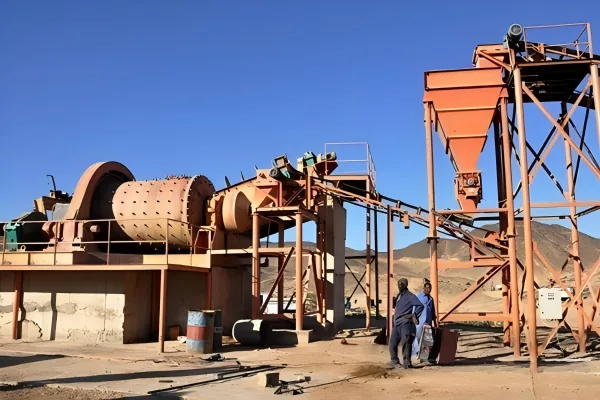
Dimana Gravitasi dan Flotasi Cocok dalam Pengolahan Emas Batuan
Konsentrasi gravitasi relevan ketika penggilingan melepaskan partikel emas dengan kontras kepadatan yang cukup dan perilaku ukuran yang sesuai. Tahap gravitasi dapat ditempatkan dalam aliran penggilingan yang bersirkulasi untuk mencegat partikel padat yang dapat diperoleh kembali, atau dapat menangani produk rahasia. Lokasi yang benar bergantung pada di mana emas yang dibebaskan muncul di sirkuit.
Flotasi melakukan tugas yang berbeda. Ini mungkin mengkonsentrasikan mineral sulfida yang mengandung emas atau asosiasi mineral lain yang membawa emas. Konsentrat buih tidak secara otomatis menjadi emas metalik final; ini adalah aliran mineral yang lebih kecil yang mungkin memerlukan perawatan lebih lanjut yang dirancang secara profesional.
Beberapa bijih mendukung kedua metode tersebut. Gravitasi pertama-tama dapat memulihkan partikel-partikel yang dibebaskan, sementara flotasi mengolah sisa mineral yang mengandung emas. Susunan gabungan ini harus dibuktikan dengan uji bertahap dan neraca massa tertutup. Hal ini tidak boleh diasumsikan hanya dari nilai kepala saja.
Alur Peralatan Benefisiasi Emas Aluvial
Pakan aluvial dapat mengandung batu-batuan, kerikil, pasir, lanau, tanah liat, bahan organik dan beberapa mineral berat. Jalur peralatan harus melepaskan partikel dari tanah liat, menolak ukuran yang terlalu besar jika pengambilan sampel mendukung keputusan tersebut dan menciptakan rentang ukuran yang dapat dipisahkan oleh peralatan gravitasi secara konsisten.
| Panggung | Peralatan Khas | Tugas Proses | Risiko Pengendalian Utama |
|---|---|---|---|
| Penerimaan pakan | Pelompat, grizzly dan pengumpan terkontrol | Terima pasir dan kerikil yang bervariasi sambil membatasi lonjakan yang tidak terkendali | Batu-batuan besar, tanah liat yang lengket dan pembebanan tidak merata |
| Mencuci dan menggosok | Scrubber atau sesuai peralatan mencuci | Membubarkan tanah liat dan melepaskan partikel mineral dari pakan yang diaglomerasi | Pecahnya tanah liat yang tidak sempurna atau pengenceran yang tidak terkontrol |
| Penyaringan | Trommel atau layar bergetar | Hapus ukuran yang terlalu besar dan bagilah umpan menjadi pecahan ukuran yang dapat diatur | Emas rugi karena oversize ditolak, layar membutakan atau lubang aus |
| Desliming dan klasifikasi | Pengklasifikasi yang cocok, hidrosiklon atau tahap pengendapan | Kontrol tanah liat halus dan siapkan umpan yang lebih sempit untuk pemisahan gravitasi | Hilangnya emas murni dalam slime atau partikel kasar yang salah letak |
| Konsentrasi gravitasi | Konsentrator gravitasi yang sesuai dipilih berdasarkan ukuran dan tugasnya | Pisahkan partikel padat dari pasir dan kerikil yang lebih ringan | Kisaran ukuran yang luas, air yang tidak stabil, padatan tinggi atau laju umpan berlebihan |
| Pembersihan konsentrat | Tabel konsentrasi gravitasi atau metode pembersihan lain yang telah teruji | Tingkatkan yang lebih kecil, menyiapkan konsentrat mineral berat | Ukuran yang buruk, fluktuasi pakan dan kehilangan di tingkat menengah |
| Air dan tailing | Penyelesaian, penebalan, sistem air balik dan residu rekayasa | Ambil kembali air dan kelola sampah kasar dan halus | Aliran air tidak seimbang, penumpukan sedimen dan pembuangan yang tidak terkendali |

Mengapa Klasifikasi Ukuran Mengontrol Pemisahan Gravitasi
Peralatan gravitasi merespons kepadatan, tetapi ukuran dan bentuk partikel juga mempengaruhi pergerakan di dalam air dan melintasi permukaan pemisah. Partikel cahaya yang besar dapat berperilaku berbeda dari partikel kecil yang padat. Oleh karena itu, pemberian pakan dengan rentang ukuran yang sangat luas membuat pemisahan kepadatan bersih menjadi lebih sulit.
Penyaringan dan klasifikasi menciptakan rentang yang lebih sempit sehingga setiap tahap gravitasi menerima material dengan perilaku pengendapan yang lebih konsisten. Material halus mungkin memerlukan pengolahan terpisah dari pasir kasar. Juga, tanah liat harus didispersikan tanpa secara otomatis membuang sebagian kecil yang mungkin mengandung emas.
A meja getar untuk konsentrasi gravitasi biasanya merupakan alat pembersih atau konsentrasi untuk pakan siap saji, bukan pengganti mencuci, penyaringan dan desliming. Kondisi dek, distribusi pakan, aliran padatan dan kontrol air harus tetap stabil untuk pemisahan yang berarti.
Cara Memilih Rute Peralatan Gold yang Benar
Pemilihan peralatan dimulai dengan kemunculan emas dan perilaku fisik material inang. Program tes yang berguna memisahkan pertanyaan-pertanyaan yang menentukan persiapan, konsentrasi dan penanganan produk hilir.
- Jenis setoran dan umpan: batuan konsolidasi, batuan yang lapuk, bahan sisa atau pasir aluvial dan kerikil.
- Kejadian emas: partikel bebas, inklusi, penyebaran halus atau asosiasi dengan sulfida dan mineral lainnya.
- Distribusi ukuran demi ukuran: pengujian emas dan gangue di seluruh crusher, layar, pengklasifikasi dan fraksi kepadatan.
- Pembebasan: ukuran dimana emas atau mineral yang mengandung emas menjadi cukup tersingkap untuk metode yang dipilih.
- Penanganan material: gumpalan terbesar, kepadatan massal, kelembaban, tanah liat, bahan organik dan perubahan pakan musiman.
- Respon penerima manfaat: gaya berat, flotasi dan pengujian lain yang sesuai pada sampel representatif dan aliran perantara.
- Dasar produksi: kisaran pakan kering, jadwal operasi, ketersediaan air, kekuatan, ketinggian dan jejak tanaman.
- Persyaratan produk: bentuk konsentrat, tujuan hilir, kondisi dewatering dan transportasi.
Itu Rangkaian peralatan penambangan emas Vanore mencakup mesin yang digunakan di seluruh tahap persiapan dan konsentrasi. Seleksi akhir memerlukan aliran data yang terhubung sehingga menjadi feeder, penghancur, layar, pabrik, pemisah, pompa dan peralatan dewatering beroperasi pada satu dasar proses yang konsisten.
Air, Antarmuka Ekstraksi Tailing dan Hilir
Air adalah aliran proses, bukan utilitas yang tidak terbatas. Pencucian aluvial memerlukan aliran yang cukup terkontrol untuk membubarkan tanah liat dan mengangkut padatan tanpa kehilangan partikel halus yang padat. Penggilingan emas batu, klasifikasi dan flotasi juga bergantung pada kepadatan pulp dan kualitas air. Penyelesaian, sistem pengentalan dan pengembalian air harus dimasukkan dalam keseimbangan aliran awal.
Tailing terdiri dari aliran berbeda dengan ukuran partikel dan kandungan air berbeda. Layar kasar menolak, tailing gravitasi, tailing flotasi dan slime halus memerlukan rute pemindahan dan penyimpanan yang ditentukan. Pengujian yang representatif dan karakterisasi lingkungan diperlukan sebelum suatu aliran dianggap sebagai limbah akhir.
Dimana uji coba mengidentifikasi tahap ekstraksi kimia, bagian itu memerlukan desain metalurgi khusus, penahanan yang direkayasa, perlindungan kerja, pemantauan dan kepatuhan terhadap peraturan yang berlaku. Pemilihan peralatan penghancuran dan benefisiasi harus menentukan umpan pada tahap tersebut tetapi tidak boleh menggantikan desain keselamatan proses..
FAQ Alur Peralatan Pengolahan Bijih Emas
Apa perbedaan aliran peralatan utama antara emas batu dan emas aluvial?
Bijih emas batu biasanya memerlukan penghancuran dan penggilingan bertahap sebelum pemisahan. Material aluvial sudah tidak terkonsolidasi, jadi mencuci, penggosokan, penyaringan, desliming dan konsentrasi gravitasi biasanya membentuk jalur peralatan utama.
Apakah setiap tanaman emas batu memerlukan flotasi?
TIDAK. Flotasi relevan ketika pengujian menunjukkan bahwa emas atau mineral yang mengandung emas dapat dikonsentrasikan melalui kimia permukaan. Emas kasar bebas dapat mendukung pemulihan gravitasi, sementara bijih lainnya memerlukan rute hilir berbeda yang direkayasa secara profesional.
Mengapa penyaringan penting dalam pengolahan emas aluvial?
Penyaringan memisahkan kerikil berukuran besar dan menghasilkan pecahan berukuran lebih sempit untuk peralatan gravitasi. Pengendalian ukuran penting karena pengendapan partikel dan perilaku dek berubah seiring dengan kepadatan dan ukuran partikel.
Bisakah tabel gravitasi memulihkan semua emas dari bijih??
Tidak ada mesin gravitasi tunggal yang dapat diasumsikan dapat memulihkan seluruh emas. Kinerja tergantung pada ukuran emas, membentuk, pembebasan, ukuran pakan, pengendalian air dan mineral terkait. Pengujian harus memperhitungkan sisa emas di tengah dan tailing.
Data apa saja yang diperlukan untuk merancang alur peralatan benefisiasi emas?
Proyek membutuhkan mineralogi yang representatif, kejadian emas, data pembebasan berdasarkan ukuran, distribusi ukuran pakan, perilaku tanah liat dan kelembaban, fraksi kepadatan, rentang throughput, hasil uji ketersediaan dan benefisiasi air.