
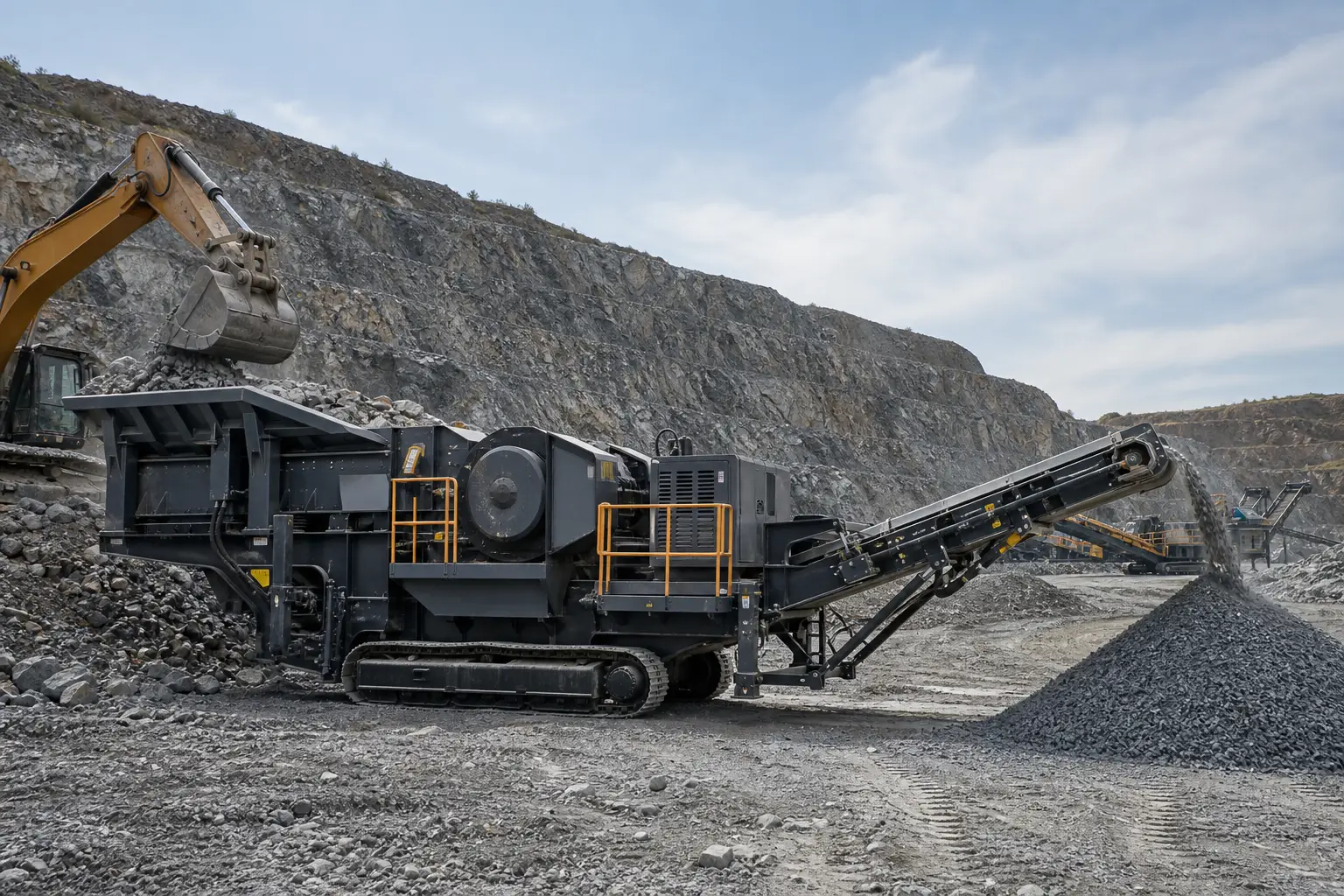
Crawler mobile crusher site use brings feeding, crushing and conveying closer to the rock source when a quarry or mining face changes position. The tracked chassis supports short moves within a prepared site, while the crusher, feeder and discharge conveyor continue to perform defined process duties. This arrangement can reduce repeated raw-material movement before primary crushing, but it still depends on a stable working platform and a coordinated production layout.
What Is Crawler Mobile Crusher Site Use?
A crawler mobile crusher is a track-mounted crushing unit that combines selected feeding, écrasement, power and conveying functions on one movable chassis. It can reposition within a quarry, mine or recycling site without requiring a separate road trailer for every short move. The tracks provide a larger contact area than road tires and allow controlled movement across firm ground that is less uniform than a paved transport route.
The Vanore crawler mobile crusher plant belongs to the broader mobile crushing equipment range. Depending on the process role, a tracked unit can carry a jaw, impact or cone crushing stage and connect with mobile screening or conveying equipment. The application is defined by the material, taille de l'aliment, required products, relocation pattern and available operating space.
How the Crawler Chassis Supports Site Movement
The crawler undercarriage is designed for self-propelled movement within the job site. This matters when extraction advances along a quarry bench, when a temporary crushing point moves between material piles, or when a recycling operation works through separate zones. Moving the crusher closer to the material can shorten the loading and hauling route before size reduction.
Track mobility does not remove ground requirements. Before operation, the machine needs a firm and suitably graded pad that supports the equipment load. The route also needs adequate width, overhead clearance, turning space and drainage. Site personnel must follow the machine manual and the project safety plan for movement, setup and operation.
Quarry and Mining Conditions That Benefit from Track Mobility
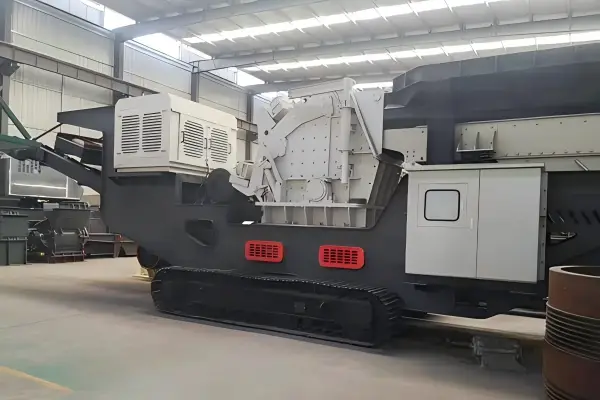
Tracked crushing has a clear role where the source rock and the preferred crushing point change over time. In a quarry, the unit can work nearer to the active face and transfer reduced material onward by conveyor or loader. At a mine site, a mobile primary crusher can support staged extraction areas without placing every crushing duty at one distant fixed point.
The same layout logic applies to temporary aggregate work and selected recycling operations. UN construction waste crusher plant may move between sorted material zones, while the crushing and screening route changes with available space. Cependant, steel, wood and other unsuitable contaminants should be managed before they reach the crusher, according to the selected process and site controls.

Crawler Mobile Crusher Site Use Factors
The following table separates useful site conditions from the checks that remain necessary. It provides process context rather than model-specific operating limits.
| Site Factor | How a Crawler Unit Contributes | Layout Check | Operating Boundary |
|---|---|---|---|
| Changing quarry face | Allows the crushing point to move closer to newly extracted rock. | Confirm travel route, loading position and downstream transfer. | Move only on a route suitable for the machine and site procedure. |
| Firm but uneven site surface | Tracks support controlled movement where a road-tire route is not practical. | Grade and compact the working platform; provide drainage. | Do not treat loose fill, unstable edges or unsupported slopes as operating ground. |
| Short on-site relocation | Reduces the need to load the entire unit onto a trailer for each internal move. | Check clearance, turning space, cables, conveyors and nearby equipment. | Long-distance public-road transport still requires an appropriate transport plan. |
| Temporary crushing area | Combines core process equipment on a movable chassis. | Reserve space for feed loading, discharge and maintenance access. | Mobility does not replace dust, noise, guarding or traffic controls. |
| Multi-unit process | Can connect primary or secondary crushing with mobile screening. | Match transfer height, belt direction, feed grading and stockpile space. | Each unit must receive a stable and controlled material flow. |
Primary Crushing Near the Material Source
A tracked jaw unit commonly performs coarse reduction near blasted rock or large aggregate feed. The hopper receives material from an excavator or loader, while the feeder regulates the flow to the jaw chamber. After reduction, the discharge belt sends material to a stockpile, a haul vehicle or the next mobile stage.
Where the project needs a dedicated primary stage with road-mobile equipment, the mobile jaw crusher plant page explains that product role. In either chassis format, feed control remains important. Oversize blocks, mixed metal and sudden surges can interrupt the process, so the loading method must match the selected inlet and feeder arrangement.
Connecting Tracked Crushing with Screening and Conveying
A crawler crusher can discharge directly to a product pile, but many aggregate processes require classification. UN mobile screening plant separates the crushed material into finished sizes and can return oversize for additional reduction. The screen and crusher may operate as separate movable units, which allows the process to change as the extraction area advances.
Transfer conveyors must follow a clear material path. Their discharge height, receiving angle and capacity relationship affect the connection between stages. The layout also needs separate stockpile zones, loader access and enough space to service belts, screens and crusher wear parts without crossing active traffic routes.
Working Platform and Relocation Boundaries
- Ground support: prepare a stable pad that can carry the machine during operation and movement.
- Edge clearance: keep the plant away from unsupported bench edges, excavations and unstable slopes.
- Drainage: prevent standing water and erosion from weakening the travel route or operating area.
- Machine clearance: account for hopper loading, conveyor folding, service doors and maintenance lifting space.
- Traffic separation: define loader, excavator and haul-vehicle routes around the crushing unit.
- Process shutdown: follow the equipment procedure before any relocation or layout adjustment.
These controls preserve the practical value of track mobility. A crawler chassis supports site movement; it does not convert unstable terrain into a suitable production platform. Ground assessment and operating instructions remain part of every deployment.
Information Needed for a Crawler Crushing Layout
Vanore Mining can discuss a crawler crushing arrangement around the raw material, maximum feed size, required finished sizes, expected hourly flow, intended crusher stage and relocation frequency. Site details should include ground condition, available operating dimensions, loader or excavator access, transport restrictions and the planned connection to screening or stockpiling.
Project teams can contacter Vanore Mining with these inputs and available site drawings. This allows the discussion to cover the crusher duty, tracked chassis, feeding method, conveyor route and related mobile equipment as one process rather than as isolated machines.
FAQ
Where is a crawler mobile crusher commonly used?
Crawler mobile crushers are commonly used in quarries, mining areas and recycling sites where crushing needs to move closer to the material source or change position within the site.
Can a crawler crusher operate on any uneven ground?
No. Tracks improve on-site mobility, but the machine still requires a firm, stable and suitably graded working platform with safe clearance, drainage and access.
Can a crawler crusher connect with mobile screening equipment?
Oui. A tracked primary or secondary crusher can connect with mobile screening and conveying equipment when transfer heights, flux de matières, stockpile space and return routes are coordinated.