
Flux d'équipement de clinker de ciment relie la ligne thermique qui forme le clinker à la ligne de finition-broyage qui produit le ciment. L'alimentation du four préparée passe par le préchauffage et la calcination, entre dans un four rotatif pour la formation de minéraux de clinker, passe par un refroidissement et un stockage contrôlés, puis atteint un circuit de broyage avec dosage, fraisage, classification, dépoussiérage et stockage du ciment. Chaque étape modifie soit l'état du matériau, le bilan énergétique ou la stabilité de la prochaine machine.

Où se termine la production de clinker et où commence le broyage du ciment
La fabrication du ciment comprend deux grandes sections de transformation. Le pyrotraitement utilise la chaleur pour convertir une charge minérale préparée en clinker. Le broyage de finition réduit ensuite le clinker et les ajouts contrôlés à la finesse et à la composition requises pour le ciment. Convoyage, refroidissement, le stockage et le dosage relient ces sections et empêchent qu'une machine soit traitée comme l'ensemble de l'usine.
Le Section AP-42 de l'US EPA pour la fabrication de ciment Portland divise le processus en préparation des matières premières, pyrotraitement et broyage du ciment fini. Il décrit également le refroidissement du clinker comme composant final du système de pyrotraitement et le broyage de finition comme l'étape qui transforme le clinker en ciment fini..
Cette limite est importante pour la planification des équipements. Le four rotatif à ciment doit livrer du clinker avec un état minéral et thermique stable. L'aval unité de broyage de clinker doit recevoir un mélange contrôlé et séparer les fines finies des matériaux qui nécessitent un autre passage dans le broyeur.
Flux d'équipement de clinker de ciment étape par étape
- Préparation des aliments au four: la farine crue homogénéisée atteint la ligne thermique à un rythme contrôlé.
- Préchauffage et précalcination: le gaz de traitement chaud transfère la chaleur à la farine crue en suspension avant la zone de combustion du four.
- Brûlage au four rotatif: une coque à revêtement réfractaire déplace le matériau à travers les réactions finales de formation de clinker.
- Refroidissement du clinker: un refroidisseur abaisse la température de refoulement et récupère la chaleur utile là où la conception le permet.
- Stockage et dosage: mâchefer, le gypse et les constituants spécifiés sont stockés et dosés.
- Terminer le meulage: un broyeur à ciment réduit le mélange à la plage granulométrique requise.
- Classement et retour: un séparateur renvoie les produits fins vers l'avant et les matériaux grossiers vers le broyeur.
- Collecte et stockage: l'air de traitement est séparé du produit avant que le ciment n'entre dans les silos.
Rôles d'équipement tout au long du processus
| Scène | Équipement principal | État du matériau | Contrôle primaire | Connexion suivante |
|---|---|---|---|---|
| Alimentation du four | Stockage, équipement de dosage et d'alimentation | Farine crue homogénéisée | Chimie et débit massique stable | Charge thermique stable |
| Préchauffage | Préchauffeur cyclone et précalcinateur en option | Chauffé, repas partiellement calciné | Contact gaz-solide et température | Charge de four restante réduite |
| Brûlage de clinker | Four rotatif, brûleur, conduire, supports et réfractaires | Minéraux de clinker et nodules | Profil thermique, rotation et mouvement du matériau | Clinker chaud vers refroidisseur |
| Refroidissement | Refroidisseur de clinker et connexions d'air | Clinker refroidi | Lit de clinker, débit d'air et décharge | Transport et stockage |
| Terminer le meulage | Broyeur à boulets ou broyeur vertical | Mélange de ciment fin | Alimentation, ventilation, température et puissance | Alimentation du séparateur |
| Classification | Séparateur d'air, ventilateur et matériel de collecte | Ciment fin et retour grossier | Taille de coupe, débit d'air et charge de retour | Retour de silo ou de broyeur de produits |
Four rotatif et refroidisseur de clinker comme un seul système thermique
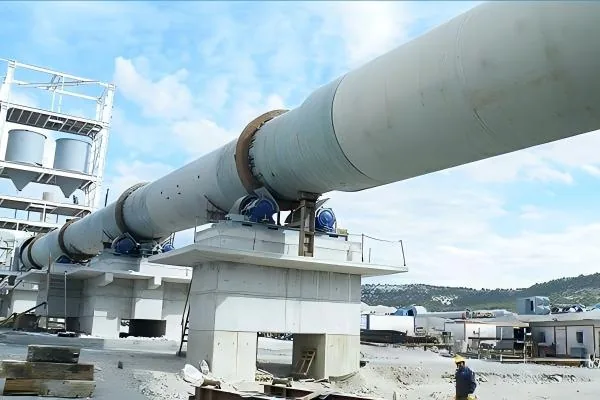
Le four rotatif est un réacteur rotatif incliné recouvert de réfractaire. Sa rotation fait avancer le matériau tandis que le brûleur et le système de gaz maintiennent les conditions requises pour les réactions finales de formation du clinker.. Alignement de la coque, état de support, stabilité du disque, scellés, l’état réfractaire et le fonctionnement du brûleur influencent tous le mouvement continu du matériau et le contrôle de la chaleur.
Le refroidisseur n'est pas simplement un convoyeur de déchargement. Le refroidissement contrôlé permet de préserver l'état du clinker développé dans le four, rend le produit maniable pour les équipements en aval et récupère la chaleur. L'air de refroidissement qui devient chaud peut retourner dans le système de combustion, le flux d'air plus frais et la combustion du four sont donc liés via le bilan thermique de l'usine..
Le fonctionnement stable du four prend également en charge la section de broyage. Variations de l’état minéral du clinker, changement de température ou de broyabilité réponse du broyeur et contrôle du produit. L'examen du processus doit donc suivre les matériaux depuis la farine crue jusqu'au refroidissement au lieu d'évaluer uniquement l'enveloppe du four..
Pourquoi le stockage et le dosage du clinker sont importants
Le stockage du clinker crée un tampon pratique entre un processus thermique et un processus de broyage mécanique. La ligne de four fonctionne souvent en continu, tandis que la ligne de broyage peut suivre un calendrier de maintenance ou de produit différent. Le stockage permet à chaque section de fonctionner dans sa plage stable sans que chaque interruption ne traverse l'ensemble de l'usine..
Avant le broyage, les doseurs de pesée contrôlent le clinker et les matériaux spécifiés pour le type de ciment. Le gypse est couramment introduit pour réguler le comportement de prise, tandis que les autres constituants autorisés dépendent de la norme et de la formulation du produit.. Le système de dosage doit suivre une recette de produit approuvée plutôt qu'une valeur ajoutée universelle.
Broyage de finition du clinker et classification en circuit fermé
UN broyeur à boulets de ciment utilise une coque rotative et un support de broyage pour réduire le clinker et les ajouts dus à l'impact et à l'abrasion. Les rejets du broyeur contiennent des fines finies et des particules qui restent trop grossières. La ventilation élimine la chaleur et transporte les matières fines vers la séparation en aval.
En circuit fermé, un séparateur d'air divise la décharge du broyeur. Les particules fines se déplacent vers la collecte des produits, tandis que les grosses particules retournent au broyeur. UN broyeur vertical combine le broyage, séchage et classification dans un arrangement différent, mais cela dépend toujours d'une alimentation contrôlée, flux de gaz et séparation des produits.
La performance de broyage ne peut pas être définie uniquement par la finesse. Température du produit, efficacité du séparateur, ventilation, humidité du matériau, La broyabilité du clinker et les spécifications du ciment influencent l'équipement sélectionné et le point de fonctionnement. Le Gamme de broyeurs Vanore présente des options d'équipement pour les tâches liées aux poudres minérales et industrielles.

Collecte de poussière, Convoyage et stockage du ciment
La production de ciment avance bien, matériau sec via les points de transfert, moulins, séparateurs, ascenseurs et silos. Un transport fermé et une ventilation correctement sélectionnée aident à contenir les matériaux et à maintenir le flux d'air du processus.. UN dépoussiéreur doit être adapté au volume de gaz, température, humidité, devoir de chargement et de collecte de poussière.
Le ciment collecté peut retourner dans le flux de produits lorsque la conception du processus le permet. Le ciment fini entre ensuite dans des silos dédiés qui prennent en charge le stockage, mélange ou expédition contrôlée. Aération des silos, mesure de niveau, des équipements d'extraction et de chargement complètent le parcours matière et contribuent à la disponibilité de l'usine.
Les directives de l'IFC pour la fabrication du ciment et de la chaux mettent également l'accent sur le contrôle des particules lors de la manipulation., écrasement, broyage et stockage. L'ingénierie des installations doit combiner les exigences des processus avec les exigences environnementales applicables., obligations réglementaires professionnelles et locales.
Interactions de processus qui affectent la stabilité de l'usine
| Changement observé | Lien de processus | Équipement à revoir | Preuve requise |
|---|---|---|---|
| Température du clinker variable | Modification du refroidissement et du stockage de la charge thermique de broyage. | Glacière, transport, ventilation du stockage et de l'usine | Tendances de température par point de processus |
| Alimentation du broyeur instable | Flux de bac, le contrôle du doseur ou la ségrégation interrompt le broyage. | Stockage, peseuses et goulottes | Tendances de débit massique et échantillons de matériaux |
| Retour grossier excessif | Le taux de broyage et la coupe du séparateur sont déséquilibrés. | Moulin, séparateur, flux d'air, ventilateur et collectionneur | Alimentation, produits et échantillons de retour |
| Variation de finesse | Matériel, le rapport d'alimentation ou la classification ont été modifiés. | Dosage, moulin, séparateur et échantillonnage | Données sur le clinker, paramètres et résultats de laboratoire |
Contributions du projet pour l'appariement des équipements de la ligne de ciment
- Matériels: chimie des repas crus, état du clinker, température, humidité, broyabilité et variation.
- Programme de produits: types de ciment, normes applicables, titre et ajouts requis.
- Base de production: production de clinker et de ciment, horaire d'exploitation, autonomie de stockage et modèle de maintenance.
- Utilitaires: carburant, pouvoir, eau de traitement, air comprimé et conditions ambiantes.
- Aménagement du site: zone, élévations, voies de transport, équipement existant et plan d’agrandissement.
- Contrôles et conformité: instrumentation, échantillonnage, dépoussiérage, sécurité et approbations locales.
Une configuration finale nécessite des données matérielles représentatives et un bilan thermique et massique spécifique au projet.. Le four, glacière, moulin, séparateur, le ventilateur et l'équipement de contrôle de la poussière doivent être évalués en tant que systèmes connectés. Même un chargeur contrôlé dépend des propriétés du volume et de la plage de débit requise.
FAQ sur le flux d'équipement de clinker de ciment
Quel est le flux d'équipement de clinker de ciment?
C'est la voie des matériaux connectés qui convertit les aliments préparés du four en clinker., refroidit et stocke le clinker, le proportionne avec du gypse ou d'autres constituants spécifiés, le broie, sépare les fines finies et envoie le ciment au stockage.
Pourquoi le clinker doit-il être refroidi avant le broyage?
Le refroidissement récupère la chaleur utile, stabilise l'état minéral du clinker et abaisse la température du matériau pour le transport, stockage et meulage de finition contrôlé. Les performances du refroidisseur affectent également l'équilibre thermique de la ligne de four..
Quel est le rôle d'un broyeur à boulets de ciment?
Un broyeur à boulets de ciment réduit le clinker et les ajouts spécifiés à la finesse de ciment requise. En circuit fermé, un séparateur d'air envoie le produit fin vers l'avant et renvoie les particules grossières pour un broyage ultérieur.
Pourquoi le clinker est-il stocké entre le four et la ligne de broyage?
Le stockage découple deux sections de processus avec des conditions de fonctionnement différentes. Il fournit un inventaire contrôlé, prend en charge le mélange et permet à la ligne de broyage de recevoir un approvisionnement en matériau plus stable.
Quelles données de projet définissent une ligne de clinker de ciment?
L'ingénierie nécessite des caractéristiques de farine crue et de clinker, types et finesses de ciment requis, base de production, conditions de carburant et de puissance, humidité, plan additif, exigences en matière d'émissions, calendrier d'exploitation et aménagement du site.