
Secondary crushing and screening connects the middle and final sizing stages of an aggregate plant. After primary crushing, the process reduces stone further, separates finished sizes and returns oversized material to the crusher when another reduction pass is needed.
What Secondary Crushing Adds to an Aggregate Plant
Primary crushing makes large rock easier to convey, but it rarely creates the final aggregate sizes required by quarry and construction material applications. Secondary crushing handles the next reduction stage, where material enters an impact crusher, cone crusher or another suitable machine according to hardness, shape requirement and plant flow.
In medium-hard stone and limestone applications, impact crushing can support both size reduction and aggregate shaping. For harder stone, a cone crushing route may be used in the same plant system. Vanore Mining groups these machines under stationary crushers so the equipment role is clear within the complete crushing line.

How Screening Controls Finished Aggregate Sizes
A vibrating screen separates crushed material into different size ranges after the secondary crusher. Correct screening makes the process measurable: finished aggregate can move to stockpiles, while oversized material can return to crushing through a conveyor loop.
This screening stage is not only a sorting step. It also controls the material path of the whole aggregate plant. When screening capacity and crusher discharge are matched, the plant can keep a steadier flow and reduce unnecessary recirculation.

Crusher, Screen and Conveyor Flow
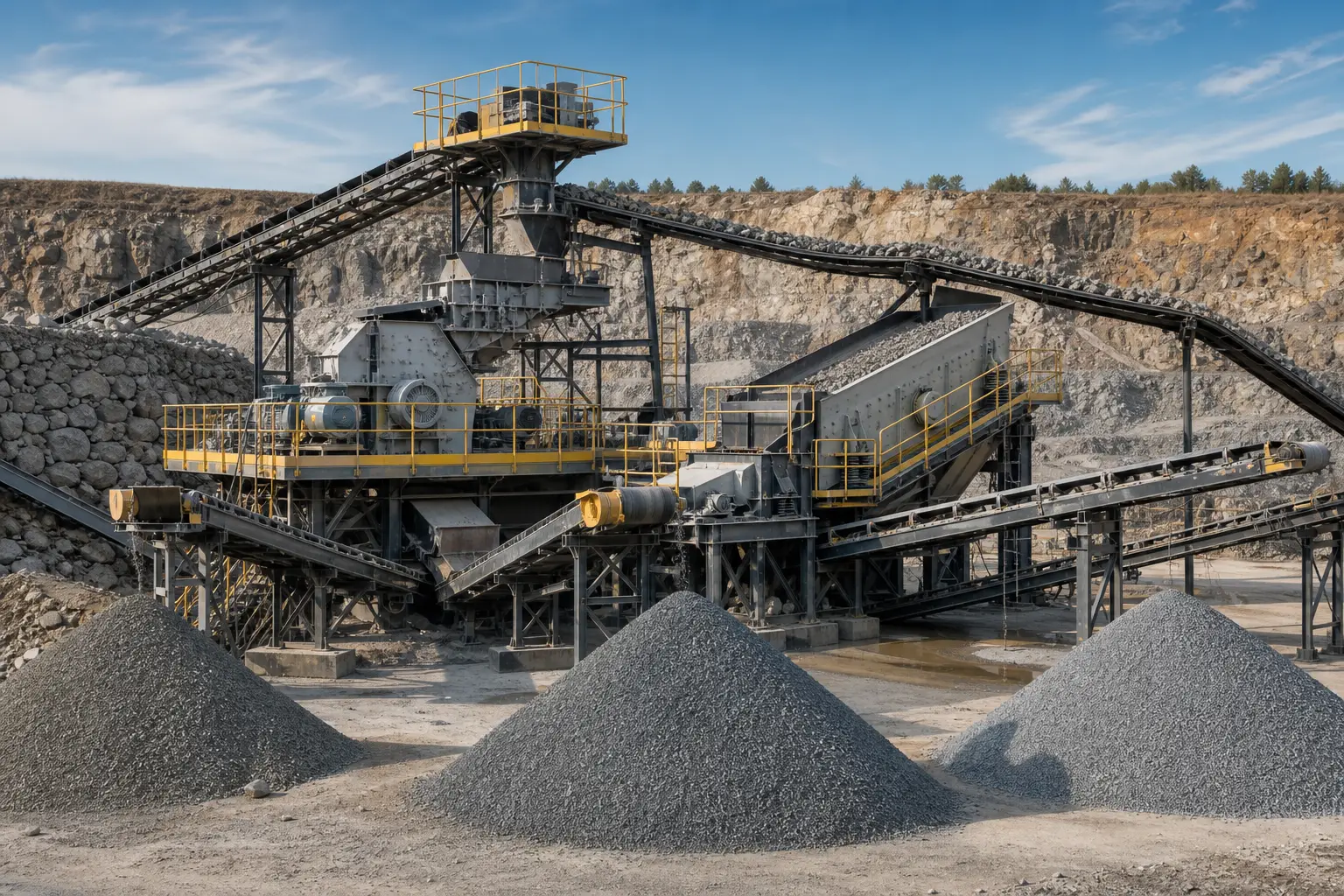
A typical secondary crushing and screening section includes a feeder or transfer conveyor, the secondary crusher, a vibrating screen and several conveyors for finished material and return material. A vibrating feeder may support stable material supply when the layout requires controlled feeding before the crushing chamber.
- Crusher feed: material arrives from primary crushing or an intermediate stockpile.
- Secondary crusher: stone is reduced further for aggregate size control.
- Screening section: material is separated into finished and oversized fractions.
- Return conveyor: oversized material moves back for another crushing pass.
- Stockpile conveyors: finished sizes move to separate aggregate piles.
Fixed and Mobile Layout Considerations
Fixed aggregate plants usually use a structured platform and conveyor layout to connect the secondary crusher with screening and stockpiling. Mobile or temporary applications may use mobile crushers and mobile screening equipment when the site needs easier relocation or a shorter installation path.
The core process remains the same in both layouts: the crusher reduces material, the screen classifies the output and conveyors connect finished and return flows. For equipment matching, users can contact Vanore Mining with raw material, feed size, target aggregate sizes and plant layout requirements.
FAQ
What is secondary crushing and screening?
Secondary crushing and screening reduces material after primary crushing and separates it into finished aggregate size ranges or return material for further crushing.
Which equipment is used in this process?
Impact crushers, cone crushers, vibrating screens, conveyors and feeders are commonly used in the secondary crushing and screening section of aggregate plants.
Why does screening matter after secondary crushing?
Screening separates finished aggregate from oversized material and helps control the return flow to the crusher, which improves plant size control.