
Sand washing and screening flow connects controlled feeding, particle-size separation, removal of clay or unwanted fines, final classification, dewatering and separate stockpiling. A preliminary screen can remove clean oversize before washing, while wet screening or washing can treat material with attached clay. The correct sequence depends on representative feed gradation, coating behavior, required products, fine-material limits, water availability and site discharge requirements.
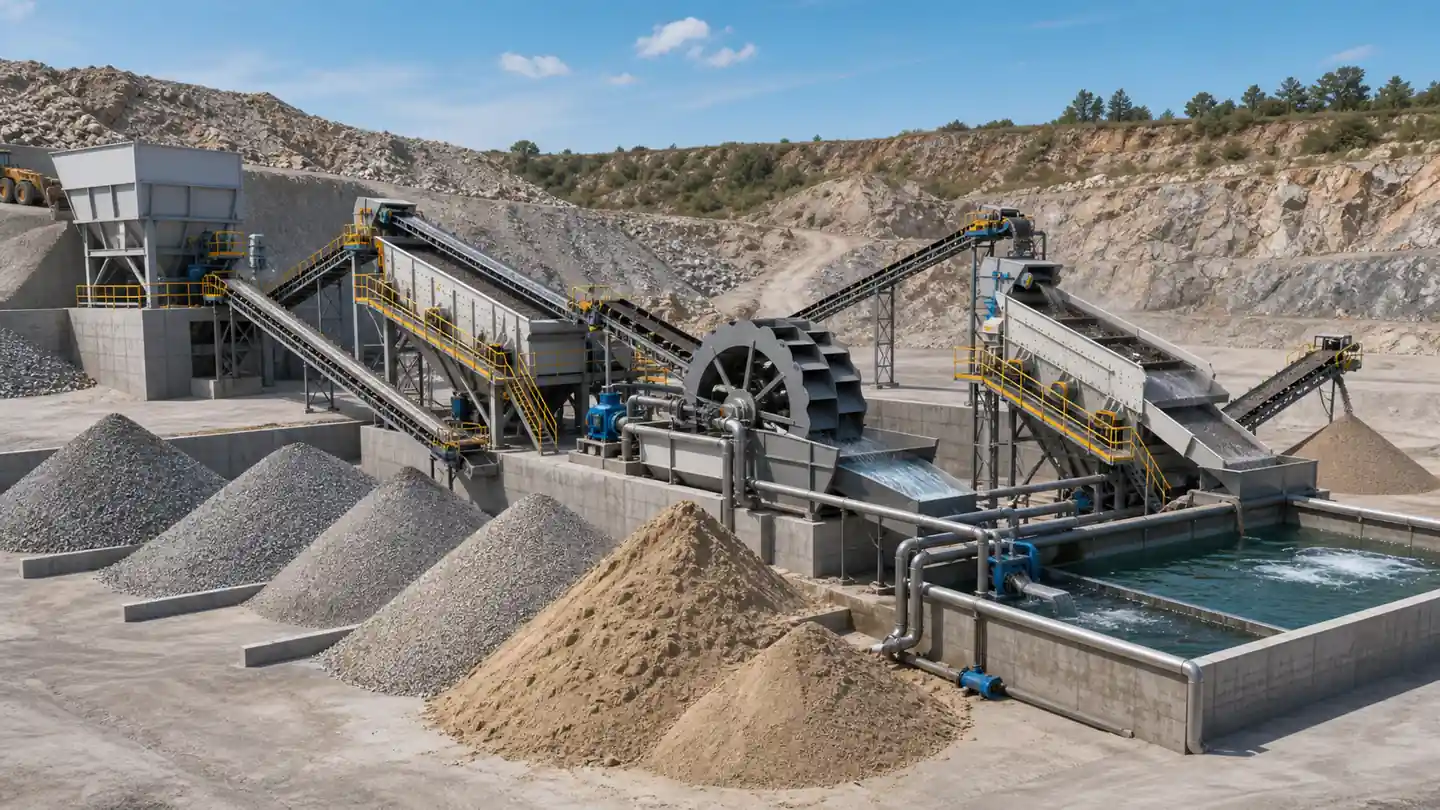
Typical Aggregate Washing and Screening Sequence
A complete aggregate line may include crushing and shaping before the washing section. The wet process itself usually begins after the plant has established a controlled feed rate and removed material that should not enter the washer. The sequence below is functional rather than universal.
| Stage | Primary Duty | Typical Equipment | Control Evidence |
|---|---|---|---|
| Feed regulation | Maintain stable solids loading and protect downstream equipment from surges | Hopper, grizzly and vibrating feeder | Feed-rate range, largest lump, bulk density, moisture and clay |
| Preliminary sizing | Remove oversize or divide material into fractions that need different treatment | Vibrating screen or another suitable sizing screen | Representative sieve analysis and product boundaries |
| Washing or scrubbing | Disperse clay, remove surface coatings and separate unwanted fine material | Sand washing equipment, scrubber or wet screen | Wash tests, clay behavior and material finer than the specified limit |
| Final classification | Create saleable coarse and fine product fractions | Sizing screen and hydraulic classifier where required | Product gradation and size-by-size mass balance |
| Fine recovery and dewatering | Retain suitable fine material and reduce free water before conveying | Fine-material recovery and dewatering equipment selected by testwork | Overflow solids, fine-product target and discharge moisture behavior |
| Water and solids management | Separate settled solids, provide return water and manage process losses | Sumps, pumps, settling or thickening systems and engineered storage | Water balance, solids balance and applicable discharge requirements |
| Product stockpiling | Keep finished fractions separate and limit segregation or moisture variation | Conveyors, stackers and drained stockpile areas | Stockpile samples, moisture checks and product dispatch plan |
Should Screening Come Before or After Washing?
The answer depends on where unwanted material occurs. A dry preliminary screen is useful when a clear coarse fraction already meets its cleanliness requirement or when oversize must return to a crusher. Wet screening becomes relevant when water sprays are needed to remove adhering fines while the deck separates products. A washer after screening can focus water and mechanical action on a selected sand fraction.
One plant can use more than one arrangement. For example, a preliminary screen may remove coarse products, while the remaining sand enters washing and final wet classification. The process should follow the measured feed and product balance rather than a fixed equipment order.
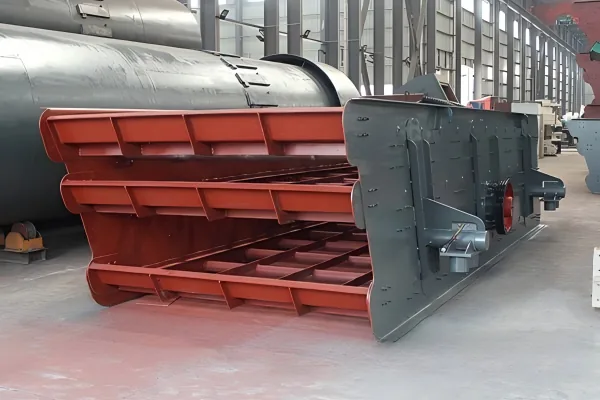
What the Screening Section Must Control
Screening establishes product boundaries and determines the solids load sent to washing. Aperture is only one variable. Feed distribution, deck area, inclination, motion, moisture, particle shape and the proportion close to the separation size all affect the split. Worn or damaged media can also send coarse particles into an undersize product.
The screen should receive material across the usable deck width instead of in one concentrated stream. Stable feed depth supports particle stratification and gives undersize repeated opportunities to reach an opening. Where spray water is used, the piping and nozzle arrangement should wet the bed evenly without creating uncontrolled slurry bypass.
Routine product samples should be compared with screen-feed samples. This shows whether a change comes from the screen, an upstream crusher or a change in source material. The stationary crushing equipment range and VSI sand-making stage must therefore be evaluated together with final screening instead of as isolated machines.
What the Washing Section Must Control
Washing should remove material that prevents the aggregate from meeting its intended specification, not indiscriminately remove every fine particle. The plant must distinguish dispersible clay and unwanted coatings from a fine aggregate fraction that may still be part of the saleable product.
Feed concentration and water distribution determine whether particles can separate from clay and from each other. Too little washing action can leave coatings or agglomerates. Excessive water or uncontrolled overflow can carry useful fine sand away. Wheel-type equipment lifts washed material from the water zone and allows part of the free water to drain before discharge, but actual product moisture also depends on particle size, drainage time and downstream dewatering.
Clay behavior varies by source and weather condition. A simple rinse may be sufficient for loose dust, whereas plastic or strongly adhering clay may require different preparation. Representative wash testing is therefore more reliable than classifying all feed solely by total fines percentage.

Fine Sand Recovery, Classification and Dewatering
Overflow from a washer can contain water, dispersed clay and fine aggregate. Recovering every solid is not automatically correct because the desired product limit may require part of the fine fraction to leave the saleable sand. The process must distinguish recoverable product from material that should report to settling or residue management.
Hydraulic classification uses particle settling behavior, which depends on size, density, shape and fluid conditions. A classifier or hydrocyclone can create a controlled split only when feed pressure, solids concentration and flow remain within the selected operating basis. The recovered fraction may then require a dewatering screen or another drainage stage before stockpiling.
Samples should cover feed, washed product, overflow, recovered fines and final residue. A size-by-size mass balance shows whether saleable fine material is being lost, whether clay is returning with recovered sand and whether changes in water rate merely shift material between streams.
Equipment Interfaces and Common Process Problems
| Observed Problem | Possible Process Causes | Evidence to Check | Relevant Interface |
|---|---|---|---|
| Product remains dirty | Incomplete clay dispersion, uneven water distribution or excessive feed loading | Feed and product wash tests, clay condition and solids rate | Feeder 鈫?washer or wet screen |
| Fine sand in overflow | Broad feed size, unsuitable classification, high water flow or unstable solids concentration | Overflow sieve analysis and water/solids balance | Washer 鈫?classifier 鈫?recovery stage |
| Coarse particles in fine product | Worn screen media, damaged panels, overloaded deck or bypass around the screen | Deck inspection and size analysis of each screen product | Screen 鈫?product conveyor |
| Variable product moisture | Feed swings, inadequate drainage, changing fine content or wet stockpile management | Moisture by stream, dewatering condition and stockpile sampling | Dewatering 鈫?conveyor 鈫?stockpile |
| Settling system overload | More fine solids than the design basis, poor return-water control or uncontrolled stormwater entry | Flow measurement, suspended solids and basin inventory | Plant drains 鈫?settling 鈫?return water |
| Finished gradation varies | Source changes, screen performance, stockpile segregation or inconsistent blending | Synchronized feed, product and stockpile sieve analyses | Source 鈫?plant 鈫?finished stockpile |
Water Balance and Return-Water System
A wet aggregate plant needs a defined water balance covering new water, screen sprays, washing, classification, product moisture, evaporation, settled solids and return water. Pumps and sumps should be based on both normal flow and credible variations instead of one average figure.
Settling or thickening removes suspended solids before water returns to the process. Return water quality can influence washing and classification when accumulated fines change slurry behavior. The solids removed from the water circuit also require a handling, dewatering or storage route.
The EPA mineral-mining wastewater guidance identifies wash water, scrubber water, mine drainage and stormwater as relevant facility streams in the United States. Projects in every market must verify their own permits and discharge rules; a closed or partly recycled process-water circuit does not remove that obligation.
Product Sampling and Stockpile Control
Plant settings cannot be controlled from visual appearance alone. Representative sieve analysis, washed-fines testing where specified, moisture and source observations connect equipment operation with the required aggregate product. Sampling points should cover incoming feed, each screen product, washed sand, overflow or recovered fines and finished stockpiles.
Finished aggregate can change after leaving the plant. High drops, uncontrolled conical stockpiles and repeated dozer or loader movement can cause size segregation. Uneven drainage can also create moisture differences across the stockpile. Separate, drained product areas and controlled stacking preserve the gradation produced by the screen.
When the washing section forms part of a complete quarry crushing and aggregate plant, production records should connect crusher settings, screen products, water conditions and stockpile tests. A mobile screening plant may serve temporary or distributed sizing duties, but its product and feed data require the same control logic.
Project Data Needed Before Equipment Selection
- Source material: natural sand and gravel, crushed stone, manufactured sand or a blended feed.
- Representative gradation: feed and required product fractions across expected source variation.
- Fines and clay: material finer than the specified limit, coating behavior, clay plasticity and wash response.
- Physical properties: largest lump, bulk density, particle shape, moisture and abrasion where relevant.
- Production basis: dry feed range, operating hours, surge requirement and planned product split.
- Water conditions: available supply, water quality, seasonal limits, return-water target and discharge obligations.
- Product requirements: gradation, cleanliness, moisture, stockpile capacity and downstream application.
- Site interfaces: elevation, footprint, conveyors, drainage, settling area, power and access for maintenance.
Sand Washing and Screening Flow FAQ
What is the usual sequence for aggregate screening and washing?
A common sequence is controlled feeding, preliminary sizing, washing or scrubbing, final classification, dewatering and separate stockpiling. The order changes with feed clay, source gradation, required products and water conditions.
Should aggregate be screened before or after washing?
Either arrangement can be valid. Preliminary dry screening can remove clean oversize before washing, while wet screening can combine sizing and rinsing. Representative feed tests and product specifications determine the sequence.
Why can a washing plant lose fine sand?
Fine particles can leave with overflow when classification or water flow does not match their settling behavior. Feed-size distribution, solids concentration, clay dispersion and fine-material recovery equipment must be evaluated together.
Can wash water be recycled in an aggregate plant?
Yes, where the process and local requirements allow it. Settling, thickening or other solids-removal stages can prepare return water, but the balance must account for solids buildup, water quality, product moisture and unavoidable losses.
What data are needed to design a washing and screening flow?
Projects need representative gradation, material finer than the specified sieve, clay and coating behavior, moisture, bulk density, required product fractions, dry feed range, available water, site layout and discharge requirements.