
Ore liberation grinding size describes the particle-size range at which valuable mineral grains become sufficiently released or exposed from surrounding gangue for effective beneficiation. Grinding reduces composite ore particles, while classification controls which size fractions leave the circuit. The suitable target depends on mineral texture and the response of flotation, magnetic separation, gravity concentration or another selected process.
What Is Mineral Liberation?
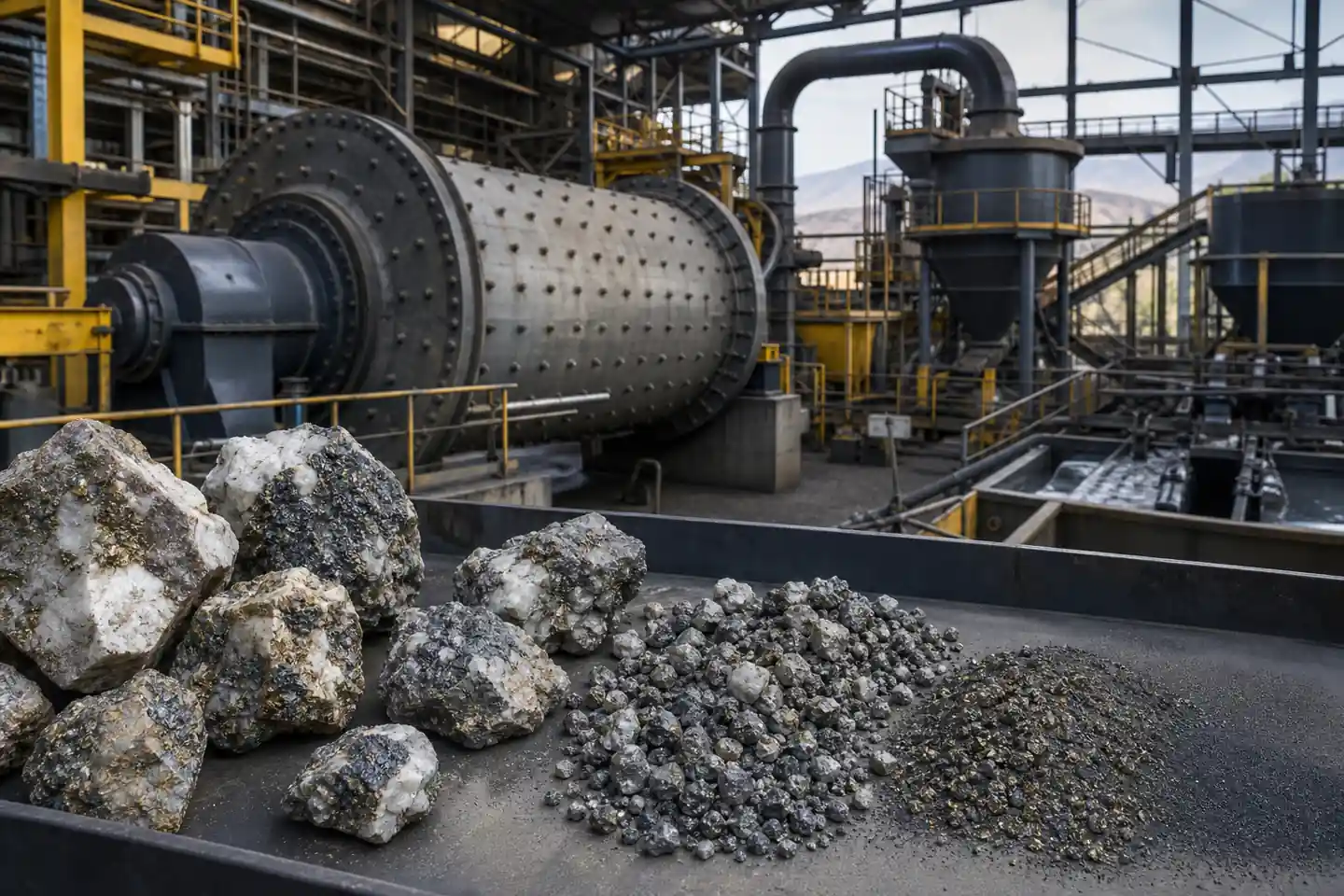
Mined ore commonly contains valuable minerals intergrown with waste rock or other minerals. A single particle may contain one mineral phase or several phases locked together. Mineral liberation occurs when crushing and grinding create particles in which the valuable mineral is physically separated from gangue or sufficiently exposed for the chosen separation method.
Liberation is therefore a mineralogical property, not simply a screen size. Two particles with the same dimensions can have different compositions. One may consist mostly of a valuable mineral, while another can remain a composite particle with substantial gangue attached.
Locked, Associated and Liberated Particles
- Locked particles: valuable mineral remains enclosed within gangue, which limits the ability of separation equipment to act on it.
- Associated particles: valuable mineral is partly exposed but remains attached to another mineral phase.
- Liberated particles: the valuable mineral has been physically released or presents sufficient exposed surface for the selected process.
A grinding product normally contains a mixture of these particle types across several size fractions. Consequently, process evaluation should examine liberation by particle size rather than use one average fineness value as a complete description.
How Grinding Size Affects Ore Liberation
Grinding creates new particle surfaces and can break composite particles along or across mineral boundaries. As the product becomes finer, more locked grains may become exposed. However, different ores respond differently because mineral grain size, texture, hardness and fracture behavior vary.
Coarsely disseminated ore may release useful mineral grains after relatively limited size reduction. Finely intergrown or complex ore can require additional grinding or staged regrinding. For this reason, the target should reflect actual ore texture and separation test results.
Selecting a Target Grinding Size
The target grinding size is the product-size distribution selected for the next beneficiation stage. It should provide sufficient mineral exposure while avoiding unnecessary reduction of particles that already meet the process requirement. In practice, the target is a distribution, not a single identical particle dimension.
Laboratory grinding tests can produce samples at several size ranges. Mineralogical analysis, size-by-size assays and separation tests then show how liberation and process response change. The selected grinding point should balance liberation, downstream selectivity, material handling and the duty placed on the grinding circuit.
Key principle: grind to the coarsest practical product that supports the required separation result for the tested ore. Additional fineness should have a demonstrated process purpose.
Grinding and Classification Control
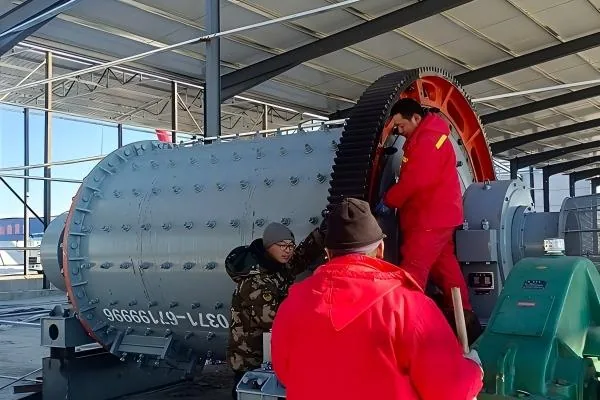
Grinding mills reduce the crushed feed, while classification separates suitable fine material from particles that require more size reduction. A ball mill can operate with hydrocyclones or mechanical classifiers in a closed circuit. In selected duties, a rod mill can provide controlled coarse grinding before later stages.
Stable feeding, mill condition, water balance, pumping and classifier operation all influence the final size distribution. If the classifier returns suitable fine material unnecessarily, the circuit can create excess fines. If it allows excessive coarse composite material to advance, downstream equipment receives insufficiently liberated feed.
Liberation Requirements for Beneficiation Methods
| Beneficiation Method | Connection to Liberation | Particle-Size Considerations | Process Evaluation |
|---|---|---|---|
| Flotation | Valuable mineral surfaces need sufficient exposure for selective reagent and bubble interaction. | Coarse locked particles and excessive fine material can respond differently in the flotation circuit. | Mineralogy, surface exposure, size-by-size response and flotation testwork. |
| Magnetic separation | Magnetic mineral grains need adequate release from non-magnetic gangue for selective separation. | The suitable range depends on mineral association, magnetic behavior and separator duty. | Liberation by size, magnetic response and staged separation tests. |
| Gravity concentration | Density differences become useful when valuable and gangue minerals are sufficiently separated. | Equipment normally works within defined size ranges because settling behavior changes with particle size. | Mineral density, size distribution, liberation and gravity testwork. |
| Leaching | Size reduction can expose mineral surfaces to the selected leaching environment. | Surface area, permeability, mineral locking and excessive fines can influence material behavior. | Mineralogy, chemistry, grind response and metallurgical testing. |
Vanore Mining supplies related mineral processing equipment for grinding, classification and suitable downstream separation routes.
Undergrinding and Overgrinding
| Grinding Condition | Particle Condition | Possible Downstream Effect | Control Direction |
|---|---|---|---|
| Undergrinding | A larger share of valuable mineral remains locked in composite particles. | Separation equipment may reject valuable mineral with gangue or produce less selective streams. | Review feed size, mill duty, classification and staged grinding requirements. |
| Suitable grinding | The product provides adequate liberation and an appropriate size distribution for the selected method. | The beneficiation stage receives process-ready feed under the tested conditions. | Maintain stable feeding, mill operation, water balance and classification. |
| Overgrinding | Material already suitable for separation receives unnecessary additional size reduction. | Excess fines can alter slurry handling, classification, dewatering or separation behavior. | Remove suitable product promptly and return only material that requires further grinding. |
Staged Grinding and Regrinding
Some ores do not need the same grinding intensity for every particle. A staged circuit can remove material that is ready for separation and direct selected middlings or coarse fractions to additional grinding. Regrinding can then focus on streams where valuable mineral remains associated with gangue.
This arrangement can connect primary grinding, classification, initial separation and a later regrind stage. The exact route depends on ore mineralogy and testwork. The previously published wet grinding process guide explains how slurry moves through mill, pump and classifier equipment.

Ore Testing and Equipment Configuration
Representative ore testing should identify valuable minerals, gangue minerals, grain size, mineral associations and liberation behavior across particle-size fractions. Grinding tests then show how the material responds to selected equipment and operating conditions. Finally, beneficiation tests connect the grinding product with actual separation performance.
Vanore Mining matches grinding and classification equipment around the feed, liberation target and downstream plant role. The review can include mill type, classifier arrangement, slurry transfer, staged grinding, flotation equipment or a wet magnetic separator according to the selected process.
Ore Liberation Grinding Size FAQ
What is mineral liberation?
Mineral liberation is the physical release or sufficient exposure of valuable mineral grains from surrounding gangue. Crushing and grinding create smaller particles so separation equipment can act on useful differences between minerals.
Is a finer grinding size always better?
No. Additional grinding can improve liberation for some locked particles, but excessive fine material may create difficult downstream handling or separation conditions. Mineralogy and beneficiation testwork should establish the suitable target.
How is a target grinding size selected?
A target grinding size is selected by comparing ore texture, liberation by size, grinding response and downstream separation results. The chosen point should support the required process result without unnecessary size reduction.
Why does classification matter for mineral liberation?
Classification removes suitable fine material from the grinding loop and returns coarse particles for additional reduction. This controls the size distribution presented to downstream beneficiation equipment.