
Crushing plant dust control works best when the plant contains dust at its source, captures airborne material through suitable extraction, and uses controlled suppression where water will not damage the process. Layout planning connects these methods across hoppers, crushers, screens, conveyors and stockpile points.
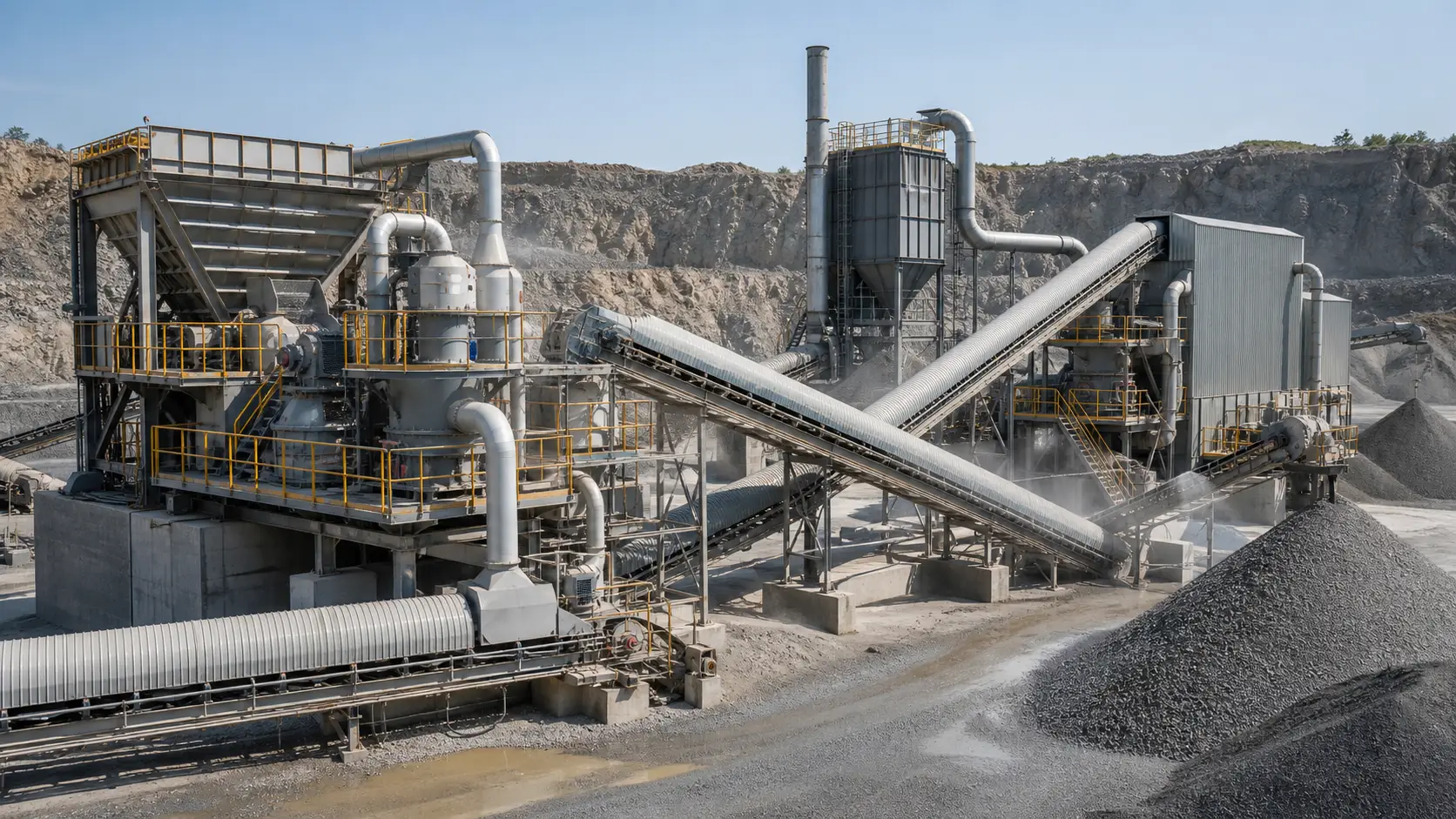
Where Dust Forms in a Crushing Plant
Dust forms whenever dry stone or ore falls, breaks, changes direction or separates by size. The most visible sources are often the feed hopper and crusher discharge. However, conveyor transfers, screen decks, return belts and stockpile discharge can release dust repeatedly throughout the operating day. For that reason, effective control starts with a plant-wide source map rather than one machine.
A vibrating feeder can support controlled material entry before primary crushing. Stable feeding reduces sudden surges and helps the enclosure or extraction point handle a more consistent material flow. Similarly, shorter drop heights and properly aligned chutes reduce unnecessary agitation at conveyor transfers.
Three Engineering Approaches to Crushing Plant Dust Control
Containment keeps dust close to the point where it forms. Hoods, skirts, covered conveyors and enclosed screens reduce the open area through which dust can escape. The enclosure still needs access for inspection and component replacement.
Collection uses local exhaust to draw dusty air from an enclosure through ducting to filters. A properly matched industrial dust collector can serve selected crusher, screen and transfer locations when airflow, dust loading, duct routing and filter maintenance match the process.
Suppression applies water spray or mist near the point of generation. It can reduce airborne particles at feed, crushing, screening and discharge locations. Nevertheless, water use must suit the material, climate and downstream product because excess moisture can affect screening, conveying or finished aggregate handling.

Dust-Control Equipment and Plant Roles
No single device controls every source. Instead, the system combines source enclosures, duct connections, filters, fans, spray equipment and cleanup access around the actual material path. The table below shows the role of each element without prescribing one universal configuration.
| Plant Location | Typical Dust Source | Possible Engineering Control | Layout Requirement |
|---|---|---|---|
| Feed hopper | Truck dumping and falling dry feed | Partial enclosure, extraction hood or controlled spray | Allow vehicle clearance, hopper access and drainage where water is used |
| Crusher inlet and discharge | Impact, compression and material release | Enclosure with local exhaust or spray at selected points | Keep maintenance doors, wear-part access and discharge flow clear |
| Conveyor transfer | Free fall, belt speed change and poor chute alignment | Transfer enclosure, skirt sealing and extraction connection | Reduce drop height and provide cleanout access below the chute |
| Vibrating screen | Particle separation across moving decks | Screen enclosure with duct extraction or suitable mist | Preserve deck access, screen movement and mesh replacement space |
| Stockpile discharge | Falling finished aggregate and wind exposure | Reduced drop, telescopic chute or selected suppression | Coordinate conveyor height, pile movement and vehicle routes |
Screening and Transfer-Point Layout
A vibrating screen creates a difficult control point because material moves across one or more decks while fine particles separate. A screen enclosure must allow the machine to move freely and must not obstruct inspection, mesh changes or discharge chutes. Extraction connections should draw from the enclosure without pulling excessive product into the duct.
Transfer points deserve equal attention. When material leaves one belt and lands on another, the receiving chute should guide the stream in the belt direction. This reduces turbulence and spillage. In addition, sufficient skirt length allows material to settle before the belt exits the enclosed section.

Layout Factors That Affect Collection Performance
- Duct length and routing: compact routes reduce unnecessary bends and leave room for inspection.
- Access: filters, hoods, chutes and screen decks need practical maintenance clearance.
- Air balance: each extraction branch must match the enclosure and system airflow.
- Material properties: moisture, fines content, abrasiveness and silica content affect control selection.
- Water conditions: water availability, drainage, freezing risk and product moisture limits affect suppression.
- Cleanup: floors and platforms need safe access so settled material does not accumulate around equipment.
These requirements should be considered alongside the process flow of stationary crushing equipment. Retrofitting can improve an existing plant, but early coordination usually provides better space for ducts, filters, water lines, access platforms and cleanout points.
Operation, Inspection and Performance Review
Engineering controls need routine inspection. Damaged skirts, open access doors, blocked spray nozzles, leaking ducts or overloaded filters can reduce performance even when the original layout is sound. Plant teams should monitor visible release points, pressure conditions, filter cleaning, water delivery and material buildup according to the installed system.
Dust exposure and environmental requirements vary by material and jurisdiction. Therefore, site-specific measurement and qualified health, safety and environmental review remain necessary. Equipment layout information supports engineering discussion, but it does not replace local risk assessment, exposure monitoring or regulatory approval.
Information for Plant Equipment Matching
Vanore Mining can discuss equipment connections around crushing, screening, conveying and dust collection. Useful project information includes the process flow, material type, fines content, moisture condition, hourly material flow, transfer locations, available plant space, water conditions and existing control equipment. Project teams can contact Vanore Mining to review the machine arrangement and auxiliary-equipment scope.
FAQ
Where does dust commonly form in a crushing plant?
Common dust-generation points include truck dumping, feed hoppers, crusher inlets and discharges, vibrating screens, conveyor transfers, stockpile discharge and vehicle routes.
What are the main crushing plant dust-control methods?
The main engineering approaches are containing dust with enclosures, collecting it through local exhaust and filtration, and suppressing it with controlled water spray or mist where material and climate conditions allow.
Why must dust control be included in plant layout planning?
Early layout planning provides space for enclosures, ducts, filters, water lines, maintenance access and material cleanup while reducing long unsupported duct runs and uncontrolled transfer drops.
Engineering guidance consulted: NIOSH crushing-facility dust controls, HSE quarry dust guidance, and WorkSafe Queensland crushing-machine controls.