
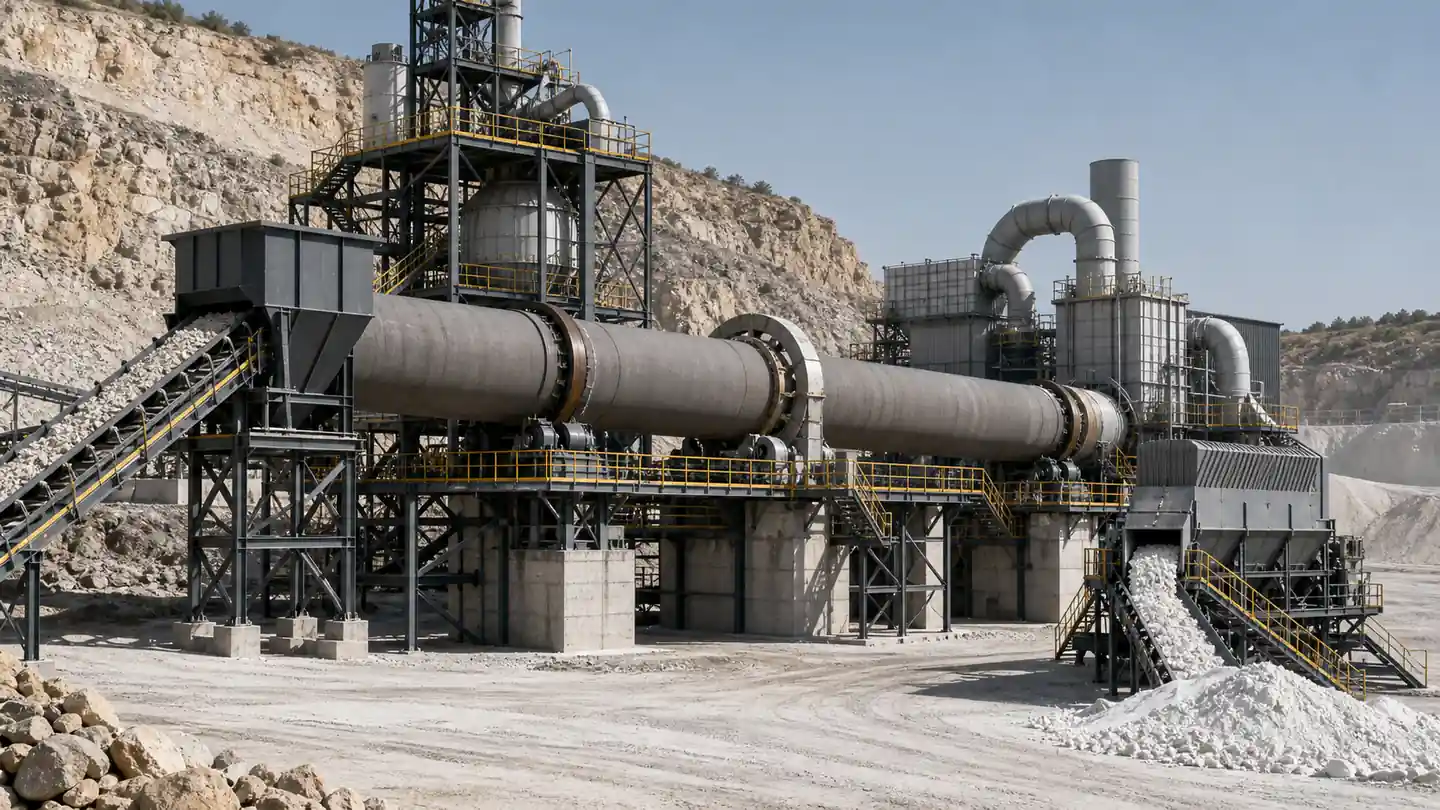
The lime calcination kiln process converts prepared limestone into quicklime by supplying enough heat to decompose calcium carbonate. 窑炉必须通过其横截面加热每块石头, 除去释放的二氧化碳, 保护所需的生石灰结构,然后与受控冷却和产品处理连接. 石灰石化学, 粒径, 气体流量, heat distribution and residence time therefore work as one process rather than independent settings.
Why Calcination Quality Matters
Quicklime is not simply hot limestone. Calcination changes the carbonate mineral into an oxide and creates a porous product structure. The degree of conversion and the thermal history influence reactivity, strength, fines generation and performance in downstream use. 因此, the kiln must balance conversion with product condition.
The US EPA definition of lime manufacturing identifies kilns that produce lime from limestone or dolomite by calcination. This clear entity relationship is important: limestone is the feed, calcination is the transformation, and quicklime or dolomitic lime is the kiln product.
Incomplete conversion leaves a carbonate core commonly described as underburned material. By contrast, excessive thermal exposure can sinter the lime structure and lower reactivity. Stable production therefore requires suitable stone preparation, uniform heat transfer and a kiln system matched to the required product.
Complete Lime Production Flow
A production line begins before the kiln. Quarry stone must be crushed, screened and separated into a size range suitable for the selected kiln. The prepared stone then enters the thermal system, passes through preheating and calcining, leaves as hot quicklime, and moves into cooling and product preparation.
The US EPA AP-42 lime manufacturing source materials cover the integrated manufacturing route and its main process stages. In a complete plant, calcination also connects with storage, 喂养, combustion, exhaust treatment, 筛选, crushing or grinding and, when required, hydration.
- Stone preparation: crush and screen limestone to the kiln feed specification.
- Controlled feeding: meter prepared stone into the kiln without unstable surges.
- Preheating: recover heat from kiln exhaust to raise feed temperature.
- Calcining: transfer reaction heat through the stone and release carbon dioxide.
- 冷却: lower quicklime temperature and recover useful heat into combustion air where the design allows.
- Product preparation: 屏幕, crush, grind, store or hydrate the lime according to the required product.
Process Stages and Kiln Equipment Roles
| Stage | Material Change | Equipment Role | Key Variables | Common Risk |
|---|---|---|---|---|
| Crushing and sizing | Large quarry stone becomes controlled kiln feed. | 破碎机, screen and storage prepare a stable size range. | Chemistry, top size, fines, size distribution and contamination | Mixed sizes create uneven gas flow and conversion. |
| 喂养 | Stone enters the kiln at a controlled solids rate. | Bin, gate and feeder maintain the selected loading pattern. | 进给速度, segregation, moisture and seal condition | Surges disturb residence and thermal balance. |
| Preheating | Stone temperature rises before major decomposition. | Preheater or upper kiln zone recovers exhaust heat. | Gas temperature, contact, stone size and pressure drop | Poor heat recovery raises downstream kiln duty. |
| Calcining | Calcium carbonate decomposes into calcium oxide and carbon dioxide. | Kiln, burner or heat system and refractory maintain the reaction environment. | Heat profile, gas composition, residence, stone core temperature and CO2 removal | Underburning, overburning or nonuniform product |
| 冷却 | Hot quicklime reaches a manageable discharge condition. | Cooler transfers sensible heat to cooling or combustion air. | Air distribution, product bed, discharge rate and final temperature | Lost heat recovery or hot downstream material |
| Product handling | Quicklime reaches the required size or hydrated form. | Conveyor, 屏幕, crusher, mill, separator, storage or hydrator completes the product route. | 产品尺寸, reactivity, fines, moisture exclusion and storage time | Dust, hydration from uncontrolled moisture or product segregation |
Limestone Preparation Controls Kiln Stability
Stone quality begins with geology and quarry control. High-calcium limestone and dolomitic stone do not produce the same oxide composition. Silica, alumina, iron compounds and other constituents may affect product specification, melting behavior, deposits or downstream use. Representative chemical analysis must therefore guide the plant design.
Size distribution matters because heat must penetrate from the stone surface toward the core. Small pieces heat quickly and can create fines or excessive pressure drop, while large pieces need more time for complete conversion. A narrow, stable feed range supports more uniform gas movement and heat exposure, especially in a shaft system.
一个 controlled limestone feeder helps maintain the solids rate, but the storage and handling layout must also prevent segregation. The equipment route should preserve the prepared size distribution from screen to kiln inlet.
Preheating, Calcining and Cooling Zones
Preheating Zone
Hot exhaust gas transfers sensible heat to incoming stone. Effective preheating reduces the additional kiln duty required before decomposition and can improve system efficiency. Gas distribution, contact area and stone size determine how evenly the feed enters the reaction zone.
Calcining Zone
The stone absorbs reaction heat while carbon dioxide moves from the reaction front through the pore structure and into the process gas. Heat transfer, time and gas conditions must support conversion through the stone without excessive sintering.
Cooling Zone
Cooling air lowers the quicklime temperature and may return recovered heat to combustion. Stable cooling protects downstream conveyors and storage while supporting the total heat balance.
Gas and Dust Route
Exhaust carries carbon dioxide, combustion products, heat and entrained dust. Ducts, fans and collection equipment must maintain the required kiln pressure while controlling material loss and emissions.
Underburned, Correctly Calcined and Overburned Lime
| Product Condition | Process Meaning | Possible Causes | Plant Review |
|---|---|---|---|
| Underburned | A carbonate core or incompletely converted fraction remains. | Oversized stone, insufficient heat transfer, short effective residence, excessive feed or poor gas distribution | Feed sizing, loading, heat profile, gas flow and representative product testing |
| Correctly calcined | Conversion and product structure meet the defined lime specification. | Balanced feed, heat, 气体流量, residence and cooling | Maintain stable operating bands and verify product quality trends. |
| Overburned | Excessive thermal exposure can densify or sinter the product and reduce reactivity. | Excess heat, long exposure, small stone fraction or nonuniform material movement | Stone distribution, temperature profile, residence and discharge stability |
Operators cannot diagnose these conditions from one temperature reading. They need time-aligned feed, fuel, pressure, gas and product-quality trends plus representative samples. Site procedures must govern burner changes, kiln entry, refractory inspection and work around hot quicklime.
Rotary and Vertical Lime Kiln Roles
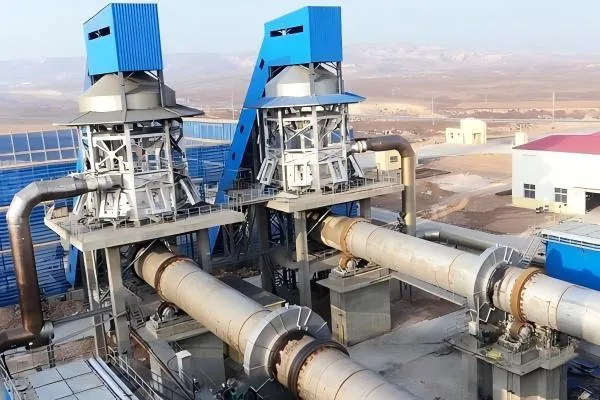
一个 rotary lime kiln moves stone through an inclined rotating refractory-lined shell. Rotation promotes material movement and mixing, while the plant can combine the kiln with a stone preheater and product cooler. Rotary systems can support varied lime duties, but the final configuration depends on stone properties, fuel, product requirement and gas handling.
一个 vertical lime kiln moves prepared stone downward through a shaft while gas passes through the bed. This arrangement relies strongly on controlled particle size, bed permeability and even gas distribution. Different shaft designs recover heat and arrange combustion in different ways, so the term vertical kiln does not describe one universal process.
Neither route is automatically superior for every project. Selection must consider limestone chemistry and size, required lime properties, 生产基础, fuel availability, energy objectives, emissions requirements and site layout. The broader guide to the difference between rotary kilns and rotary dryers explains why calcination requires a reaction-focused kiln rather than ordinary moisture-removal equipment.

Supporting Equipment Around the Lime Kiln
The kiln is the central reactor, but the production line determines whether it receives stable feed and discharges a controlled product. Crushing and screening prepare the stone. Storage and feeding regulate flow. The thermal system supplies heat, while seals, ducts and fans control gas movement. A correctly selected lime plant dust collector manages entrained particles according to gas temperature and dust properties.
After cooling, quicklime may move through screening, crushing or grinding. Where the product route requires fine material classification, a lime powder separator can serve the downstream powder circuit. Hydrated lime production adds a separate controlled reaction with water and must not be treated as part of kiln calcination.
The Vanore kiln and dryer equipment category connects individual kiln products with feeders, coolers, dust control and material-handling equipment used in complete mineral and thermal processing lines.
Key Project Inputs for Kiln Configuration
- Stone chemistry: calcium carbonate, magnesium carbonate and relevant impurity profile.
- Physical feed: size distribution, bulk density, strength, fines, moisture and expected variation.
- Required product: quicklime type, size, conversion, reactivity and downstream use.
- Production basis: dry feed rate, operating schedule and acceptable turndown.
- Thermal basis: available fuel, combustion-air conditions, heat-recovery objectives and process atmosphere.
- Plant integration: 压碎, 筛选, storage, 喂养, 冷却, 集尘, product handling and available space.
Representative material tests and a project heat-and-mass balance should define the equipment arrangement. General process descriptions cannot replace kiln-specific engineering, local emissions review or the site’s combustion and safety procedures.
Lime Calcination Kiln Process FAQ
What happens during lime calcination?
Heat decomposes calcium carbonate in limestone into calcium oxide, called quicklime, and carbon dioxide. The kiln must provide sufficient heat and time while allowing released carbon dioxide to leave the stone and process gas.
What are the main zones in a lime kiln?
A continuous lime kiln generally includes preheating, calcining and cooling functions. Exhaust gas preheats incoming stone, the calcining zone drives carbonate decomposition, and cooling air lowers product temperature while recovering useful heat.
Why is limestone size important for calcination?
Stone size affects gas flow, heat penetration and residence requirements. A wide or unstable size distribution can cause small particles to overheat while large pieces remain incompletely calcined.
What causes underburned or overburned lime?
Underburning can result from insufficient heat transfer or time, oversized stone, excessive feed or poor gas distribution. Overburning can result from excessive thermal exposure and may reduce quicklime reactivity.
How do rotary and vertical lime kilns differ?
A rotary kiln moves stone through an inclined rotating shell and offers broad material movement and process flexibility. A vertical kiln moves sized stone downward through a shaft and depends strongly on feed-size consistency and gas distribution. Selection requires material and product data.