
Grinding mill feed size control keeps the particle-size distribution and material flow entering a mill within a range suited to the equipment and ore. Stable feed supports consistent mill loading, while coordinated classification keeps the finished product aligned with the next mineral processing stage. Effective control therefore begins before the mill and continues through the complete grinding circuit.
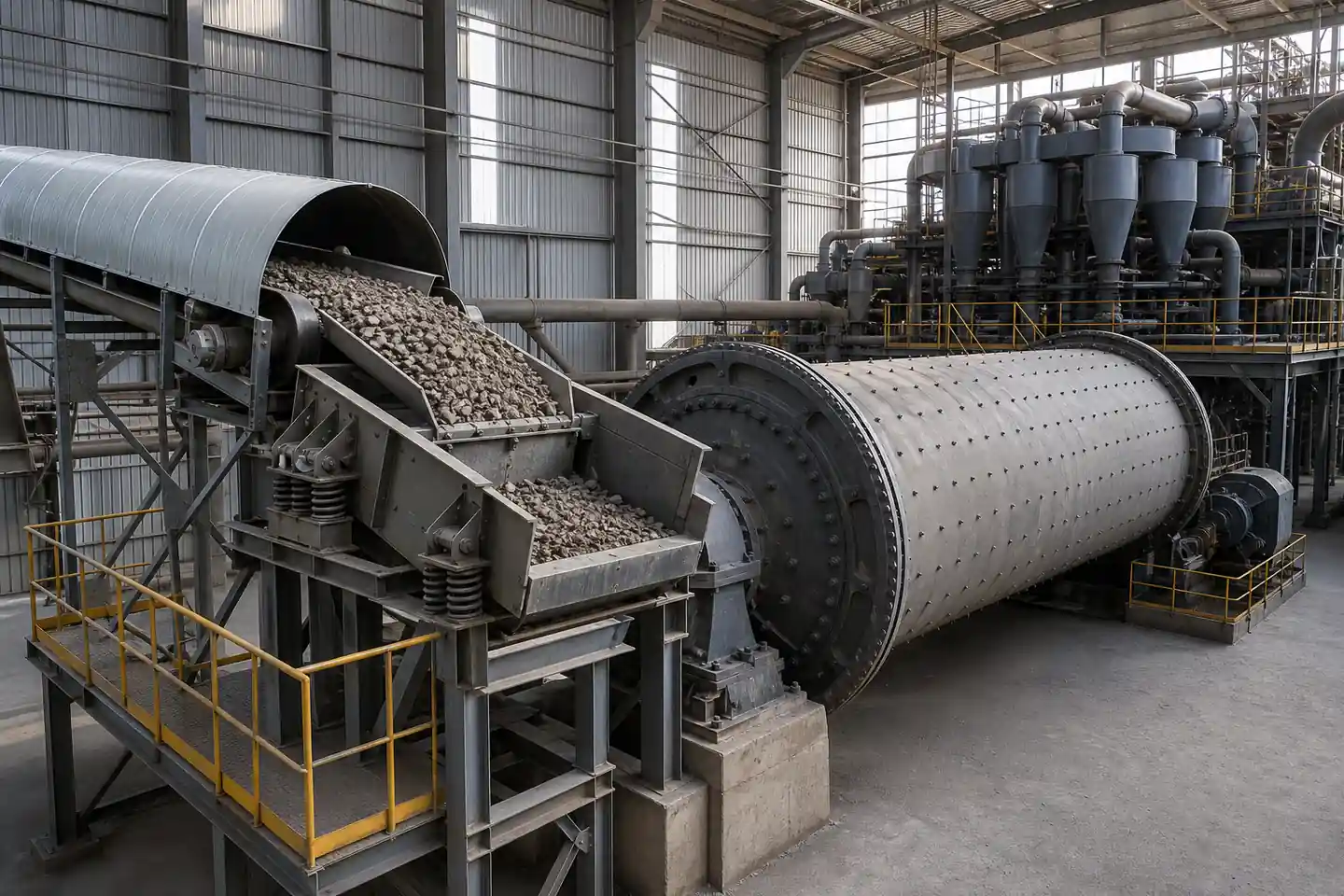
What Does Grinding Mill Feed Size Control Include?
Feed control covers more than stopping occasional oversized rocks. A grinding circuit receives a continuously changing mixture of coarse, intermediate and fine particles. The mill must process that distribution together with variations in ore hardness, humedad, feed rate and mineral texture.
- Tamaño superior del alimento: the largest particles presented to the mill.
- Feed size distribution: the proportion of material across the complete measured size range.
- Tasa de alimentación: the mass flow delivered to the mill over time.
- Tamaño del producto: the ground material leaving the grinding and classification circuit.
These values describe different parts of the process. Por ejemplo, a feed stream can stay below the permitted top size but still shift toward a much coarser overall distribution. Asimismo, a suitable size distribution can disturb operation when the feeder delivers it in sudden surges.
Why Feed Size Distribution Affects Stable Mill Operation
Coarse particles need sufficient impact or compressive energy for breakage, while finer particles respond more strongly to repeated contact and abrasion. A major change in the coarse-to-fine balance alters how material occupies the mill and interacts with the grinding media or ore charge.
Como resultado, feed variation can change mill power, load, sound, discharge behavior and circulating load. Ore hardness can create similar symptoms, so particle size should be evaluated together with feed rate and ore characteristics rather than treated as the only cause.
How Mill Type Changes Feed-Size Sensitivity
| Mill Type | Feed Relationship | Main Control Focus | Typical Circuit Context |
|---|---|---|---|
| AG / SAG mill | The ore charge contributes directly to grinding action, which makes the mill especially sensitive to size distribution and ore competence. | Fragmentation, stockpile blending, feeder balance, coarse fraction and pebble handling. | Primary grinding after crushing in larger mineral processing circuits. |
| molino de bolas | Steel media provide the main grinding action, but the feed must still match mill size, media arrangement and target product. | Consistent crushed feed, tasa de alimentación, media condition, water balance and classification. | Primary or secondary grinding in closed or open circuits. |
| Molino de varillas | Rod contact can provide controlled coarse grinding when feed and operating conditions match the selected duty. | Uniform feed presentation, oversize prevention and suitable discharge control. | Coarse grinding before ball milling, classification or selected beneficiation stages. |
The acceptable feed cannot be transferred from one mill type or model to another without checking the actual equipment and ore. Manufacturer data, representative samples and grinding testwork should establish the suitable operating range.
Feed Control Begins Upstream of the Mill
Stable grinding mill equipment depends on the condition of material arriving from crushing and storage. Upstream equipment should prepare a consistent stream and prevent isolated oversize pieces, long feed gaps and sudden coarse or fine surges.
Crushing and screening establish the first size range. Sin embargo, stockpiles and bins can segregate coarse and fine fractions as material moves or rests. Chute geometry, withdrawal points and feeder operation therefore influence the distribution that reaches the conveyor even when the crusher product remains unchanged.
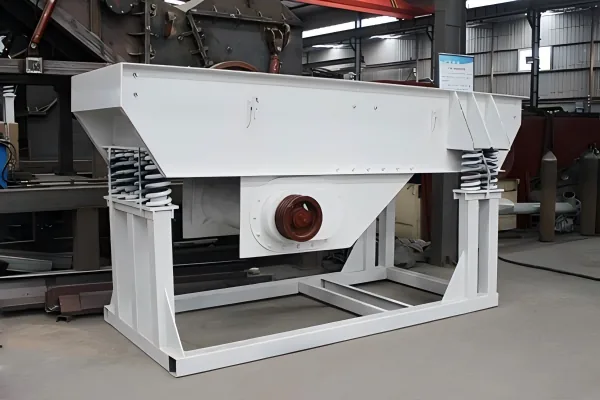
A alimentador vibratorio meters material from a hopper or bin and helps maintain continuous delivery. Feeder speed controls flow rate, while suitable hopper, liner and chute design support reliable discharge. When several feeders draw from a stockpile, their operating balance can also affect the coarse-to-fine mixture on the mill feed conveyor.
Signals That Reveal Feed-Size Disturbances
| Signal | What It Shows | Por qué es importante | Check Together With |
|---|---|---|---|
| Belt feed rate | Changes in mass flow entering the mill. | Separates a feed-rate surge from a size-distribution change. | Feeder speed, belt scale, bin level and conveyor loading. |
| Feed particle size | The coarse, intermediate and fine fractions in the incoming stream. | Identifies gradual shifts and short coarse or fine surges. | Crusher discharge, screen performance, stockpile withdrawal and sampling quality. |
| Mill power and load | How the mill responds to the combined ore, media and water condition. | Supports detection of changing internal loading or breakage behavior. | Tasa de alimentación, ore hardness, mill speed, media condition and discharge. |
| Sound or vibration | Changes in material and media interaction inside the mill. | Can provide a rapid indication of a changing charge condition. | Fuerza, load, feed size and liner condition. |
| Product size and classification | Whether the circuit is delivering the required ground product. | Connects mill response with the actual downstream requirement. | Cyclone or classifier operation, carga circulante, slurry density and water balance. |
Common Disturbances and Inspection Direction
| Observed Condition | Possible Feed-Side Cause | Other Possible Cause | Inspection Direction |
|---|---|---|---|
| Repeated load surges | Irregular feeder output or alternating coarse and fine batches. | Ore hardness variation or unstable water addition. | Compare feed rate and size trend with load, power and water flow. |
| Persistent coarse product | Coarser feed distribution or excessive feed rate for the current duty. | Media condition, classifier bypass or insufficient grinding duty. | Review crusher product, mill condition and classification together. |
| Excess fine material | A finer incoming distribution or reduced fresh feed. | Excessive retention or inefficient removal of finished product. | Check feed trend, carga circulante, classifier cut and product-size samples. |
| Feed interruptions | Bin bridging, chute blockage, feeder trips or uneven stockpile withdrawal. | Conveyor or protection-system interruption. | Inspect hopper, alimentador, chute, belt loading and interlocks before changing mill settings. |
The table identifies inspection areas rather than automatic diagnoses. Several variables can produce similar symptoms, so trend comparison and representative sampling remain important.
A Practical Feed-Control Sequence
- Define the equipment boundary. Confirm the mill type, model, drive, medios de comunicación, feed arrangement, target product and classifier duty.
- Measure the incoming distribution. Use representative belt sampling, screening analysis or suitable online measurement to track more than the largest particle.
- Stabilize material withdrawal. Check stockpile segregation, hopper flow, feeder output, chute condition and conveyor loading.
- Compare feed with mill response. Review size and feed-rate trends alongside power, load, sound, water balance and discharge behavior.
- Confirm the circuit product. Use classifier performance and final particle-size results to determine whether the complete circuit remains on target.
Feed Size, Grinding Media and Mill Loading
Ball size and media distribution should match the feed and required product. Larger grinding media provide higher impact energy for coarser particles, while smaller media create more contact points for finer grinding. A mixed charge can therefore serve a broader feed distribution when it matches the mill design and ore response.
Feed variation can also change the volume and movement of material inside the mill. Como consecuencia, tamaño de alimentación, tasa de alimentación, media condition and mill loading should be reviewed as connected variables. Changing one setting without checking the others can move the circuit away from stable operation.

Classification Must Follow the Grinding Duty
Classification removes material that meets the process size and returns coarse material for additional grinding. Hydrocyclones, mechanical classifiers or screens can perform this duty depending on the circuit. Stable mill feed supports classification, but classifier condition and water balance also determine circulating load and final product size.
The target product should match the required ore liberation and grinding size for the selected downstream method. Returning suitable fine material to the mill can promote unnecessary grinding, while allowing excessive coarse material to pass can reduce the effectiveness of later separation.
Grinding Circuit Equipment Integration
Vanore Mining supplies mills, feeders and related equipos de procesamiento de minerales for connected grinding circuits. Equipment configuration can include crushed-ore storage, controlled feeding, mill selection, discharge handling, clasificación, pumping and suitable downstream separation machines.
Project review should use representative material information and confirmed equipment requirements. This allows the feed system, grinding duty and classifier arrangement to be matched around one operating objective instead of treating each machine as an isolated unit.
Grinding Mill Feed Size Control FAQ
What is grinding mill feed size control?
Grinding mill feed size control manages the particle-size distribution and continuity of material entering a mill. It connects upstream crushing, cribado, storage and feeding with mill loading and downstream classification.
Why is feed size distribution more useful than one maximum size?
A maximum size identifies only the largest particles. The full distribution shows the balance of coarse, intermediate and fine fractions, which can influence mill loading, breakage behavior and circuit stability.
Can the same feed size be used for every grinding mill?
No. The suitable feed depends on mill type, mill dimensions, installed power, grinding media, ore hardness, humedad, target product and classification arrangement. Equipment data and testwork should define the operating range.
How does a vibrating feeder support stable mill operation?
A vibrating feeder meters material from a hopper or bin onto the mill feed conveyor. Stable feeder output reduces sudden surges and gaps, while suitable bin and chute design helps limit segregation and blockage.
Which signals help identify feed-size disturbances?
Useful signals include belt feed rate, online or sampled particle-size distribution, mill power, mill load, sound or vibration, discharge density, carga circulante, classifier performance and final product size.