
A rod mill uses long steel rods and is commonly considered for coarse grinding when limiting unwanted fines matters. A molino de bolas uses balls and is commonly used for finer grinding, often with a classifier. In a rod mill vs ball mill comparison, the deciding question is which circuit delivers the required particle-size distribution and mineral liberation at an acceptable operating cost. Neither mill is universally more efficient, and neither guarantees a particular product size without ore-specific design and testing.
The difference that matters after grinding
Two products can have the same P80 but behave differently in the next process. P80 is the particle size through which 80% of the product mass passes; it does not describe how much very fine material the product contains or how coarse the remaining fraction is. A comparison based only on P80 can therefore miss a fines problem or an oversize problem.
For a separation circuit, record the target size together with the mineral liberation requirement. For a sized industrial-mineral product, record the acceptable size band and maximum fines content. These requirements give the comparison a measurable purpose before motor size or equipment price enters the discussion.
| Criterion | Molino de varillas | molino de bolas |
|---|---|---|
| Grinding media | Long rods form the working charge. | Balls form the working charge. |
| Typical duty | Coarse grinding or an initial grinding stage. | Fine grinding or a subsequent grinding stage; some designs handle primary grinding. |
| Product distribution | Often considered where a relatively narrow distribution and reduced fines generation are useful. | Can produce a finer product; media selection and classification strongly affect the resulting distribution. |
| Circuit arrangement | May supply a downstream separation stage or another mill. | May operate in open or closed circuit, depending on the duty. |
| Selection evidence | Coarse-size grindability, product distribution and suitability of the rod charge for the feed. | Grindability over the intended size range, media requirements and classification performance. |
| Cost comparison | Compare complete circuits at the same feed, throughput and product requirement. Installed motor power alone does not establish energy use per tonne. | |
When a rod mill deserves the first trial
A rod mill merits evaluation when the required product remains relatively coarse and producing extra fines would reduce usable yield or complicate the next process. The rod charge provides a different contact arrangement from a ball charge, and rod milling is associated with a more uniform product in suitable applications. That tendency is a reason to test the ore, not a promise that slimes will disappear.
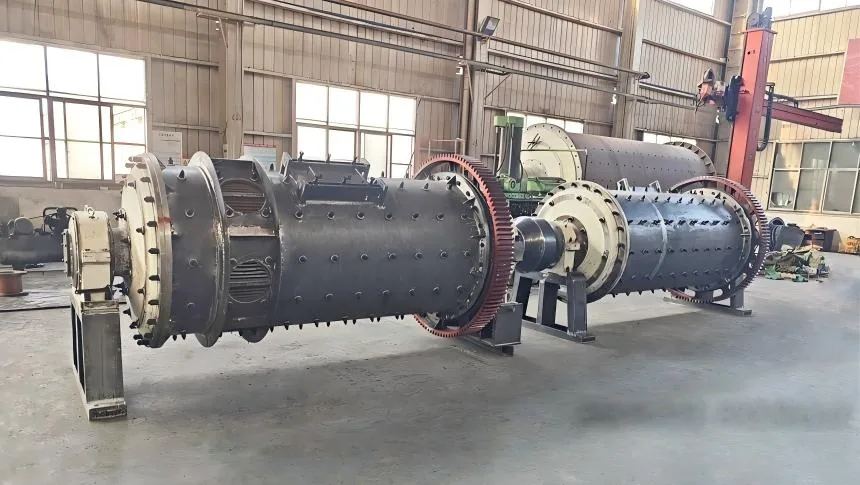
The trial should report the full size distribution, not simply whether the target P80 was reached. Compare the mass within the useful size band, the undersize fraction and any residual coarse particles. Mineralogy still matters: a coarse product that leaves valuable minerals locked in gangue may fail the separation requirement even when its size distribution looks attractive.
vanore's rod mill equipment page covers the machine range. The separate discussion of coarse-grinding applications explains where that stage fits in a processing line.
When the duty points toward a ball mill
A ball mill is commonly evaluated when further size reduction is necessary to release minerals or meet a finer product specification. Ball size distribution, revestimientos, feed characteristics and operating conditions all affect its work. A mill with a suitable media charge must still be paired with an appropriate way of removing finished material.
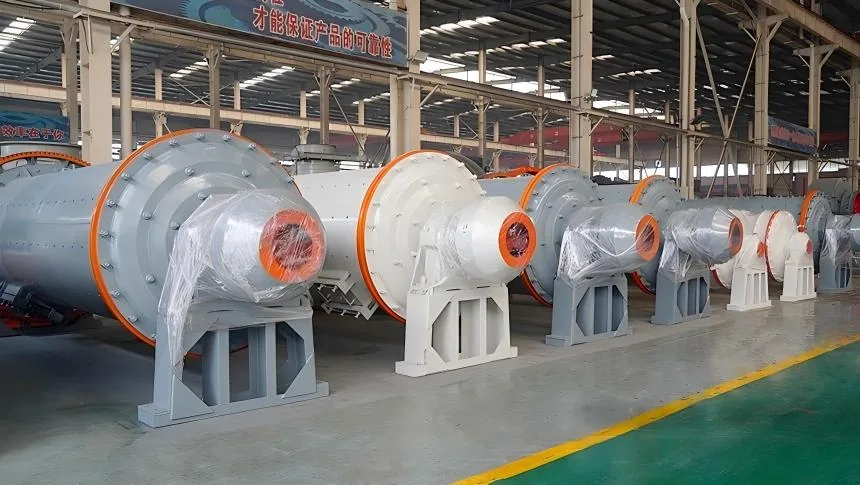
In a closed circuit, a classifier separates the mill discharge into a finished stream and material returned for more grinding. Poor separation can send already-fine particles back to the mill or allow unwanted coarse particles into the product. Before attributing the result to the mill type, examine the mill and classification circuit together.
For equipment details, see the Vanore ball mill range. A model’s nominal capacity is not a reliable comparison unless the quoted feed, ore properties and discharge requirement match the proposed duty.
Sometimes the answer is a rod mill followed by a ball mill
The two machines do not always compete for the same position. In a staged arrangement, rod milling can perform coarse reduction before ball milling completes the finer duty. The question then becomes whether dividing the work improves the complete process enough to justify another machine and its associated handling equipment.
Compare that route against a suitable single-stage alternative using the same fresh-feed rate and final product specification. Include transfer equipment, clasificación, water handling where relevant, media consumption, maintenance access and the installed footprint. A lower load on the second mill does not by itself prove lower total circuit cost.

These are configuration options, not a claim that every plant needs two grinding stages. The required liberation and grinding size should determine how far the material needs to be reduced.
The evidence that makes the comparison useful
Measure the product with a method appropriate to its size. Sieving and fine-particle methods serve different measurement ranges. El SGS overview of grain-size analysis describes methods used for coarse fractions and fine slurries. Keep the sampling and analytical method consistent when comparing trial products.
Match grindability evidence to the duty. Bond rod mill and ball mill work indices come from different test conditions. They are not interchangeable labels for one universal ore-hardness number. The ore can behave differently over coarse and fine size ranges, so the selected test and design model must represent the proposed reduction.
Compare energy at a common boundary. Use energy per tonne of fresh dry feed for circuits that meet the same product requirement. State whether the comparison includes pumps, classifiers and other auxiliaries. A smaller motor can accompany lower throughput; it is not automatically evidence of better efficiency.
Report separation or product yield alongside size. For a mineral-processing trial, compare liberation and the relevant downstream test results. For a sized product, compare saleable yield and rejected fines. This prevents a slightly lower grinding energy figure from hiding a more expensive loss elsewhere in the process.
The useful conclusion is therefore specific: a defined ore, feed distribution and product requirement favor a particular mill or staged circuit. Broad claims that rods always save energy, balls always overgrind, or one mill can replace the other without redesign do not establish that conclusion.