
Rod mill coarse grinding applications use long steel rods to reduce crushed ore or mineral feed before ball milling, 重力分离, 磁选, 分类或受控的粗产品阶段. 杆接触往往首先作用于较大的颗粒, so the mill can produce a comparatively narrow distribution with fewer unwanted fines when the material and circuit suit this grinding method.
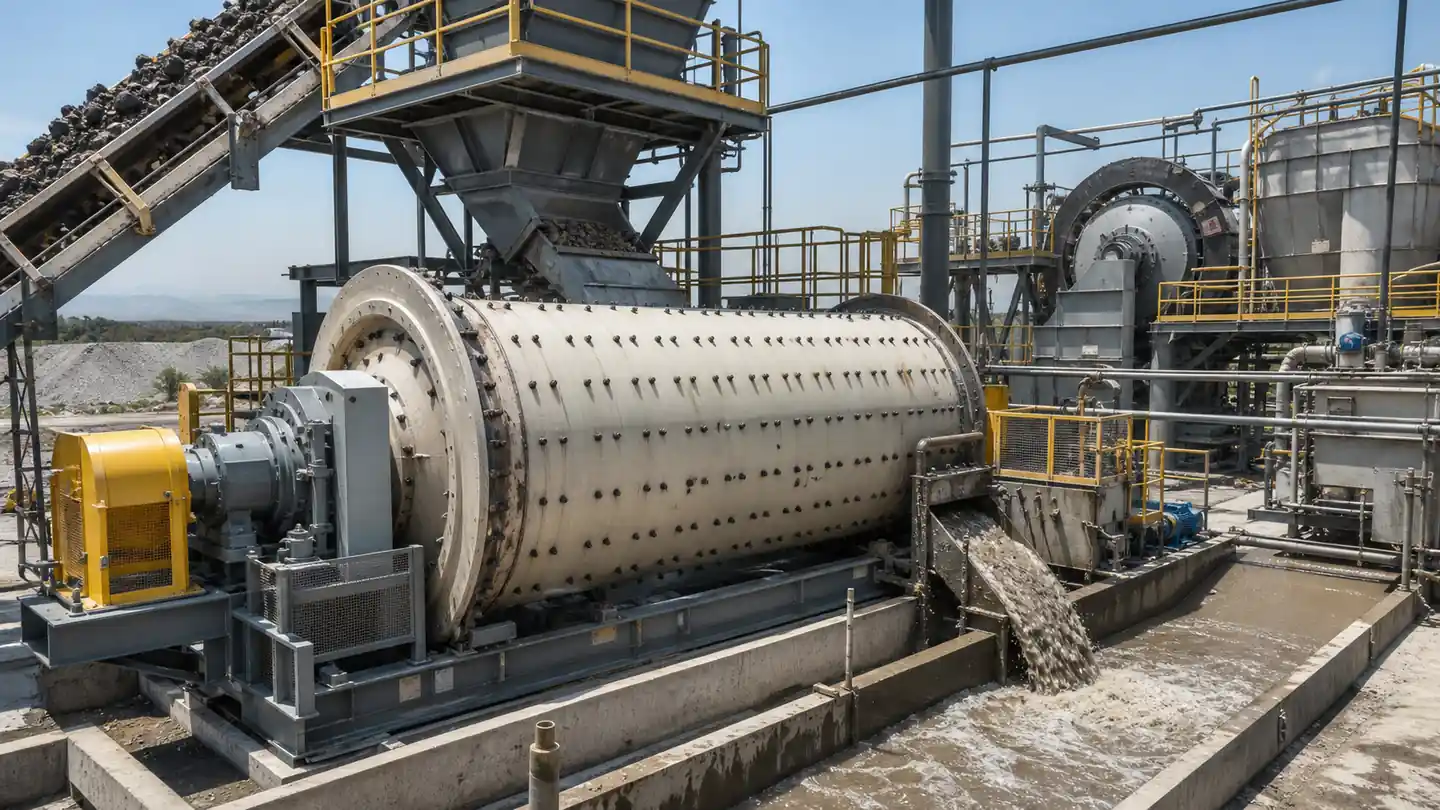
Where a Rod Mill Fits in the Process
一个 rod mill for mineral grinding normally sits after crushing and before a process that needs a controlled coarse feed. The upstream crusher establishes a manageable feed distribution, while a hopper and feeder keep the mill load stable. After grinding, the discharge can move directly to the next stage or pass through classification when the circuit requires tighter top-size control.
The correct downstream route depends on the process objective. 例如, a concentrator may send rod-mill discharge to a ball mill for finer liberation. Another plant may direct the coarse product to gravity or magnetic separation because excessive fines could reduce separation selectivity or complicate material handling.
Why Rod Media Suits Controlled Coarse Grinding
A rod mill is a rotating cylindrical mill charged with long steel rods. As the shell turns, the rods lift and cascade through the material. Their extended line contact differs from the point contacts created by ball media. Larger particles also tend to hold the rods apart, which concentrates more breakage action on the coarse fraction.
最后, the mill can reduce coarse particles without applying the same level of repeated fine-particle contact throughout the charge. This selective behavior supports a more controlled product distribution. 然而, it does not guarantee zero fines, and ore texture, feed distribution, 水分, residence time, media condition and discharge design still affect the result.
Rod milling therefore serves a specific process role rather than a universal replacement for other mineral grinding mills. The downstream requirement should determine whether a controlled coarse product has more value than a finer single-stage grind.
Rod Mill Coarse Grinding Applications by Process Objective
| 应用 | Process Objective | Typical Downstream Stage | Why Rod Milling Can Fit |
|---|---|---|---|
| Ball-mill feed preparation | Reduce crusher product to a more consistent intermediate size. | Ball mill and classifier | Supports staged grinding and limits the burden of coarse particles entering fine grinding. |
| Gravity-separation feed | Expose valuable minerals while limiting unnecessary fine material. | Jig, spiral, table or another gravity device | Preferential coarse breakage can support a controlled feed distribution for density separation. |
| Magnetic-separation preparation | Prepare a coarse liberated fraction for magnetic recovery or rejection. | Magnetic separator, followed by additional grinding when required | Provides an intermediate grinding stage before early separation or staged liberation. |
| Industrial minerals and sand | Produce a controlled coarse product with limited unwanted ultrafines. | 筛选, 分类, washing or product handling | Can shape a relatively narrow coarse product when specifications favor controlled size reduction. |
Preparing Feed for a Downstream Ball Mill
One established rod-mill duty is primary grinding ahead of a ball mill for finer ore grinding. The rod mill receives crushed feed and performs the first controlled reduction. Its discharge then enters the ball-mill stage, where smaller grinding media provide the greater contact area needed for finer liberation.
This staged arrangement separates coarse and fine grinding duties. 因此, each mill can focus on a different part of the size-reduction task. The flow can remain simple when rod-mill discharge already suits the next stage, or classification can manage oversize and circulating load when tighter control is necessary.
The main design question is not whether two mills are automatically better than one. 反而, engineers should determine whether the ore response, 所需的最终尺寸, throughput and existing plant arrangement justify a dedicated coarse-grinding stage.
Preparing Material for Gravity Separation
Gravity processes separate particles according to differences in density and their behavior in water or another flowing medium. They need adequate mineral liberation, but excessive fine material can alter settling behavior and reduce the effectiveness of some gravity devices. Rod milling can therefore fit when the circuit needs liberation at a relatively coarse size.
In this arrangement, crushing prepares the feed, the rod mill reduces the coarse fraction, and the discharge moves to a jig, spiral, table or another selected separator. Screening or hydraulic classification may divide the flow into size classes before separation. The required equipment depends on the ore, valuable-mineral size, density contrast and water circuit.
A representative mineralogical and grindability program should establish how much grinding releases the target mineral. Additional grinding may lower the particle size without improving useful liberation, so the test program must examine both size distribution and separation response.
Coarse Grinding Before Magnetic Separation
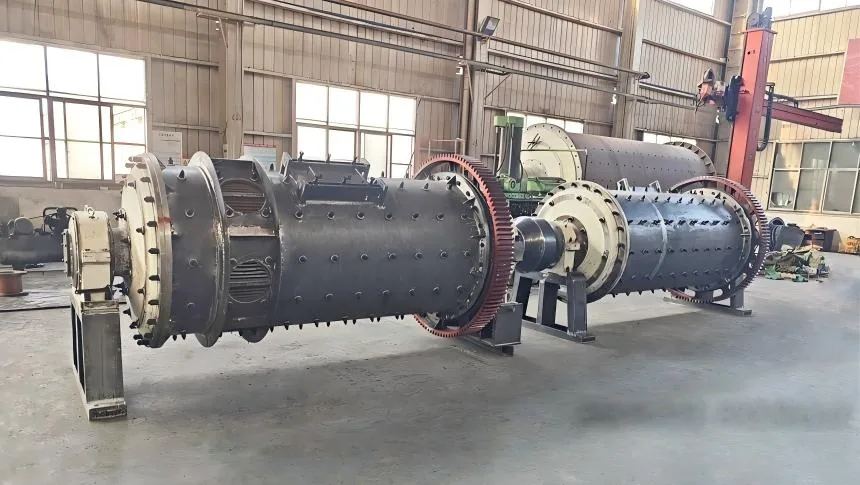
Some beneficiation flowsheets use magnetic separation after an intermediate grinding stage. The objective is to recover a liberated magnetic fraction, reject gangue early or divide the material before finer grinding. A rod mill can provide the coarse product needed for this staged approach when the mineral texture supports early separation.
Early rejection can reduce the mass that continues to later grinding, but the benefit depends on actual liberation and magnetic response. 所以, laboratory or pilot testing should compare product-size classes, recovery behavior and downstream grinding demand. The broader 选矿设备 arrangement may also include feeders, 屏幕, 分类器, pumps and dewatering equipment.
Industrial Mineral and Specification-Sand Duties
Rod mills can also grind industrial minerals, gravel or aggregate when the required product remains relatively coarse and the process seeks to limit excess ultrafines. A peripheral-discharge arrangement may suit selected coarse-product duties, while classification or washing can refine the final size distribution.
Product requirements control the flowsheet. Sand and industrial-mineral applications may specify particle-size distribution, maximum oversize, 细粉含量, cleanliness or downstream handling behavior. Engineers should compare those requirements with the material’s abrasion, breakage pattern and contamination limits before selecting the mill, discharge arrangement and wear materials.
Typical Rod-Mill Circuit Configurations
| Configuration | Material Flow | Main Purpose | Important Boundary |
|---|---|---|---|
| Open-circuit rod mill to ball mill | Crushing -> feeding -> rod mill -> ball mill -> classification | Divide coarse and fine grinding between two stages. | Rod-mill discharge must suit the ball-mill feed and classification strategy. |
| Rod mill to beneficiation | Crushing -> feeding -> rod mill -> gravity or magnetic separation | Liberate a useful coarse fraction before separation. | Testing must confirm liberation and separation response at the selected grind. |
| Rod mill with classification | Crushing -> feeding -> rod mill -> screen or classifier -> product / return | Control oversize or produce a defined coarse product. | The classifier and return load must match the mill and product specification. |
| Dry rod-mill line | Dry crushing -> sealed feeding -> rod mill -> classification and dust collection | Produce a dry coarse mineral product. | Moisture, dust, air handling and downstream storage need specific control. |
Equipment Roles in a Coarse-Grinding Circuit
| 设备 | 植物角色 | Key Interface |
|---|---|---|
| Crusher and screen | Prepare a controlled feed distribution and remove unsuitable oversize. | 进料顶部尺寸, fines content and surge capacity |
| Hopper and feeder | Buffer the upstream process and meter material into the mill. | Stable mass flow and protection against feed surges |
| 棒磨机 | Perform controlled coarse size reduction using long steel rods. | Feed distribution, media charge, liner condition and discharge design |
| Classifier or screen | Separate product from oversize when the circuit requires a controlled cut. | Cut size, 循环负荷, water balance and product specification |
| Downstream mill or separator | Continue fine grinding or recover minerals from the rod-mill product. | Required liberation, allowable fines and feed consistency |
A stable mineral vibrating feeder helps separate upstream crusher fluctuations from the mill. 尽管如此, the feeder cannot correct unsuitable ore preparation on its own. The complete line should coordinate feed storage, metering, 磨削, classification and downstream handling.

湿的, Dry and Discharge Options
Wet grinding is common in mineral concentrators because the slurry can move directly to classification or beneficiation. Water addition, pulp density, pumping and classification then become part of one process balance. Dry grinding may suit industrial minerals or locations where the product must remain dry, but it requires suitable sealing, dust collection and material-handling controls.
Overflow rod mills discharge through the trunnion and commonly support wet grinding. Peripheral-discharge designs release material through openings around the shell and can support selected coarse wet, damp or dry duties. The discharge type changes residence time and product behavior, so engineers should select it for the actual process rather than by equipment name alone.
Material and Downstream Factors That Control Suitability
- Feed-size distribution: isolated oversize, excessive fines and unstable crusher discharge change the rod charge behavior and mill loading.
- Ore hardness and texture: grindability and mineral association determine how much energy and residence time the coarse reduction requires.
- Abrasiveness: abrasive feed affects rods, 衬垫, discharge components and maintenance planning.
- Moisture and process water: these factors influence flow, slurry transport, dust control and the choice between wet and dry grinding.
- Target product distribution: the required top size, fines content and downstream liberation define the grinding objective.
- Downstream sensitivity: ball milling, 重力分离, 磁选, leaching and product classification each place different demands on the discharge.
- Plant arrangement: available space, elevation, pumping, 输送机, water balance and access affect practical integration.
When Another Grinding Technology May Fit Better
A rod mill is not automatically the best choice for every coarse-grinding duty. A ball mill may fit when the circuit needs a finer product and can manage classification. AG or SAG milling may suit large ore-processing duties where ore competency and plant scale justify autogenous or semi-autogenous grinding. HPGR, crushing and screening, or stirred milling can also serve different reduction ranges and project objectives.
Technology selection should compare the complete flowsheet, not one machine in isolation. Feed variability, required liberation, 可用水量, energy evaluation, wear, maintenance, downstream separation and future expansion all influence the result.
Testing and Project Data for Rod Mill Evaluation
Representative material testing provides the most reliable basis for rod-mill evaluation. A Bond rod mill work index test can characterize resistance to grinding in an intermediate size range, while particle-size analysis, 矿物学, abrasion testing and separation tests add the context needed for flowsheet decisions.
The test program should match the intended duty. Data from a different ore, reduction range or laboratory condition cannot replace project material. Before equipment selection, define feed distribution, material properties, target product, capacity, operating mode, downstream process and site constraints.
Rod Mill Coarse Grinding FAQ
What is the main application of a rod mill in a grinding circuit?
A rod mill commonly provides controlled coarse grinding between crushing and a downstream stage such as ball milling, 重力分离, magnetic separation or coarse product classification. The exact role depends on the ore and required product distribution.
Why can a rod mill produce fewer unwanted fines?
Long rods make line contact and tend to act preferentially on larger particles in the mill charge. This behavior can create a narrower coarse product distribution than a duty dominated by point-contact fine grinding, although the result still depends on the material and operating conditions.
Does a rod mill normally operate in open or closed circuit?
Open-circuit operation is common when the rod mill can produce a controlled feed for the next process stage. Classification can be added when the circuit needs tighter oversize control or a more defined coarse product.
Can rod mills operate in both wet and dry applications?
是的. Rod mills can support wet or dry grinding, but the suitable arrangement depends on material moisture, dust control, downstream processing, discharge design and the required product. Wet grinding is common in mineral concentrators.
What information is needed to evaluate a rod mill application?
The evaluation should include representative feed-size distribution, ore hardness and abrasiveness, 水分, required throughput, target product distribution, 湿式或干式, downstream process, site conditions and suitable grindability-test results.