石灰石和中硬石冲击式破碎

Impact crushing for limestone combines secondary size reduction with aggregate shape control in quarry and fixed crushing plants. A well-matched line connects the impact crusher with controlled feeding, conveying and screening so each stage receives a consistent material flow.

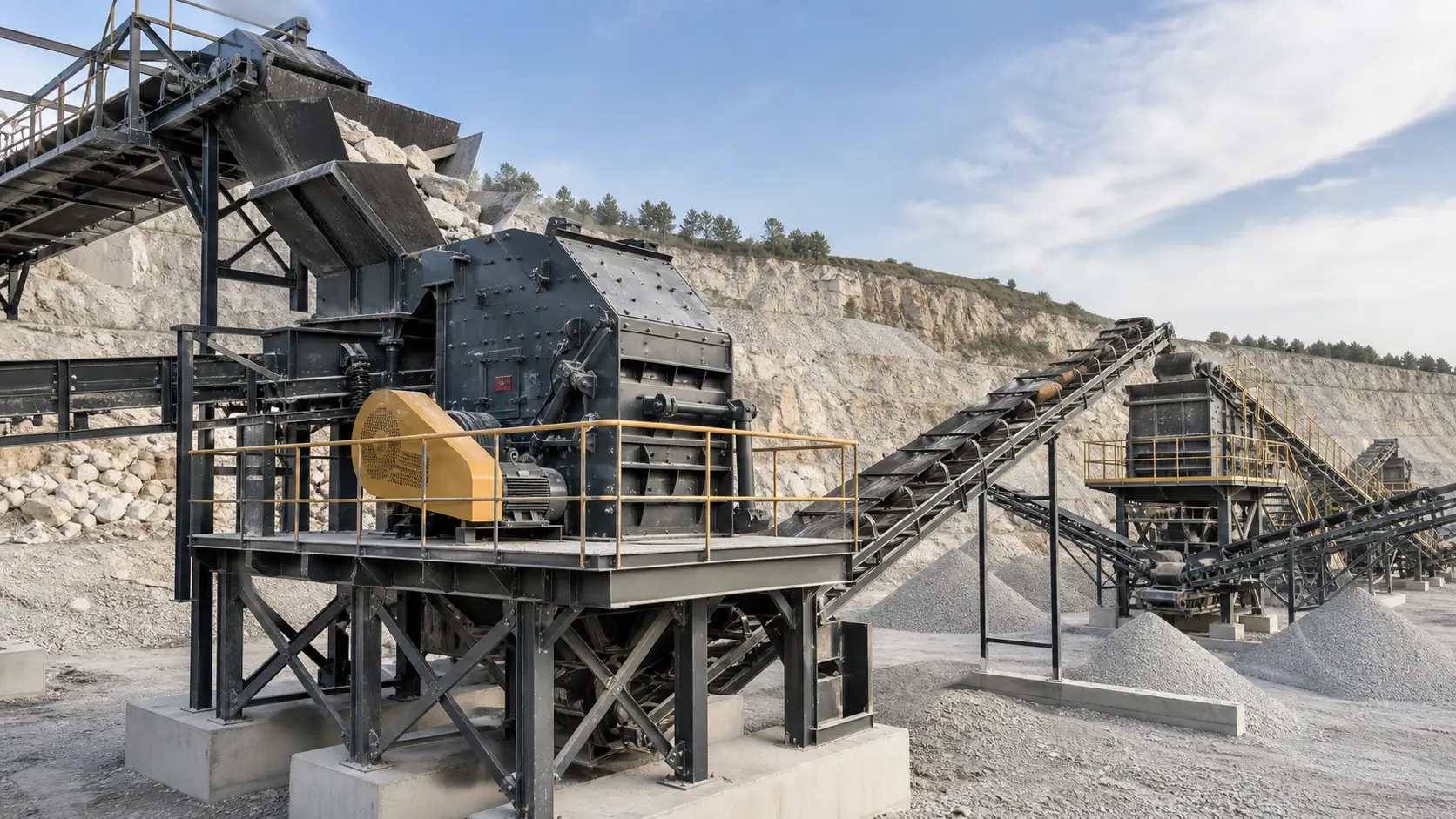
Impact crushing for limestone with crusher conveyors and screening stage in a quarry plant
Integrated impact crushing and screening line for limestone aggregate processing.

Why Limestone Suits Impact Crushing

Limestone usually breaks effectively under impact force. Inside an 反击式破碎机, the rotor accelerates material toward impact elements and chamber surfaces. This action reduces particle size and can create more regular aggregate shapes than compression alone. 所以, quarry plants often place the machine after primary crushing and before final screening.

然而, material name alone does not determine the equipment arrangement. Moisture, clay content, abrasiveness, maximum feed size and the required finished fractions also influence the line. Plant design should consider these properties together because they affect feeding continuity, wear conditions and screen performance.

Impact Crusher Role in a Fixed Crushing Line

In a typical fixed plant, primary crushing first reduces large quarry stone. 下一个, the impact crusher handles the secondary reduction stage. Conveyors then move the crushed material to a screen, where the plant separates saleable aggregate sizes and returns oversize particles when the circuit includes recirculation.

This arrangement makes the impact crusher one component of a complete process rather than an isolated machine. Vanore Mining supplies impact crushers within its stationary crusher range and supports equipment matching for fixed quarry, 骨料和矿物加工厂.

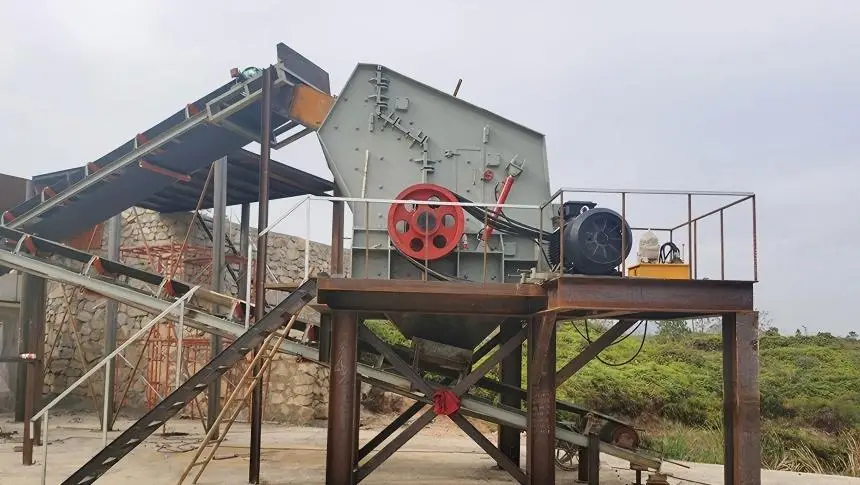
Impact crusher installed with conveyors for limestone quarry aggregate processing
Impact crusher integrated with conveyors in a fixed quarry crushing line.

Rotor, Chamber and Aggregate Shape

The rotor provides the kinetic energy for impact breakage, while the chamber guides repeated contact between the material and impact surfaces. Together, these parts influence reduction behavior and the shape of the discharged aggregate. Stable feed distribution helps the rotor work across its available width instead of concentrating material in one section.

此外, discharge adjustment and wear-part condition affect the finished material. The required product shape should align with the intended application, whether the aggregate will enter concrete production, road base, general construction or another downstream process. Operators should inspect wear parts according to actual material conditions and operating hours.

Impact crusher units arranged in a mining machinery production workshop
Impact crusher units with heavy housings and crushing chambers in the production workshop.

Key Factors in Impact Crushing for Limestone

Impact crushing for limestone works best when the complete feed condition matches the crusher and screen. The following factors help define that match without relying on one generic configuration.

Factor为什么它很重要Plant Response
Maximum feed sizeControls inlet loading and the required primary crushing stage.Match the crusher inlet, feeder and upstream machine.
Moisture and clayCan affect material flow through chutes and screens.Review hopper, 喂食器, chute and screening arrangement.
AbrasivenessInfluences wear-part selection and maintenance intervals.Evaluate actual mineral composition and operating duty.
Finished fractionsDefines screen decks, mesh openings and recirculation needs.Coordinate crusher discharge with the screening circuit.
Required plant flowConnects each machine to the overall production target.Balance feeding, 压碎, conveying and screening capacity.

Screening After Impact Crushing

一个 振动筛 classifies the crusher discharge into defined size ranges. Finished fractions move toward separate stockpiles, while oversize material can return to the crushing stage in a closed circuit. 因此, the screen determines whether the line consistently separates the required products.

Screen area, deck arrangement, mesh openings and feed distribution all matter. Moreover, the screen must receive material at a controlled rate. If a conveyor delivers an uneven surge, one section of the screen can carry more load than another, which reduces effective classification area.

Vibrating screen installation for classifying limestone aggregate after impact crushing
Vibrating screen installation supports downstream aggregate size classification.

Typical Limestone Crushing Flow

  1. A hopper receives blasted or excavated limestone.
  2. A feeder controls material entering the primary crusher.
  3. Primary crushing reduces large stone for the secondary stage.
  4. The impact crusher performs secondary reduction and shape control.
  5. The vibrating screen separates the required aggregate fractions.
  6. Conveyors transfer finished products and return oversize material when required.

The exact sequence changes with raw feed size, target products and site layout. 例如, some plants need pre-screening before secondary crushing, while others require more than one finished-product deck. 最后, equipment selection should start with material data and the required process output.

Information Needed for Equipment Matching

Clear project data allows Vanore Mining to evaluate the crusher and its surrounding equipment as one system. Useful information includes the material name, 最大进料尺寸, 水分状况, required finished sizes, expected hourly flow, working hours and site power conditions. Photos or laboratory information can provide additional context when the material varies across the deposit.

项目团队可以 联系瓦诺尔矿业 to discuss an impact crushing and screening arrangement for limestone or medium-hard stone. The review can cover the crusher role, feed path, screen configuration, conveyor connections and space available at the site.

常问问题

Why is an impact crusher commonly used for limestone?

Limestone is generally suitable for impact breakage. An impact crusher can provide secondary size reduction while supporting aggregate shape control before screening.

Which materials can follow a similar impact crushing route?

Many medium-hard and non-abrasive materials can follow a similar route, although mineral composition, 水分, abrasiveness and feed size must be reviewed for each plant.

Why is screening important after impact crushing?

Screening separates crushed material into required size ranges. Oversize material can return to the crusher, while finished fractions move to stockpiles or the next process stage.