
Britagem de impacto para calcário combina redução de tamanho secundário com controle de formato de agregado em pedreiras e instalações de britagem fixas. Uma linha bem combinada conecta o britador de impacto com alimentação controlada, transporte e triagem para que cada estágio receba um fluxo de material consistente.
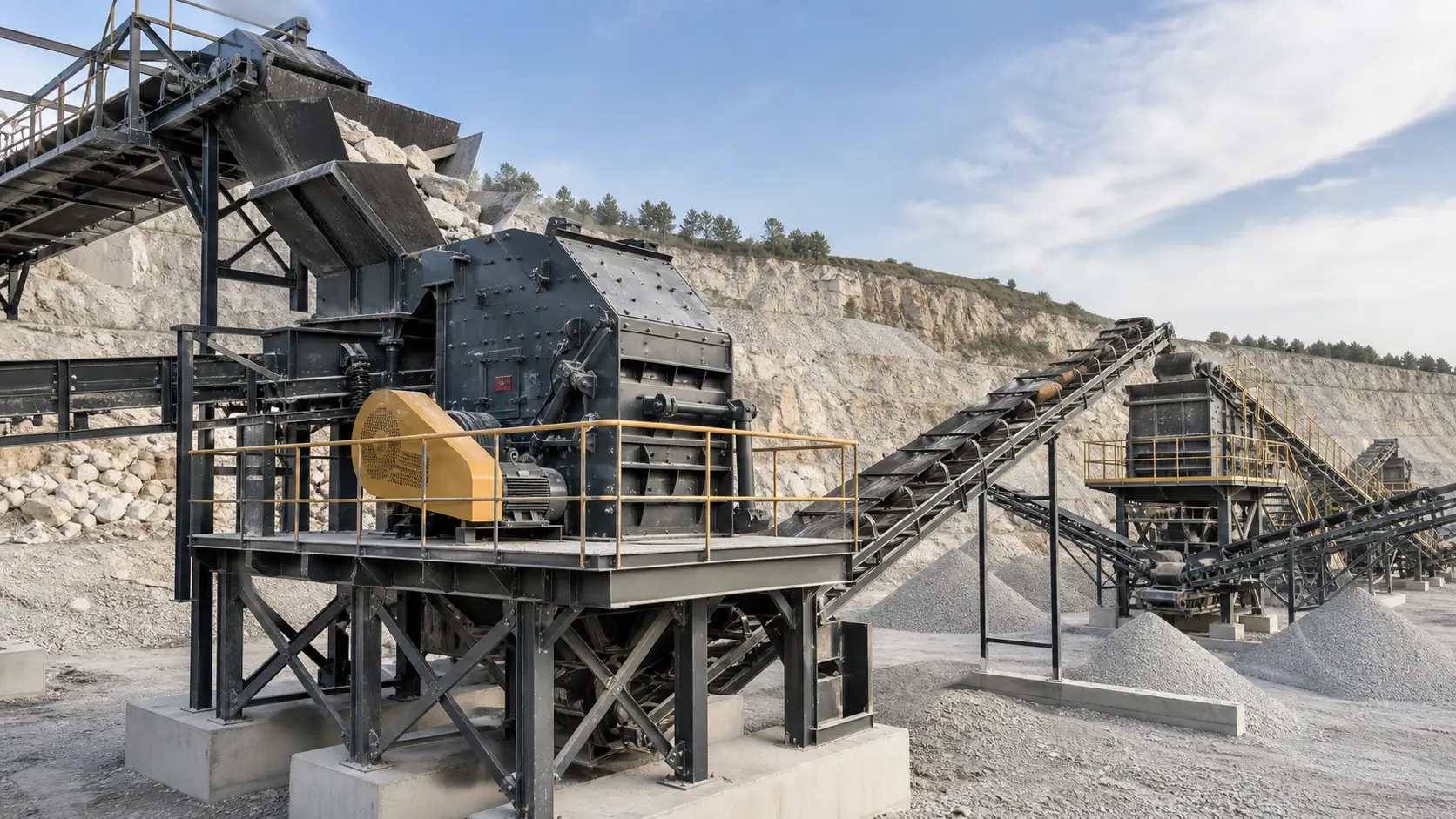
Por que o calcário é adequado para britagem de impacto
O calcário geralmente quebra efetivamente sob a força de impacto. Dentro de um triturador de impacto, o rotor acelera o material em direção aos elementos de impacto e às superfícies da câmara. Esta ação reduz o tamanho das partículas e pode criar formas agregadas mais regulares do que apenas a compressão. Portanto, as pedreiras geralmente colocam a máquina após a britagem primária e antes da triagem final.
No entanto, o nome do material por si só não determina a disposição do equipamento. Umidade, teor de argila, abrasividade, o tamanho máximo de alimentação e as frações acabadas necessárias também influenciam a linha. O projeto da planta deve considerar essas propriedades em conjunto porque elas afetam a continuidade da alimentação, condições de desgaste e desempenho da tela.
Função do britador de impacto em uma linha de britagem fixa
Em uma planta fixa típica, britagem primária primeiro reduz grandes pedras de pedreira. Próximo, o britador de impacto lida com o estágio de redução secundária. Os transportadores então movem o material triturado para uma peneira, onde a planta separa tamanhos de agregados vendáveis e retorna partículas de tamanho grande quando o circuito inclui recirculação.
Este arranjo torna o britador de impacto um componente de um processo completo, em vez de uma máquina isolada. A Vanore Mining fornece britadores de impacto dentro de sua linha de britadores estacionários e oferece suporte à correspondência de equipamentos para pedreiras fixas, plantas de processamento de agregados e minerais.
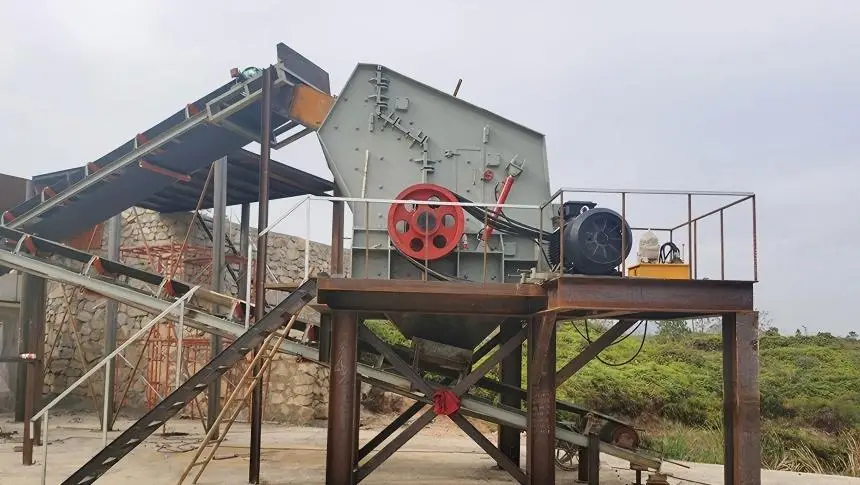
Rotor, Câmara e formato agregado
O rotor fornece a energia cinética para a quebra por impacto, enquanto a câmara orienta o contato repetido entre o material e as superfícies de impacto. Junto, essas peças influenciam o comportamento de redução e a forma do agregado descarregado. A distribuição estável da alimentação ajuda o rotor a trabalhar em toda a largura disponível, em vez de concentrar o material em uma seção.
Além disso, o ajuste de descarga e a condição das peças de desgaste afetam o material acabado. O formato do produto necessário deve estar alinhado com a aplicação pretendida, se o agregado entrará na produção de concreto, base rodoviária, construção geral ou outro processo posterior. Os operadores devem inspecionar as peças de desgaste de acordo com as condições reais do material e as horas de operação.

Fatores-chave na britagem de impacto para calcário
A britagem por impacto de calcário funciona melhor quando a condição completa de alimentação corresponde à do britador e da peneira. Os fatores a seguir ajudam a definir essa correspondência sem depender de uma configuração genérica.
| Fator | Por que é importante | Resposta da planta |
|---|---|---|
| Tamanho máximo do feed | Controla a carga de entrada e o estágio de britagem primária necessário. | Combine a entrada do britador, alimentador e máquina a montante. |
| Umidade e argila | Pode afetar o fluxo de material através de calhas e telas. | Revisão do funil, alimentador, arranjo de rampa e triagem. |
| Abrasividade | Influencia a seleção de peças de desgaste e os intervalos de manutenção. | Avalie a composição mineral real e o serviço operacional. |
| Frações acabadas | Define decks de tela, aberturas de malha e necessidades de recirculação. | Coordene a descarga do britador com o circuito de triagem. |
| Fluxo de planta necessário | Conecta cada máquina à meta geral de produção. | Alimentação equilibrada, esmagamento, capacidade de transporte e triagem. |
Triagem após esmagamento por impacto
UM peneira vibratória classifica a descarga do britador em faixas de tamanho definidas. As frações acabadas movem-se para estoques separados, enquanto o material superdimensionado pode retornar ao estágio de britagem em circuito fechado. Como resultado, a tela determina se a linha separa consistentemente os produtos necessários.
Área da tela, arranjo de convés, aberturas de malha e distribuição de ração são importantes. Além disso, a tela deve receber material a uma taxa controlada. Se um transportador fornecer um impulso irregular, uma seção da tela pode suportar mais carga do que outra, o que reduz a área de classificação efetiva.
Fluxo típico de britagem de calcário
- Uma tremonha recebe calcário explodido ou escavado.
- Um alimentador controla o material que entra no britador primário.
- A britagem primária reduz pedras grandes para o estágio secundário.
- O britador de impacto realiza redução secundária e controle de forma.
- A peneira vibratória separa as frações agregadas necessárias.
- Os transportadores transferem produtos acabados e devolvem materiais de grandes dimensões quando necessário.
A sequência exata muda com o tamanho do feed bruto, produtos alvo e layout do site. Por exemplo, algumas plantas precisam de pré-triagem antes da britagem secundária, enquanto outros exigem mais de uma plataforma de produto acabado. Consequentemente, a seleção do equipamento deve começar com os dados do material e a saída necessária do processo.
Informações necessárias para correspondência de equipamentos
Dados claros do projeto permitem que a Vanore Mining avalie o britador e seus equipamentos adjacentes como um sistema. Informações úteis incluem o nome do material, tamanho máximo de alimentação, condição de umidade, tamanhos acabados necessários, fluxo horário esperado, horas de trabalho e condições de energia do local. Fotos ou informações laboratoriais podem fornecer contexto adicional quando o material varia no depósito.
As equipes de projeto podem entre em contato com a Vanore Mining para discutir um arranjo de britagem e peneiramento de impacto para calcário ou pedra de dureza média. A revisão pode abranger a função do britador, caminho de alimentação, configuração de tela, conexões de transportadores e espaço disponível no local.
Perguntas frequentes
Por que um britador de impacto é comumente usado para calcário?
O calcário é geralmente adequado para quebra por impacto. Um britador de impacto pode fornecer redução secundária de tamanho e, ao mesmo tempo, apoiar o controle do formato do agregado antes da triagem.
Quais materiais podem seguir uma rota de britagem por impacto semelhante?
Muitos materiais semiduros e não abrasivos podem seguir um caminho semelhante, embora composição mineral, umidade, a abrasividade e o tamanho do avanço devem ser revisados para cada planta.
Por que a triagem é importante após a britagem por impacto?
A peneira separa o material triturado nas faixas de tamanho exigidas. Material de tamanho grande pode retornar ao britador, enquanto as frações acabadas são movidas para estoques ou para o próximo estágio do processo.