
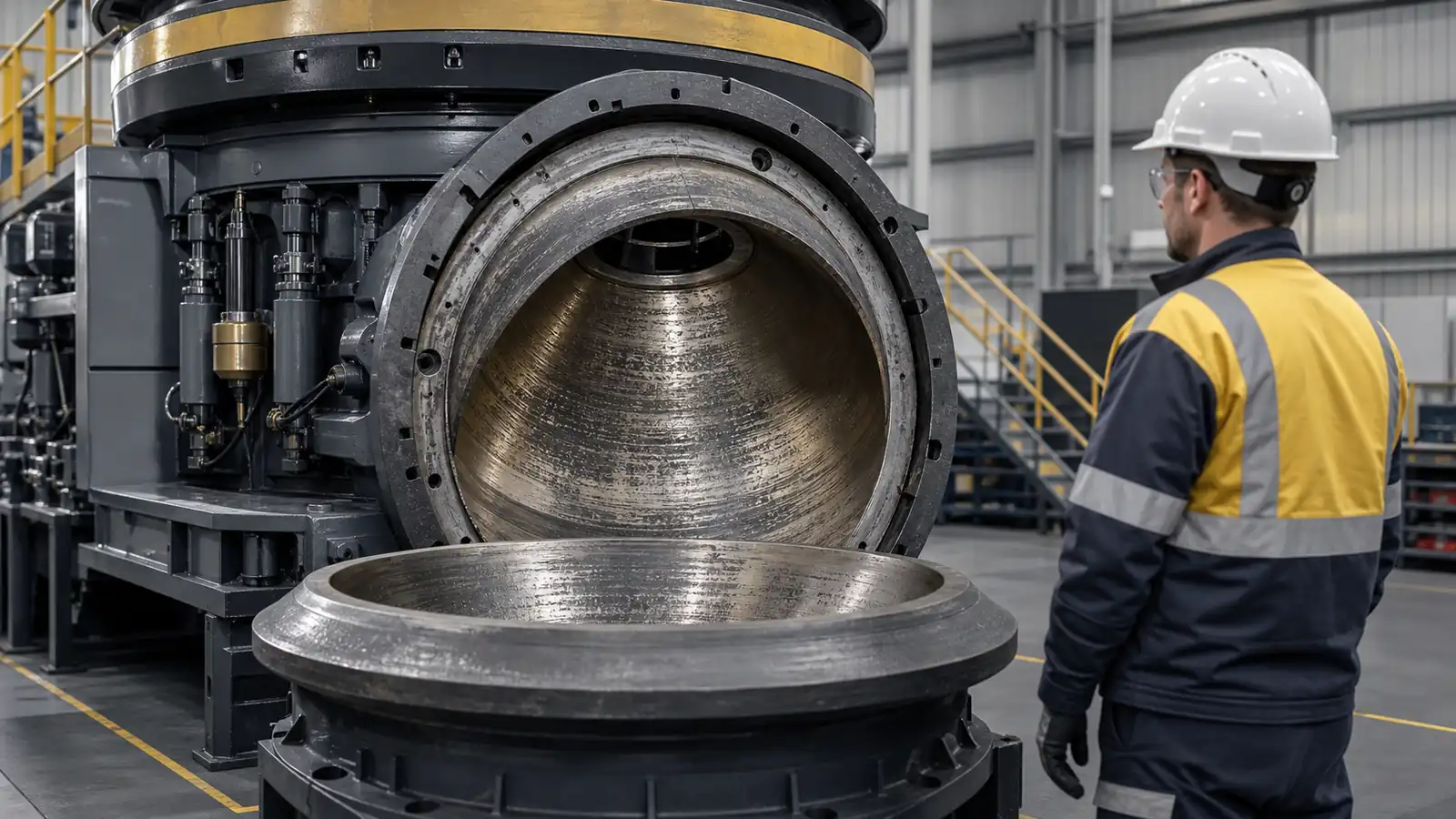
Cone crusher liner wear patterns should be diagnosed by comparing wear around the full mantle and concave, not by judging one polished area. Even wear through the intended crushing zone generally indicates stable material presentation. One-sided wear, a deep local groove, heavy wear only at the top or bottom, cracking, or deformation calls for a controlled review of feed distribution, gradação de alimentação, chamber selection, closed side setting, operating stability and liner installation.
What a Liner Wear Pattern Can Tell You
The mantle and concave form the crushing chamber. As rock is compressed and moves downward, contact pressure and relative movement gradually remove material from both liners. The resulting profile changes the chamber geometry, so liner condition can influence material flow, product size distribution, capacidade, power behavior and the usable setting range.
A normal pattern is specific to the approved crusher, chamber profile and duty. It should therefore be compared with the equipment manual, the original liner profile and previous successful liner sets. O triturador de cone de mola e britador de cone hidráulico usar diferentes arranjos de ajuste e proteção, but both require the installed chamber and operating conditions to match the intended application.
Published crusher studies consistently show that wear changes chamber geometry and crushing behavior. No entanto, laboratory models and another manufacturer’s limits cannot determine the remaining life of a Vanore or site-specific liner. Replacement decisions must use the approved inspection method and limits for the exact machine and liner profile.
Common Cone Crusher Liner Wear Patterns
| Padrão Observado | What It May Indicate | Evidências para verificar | Do Not Conclude Yet |
|---|---|---|---|
| Relatively even wear around the circumference | Material is reaching the chamber with broadly consistent circumferential loading. | Compare vertical profile, CSS history, product gradation and tonnes processed with a known good liner set. | Even appearance alone does not prove acceptable remaining thickness. |
| One side wears faster | Off-center feed, segregação, a biased chute or another asymmetric loading condition may be present. | Observe feed trajectory, distribution around the chamber, chute wear, surge behavior and feed size by location. | Do not assume the liner material is defective without checking distribution and installation. |
| Heavy wear near the upper chamber | Large feed, an unsuitable cavity or excessive impact near the entry may be concentrating loading. | Maximum lump size, feed opening, chamber profile, reduction duty and bridging history. | The precise cause depends on the machine design and approved feed envelope. |
| Heavy wear near the lower chamber | Fine or undersized feed, a narrow feed distribution, an unsuitable chamber or operating setting may shift work downward. | Complete feed gradation, prescreen performance, carga recirculante, CSS and product samples. | Bottom wear should not be corrected by changing CSS without circuit evidence. |
| Localized groove or cupping | Wear may be concentrated in a narrow crushing zone because the feed, cavity and setting are not working together. | Profile measurements, gradação de alimentação, chamber selection, power trend and liner compensation history. | A photograph cannot quantify remaining thickness or seating condition. |
| Cracks, deformation or broken areas | Abnormal loading, tramp material, installation problems or another mechanical event may have occurred. | Stop and follow the manufacturer’s inspection procedure; review event logs, protection-system records and seating surfaces. | Do not continue operating merely because product size still appears acceptable. |
Why Uneven Feed Distribution Changes Wear
A cone crusher should receive material through a feed arrangement suited to its chamber. When the stream enters predominantly from one side, that side can carry more of the crushing load while the opposite side is underused. Segregation can create a similar result when coarse rock enters one zone and fines enter another.
Inspect the chute, feed box and upstream transfer points before changing crusher settings. Record whether the stream is centered, continuous and distributed around the chamber. A correctly matched alimentador vibratório can stabilize delivery, but chute geometry must still prevent side loading and size segregation at the crusher inlet.
How Feed Gradation and Chamber Selection Affect the Profile
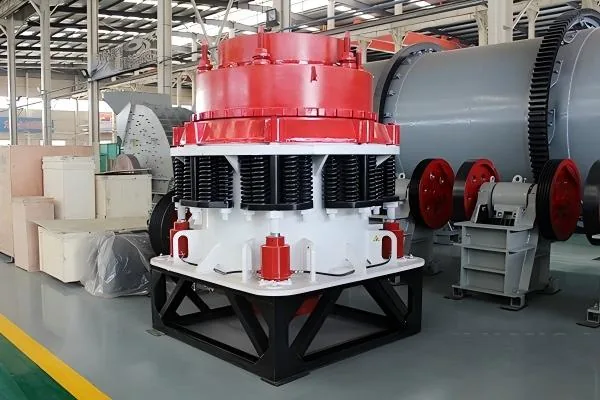
Top size alone is not enough to define cone-crusher feed. The full gradation determines how particles occupy the chamber and where crushing work occurs. Oversized lumps may not enter or nip as intended. A feed dominated by small particles can concentrate work lower in the cavity, while excessive fines may pack spaces and change force behavior. Moisture and clay can intensify packing.
The selected cavity must provide a suitable feed opening and operating setting range for the stage. A liner profile intended for another feed or reduction duty can develop concentrated wear even when the crusher is mechanically sound. Confirm the mantle and concave as an approved pair, then compare actual feed and target product with the profile documentation.
Prescreening and recirculating load also matter. The crusher should be evaluated within the complete fixed crushing and screening system, because a screen or return conveyor can change the amount and size of material presented to the chamber.
CSS Compensation Does Not Restore a Worn Chamber
Closed side setting influences the discharge opening, but adjusting it does not recreate the original liner geometry. As the profile wears, two liners can have the same measured CSS and still present material differently. Track both setting compensation and the physical wear profile rather than treating one setting measurement as a complete condition assessment.
The article on crusher closed side setting explains how CSS relates to product size and circuit control. For wear diagnosis, add liner age, tonnes processed, profile measurements, product sieve analyses and operating trends. A sudden increase in setting compensation or a change in product gradation is a reason to inspect, not a standalone diagnosis.
A Practical Liner Inspection Sequence
Inspection starts with safety. Isolate electrical, hydraulic, pneumatic, gravitational and other stored energy according to the site procedure and the equipment manual. O OSHA hazardous-energy overview explains why unexpected startup or stored-energy release must be controlled during servicing; each site must apply the laws and procedures that govern its location and equipment.
- Establish a baseline. Keep the original profile, liner identification, installation date and approved measurement points.
- Make the machine safe. Complete site-specific isolation, verificação, access and lifting controls before entering any inspection area.
- Clean enough to see the surface. Remove loose material using the approved procedure without hiding cracks or altering the wear surface.
- Photograph repeatable positions. Use the same orientation, distance and reference marks around the full circumference and down the chamber.
- Measure the profile. Use the manual-approved profile gauge, ultrasonic method or scanning procedure for the exact liner and machine.
- Review matched operating data. Compare feed gradation, horário de funcionamento, estimated tonnes, CSS history, product samples, power behavior and event records from the same wear period.
- Inspect related components. Check liner seating, fastening, feed arrangement and protection-system evidence according to the manufacturer procedure.
- Correct the verified cause. Change one controlled factor where practical, then compare the next inspection and product data with the baseline.

Records That Make Wear Diagnosis More Reliable
A useful liner history connects physical condition with process conditions. Record liner part and profile references, installation and removal dates, horário de funcionamento, estimated dry tonnes, material source, gradação de alimentação, moisture or clay changes, CSS checks, adjustment history, product sieve analyses and relevant power or pressure trends. Note tramp-release events, bridging and unusual shutdowns separately.
Normalize comparisons where possible. A liner set that lasts more calendar days may have processed fewer tonnes, while a shorter campaign may have handled more abrasive material. Compare like-for-like periods and retain photographs or measurements at the same marked positions. This makes gradual asymmetry visible before it becomes obvious from a removed liner.
When Should Cone Crusher Liners Be Replaced?
Replace liners according to the exact machine manual, approved remaining-thickness or adjustment limit, seating protection requirement and site maintenance procedure. Replacement may also be justified earlier when a distorted profile causes unacceptable product gradation, unstable operation or concentrated loading. Never operate until a liner wears through, because the supporting head or bowl surfaces can be damaged.
Do not publish or reuse a universal percentage, hour limit or tonnage target for all cone crushers. Liner profile, alloy, feed abrasiveness, crushability, umidade, chamber loading and operating stage all affect wear. Vanore Mining reviews the machine model, chamber duty, feed data, target product and observed wear evidence when matching a cone crusher or replacement configuration.
Cone Crusher Liner Wear FAQ
What does one-sided cone crusher liner wear usually mean?
It often points to asymmetric chamber loading, such as off-center feed or segregation, but the feed chute, liner installation, event history and measurements around the complete chamber must be checked before assigning a cause.
Can CSS adjustment correct an uneven wear profile?
Não. CSS adjustment changes the discharge opening but does not restore the original chamber geometry. Inspect the physical profile and correct the verified feed, cavity, setting or mechanical cause.
Why is feed gradation needed for liner diagnosis?
The complete size distribution influences where particles are nipped, compressed and discharged. Top size alone cannot show whether the chamber receives excessive fines, undersized feed, gaps in gradation or an unsuitable reduction duty.
Should the mantle and concave be evaluated together?
Sim. They form one crushing chamber, so their profiles, wear distribution, identification and approved pairing should be reviewed together along with the supporting machine surfaces.
What information should be recorded for each liner set?
Record liner identification, profile, installation date, horário de funcionamento, estimated tonnes, material source, gradação de alimentação, CSS history, product samples, operating trends, event records and repeatable wear photographs or measurements.