
Crusher closed side setting is the smallest gap between the crushing surfaces during the operating cycle. It strongly influences the crusher’s product-size distribution and the load returned by a downstream screen, but it does not equal one guaranteed product size. Chamber geometry, liner wear, gradación de alimentación, material behavior, ataque, speed and chamber loading all affect the result.

What Is Crusher Closed Side Setting?
A jaw or cone crusher has a moving crushing surface and a fixed or opposing surface. Their separation changes through the motion cycle. The closed side setting, commonly abbreviated CSS, is the minimum operating gap. The open side setting is the larger gap at the opposite phase of the cycle, while the difference between open and closed positions relates to the machine’s stroke or throw.
The measurement reference is not identical across every crusher or liner profile. Tooth shape, mantle and concave geometry, wear condition and the manufacturer’s measuring method determine where and how the setting is checked. Por lo tanto, a recorded value is meaningful only when the machine, liner set, measurement method and operating reference are also known.
For the stationary crusher range, setting control should be treated as part of the complete crushing and screening duty. It connects the crusher chamber with feed preparation, product specification, screen aperture and any oversize return path.
How CSS Affects Product Size
Changing CSS changes the space through which crushed particles leave the chamber and alters the compression conditions near discharge. A tighter setting generally shifts the product distribution finer within an appropriate operating range. A wider setting generally shifts it coarser. Sin embargo, the discharge remains a distribution containing many particle sizes rather than one size defined by the gap.
Two crushers operating at the same nominal CSS can produce different gradations because their chambers, ataque, velocidad, revestimientos, feed and rock breakage behavior differ. Even one crusher can produce a different distribution after the feed source changes or the liners wear. This is why universal CSS-to-product ratios are unreliable for equipment matching or process control.
| Variable | Connection to CSS | Possible Circuit Effect | Evidence to Review |
|---|---|---|---|
| Feed gradation | Changes chamber filling and the amount of material requiring breakage. | Product and power can vary without a setting change. | Representative feed sieve analysis and top-size observations. |
| Chamber and liners | Geometry defines compression zones and the correct measurement reference. | Different liner profiles can change gradation, loading and wear behavior. | Machine model, chamber designation, liner records and wear profile. |
| Material properties | Strength, abrasión, moisture and particle shape affect breakage and flow. | The same setting can produce a different size distribution by source. | Source samples, material tests and operating history. |
| Speed and stroke | Influence particle transport, compression frequency and chamber behavior. | Throughput and gradation may shift together. | Verified machine configuration and operating measurements. |
| Chamber loading | Changes how particles interact before reaching the closed-side gap. | Trickle feed and unstable feed can alter product consistency. | Feed-level trend, feeder stability and power trend. |
| Downstream screening | Determines which crusher product returns as oversize. | A setting change can increase or reduce circulating load. | Screen feed, oversize and undersize mass and size analyses. |
CSS, Capacity and Power Must Be Read Together
A setting change can alter the available discharge area, material residence and degree of size reduction. Como consecuencia, product gradation, rendimiento, power draw and wear can move together. The direction and magnitude depend on the crusher design and operating condition, so a single capacity rule should not be applied across machines.
A tighter setting that increases breakage duty may also increase the proportion of material passing the downstream screen. At the same time, it can reduce available flow area or raise mechanical loading. A wider setting may allow more mass through the crusher but send more oversize back from the screen. The useful operating point is the one that meets product and circuit requirements within the machine limits, not the smallest achievable CSS.
Why Liner Wear Changes the Effective Setting
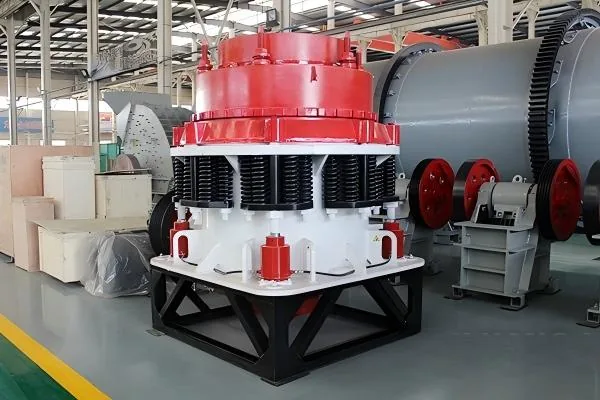
Mantles, concaves and jaw plates lose material during operation. Wear changes both the gap and the profile that guides particles through the chamber. If the adjustment does not compensate appropriately, the effective CSS can drift and the crusher product can become coarser. Uneven wear can also change loading from one area of the chamber to another.
Recording only the adjustment-system position is insufficient when the liner profile has changed. Maintenance records should connect setting measurements with liner operating time, wear observations, chamber condition and product samples. El spring cone crusher y hydraulic cone crusher use different adjustment and protection arrangements, so each model requires its own procedure and permitted range.
CSS in a Closed Crushing and Screening Circuit
In a closed circuit, crusher discharge enters a criba vibratoria. Material finer than the selected screen aperture leaves as product, while oversize returns to the crusher. CSS changes the crusher-discharge distribution, and the screen determines how much of that distribution recirculates.
If the crusher product becomes coarser, screen oversize can rise and increase return load. This extra load then mixes with fresh feed, changes total crusher feed and may alter chamber behavior. Sin embargo, high return load does not prove that CSS is wrong. A blinded or damaged screen, unsuitable aperture, poor feed distribution or a changed fresh-feed gradation can create a similar symptom.
The correct review follows the mass balance. Measure fresh feed, total crusher feed where possible, screen feed, final product and return stream during the same stable period. Add sieve analyses around the screen cut size. These data show whether the constraint begins in crushing, screening or their interface.
How to Diagnose Coarse Product or High Return Load
- Define the measured problem. State which product fraction is outside requirement and whether the issue is continuous or intermittent.
- Confirm representative sampling. Compare samples collected during the same stable operating window instead of isolated grab samples.
- Verify the current setting correctly. Use the machine-specific method, reference points and liner condition.
- Review feed conditions. Check top size, gradación, humedad, source, feed stability and chamber loading.
- Inspect liner and chamber condition. Look for wear, uneven profiles, loose components or unsuitable chamber configuration.
- Check the screen. Inspect aperture, blinding, damage, distribution and product separation before blaming the crusher.
- Review machine trends. Compare power, pressure or other manufacturer-approved operating indicators with historical stable operation.
- Make one controlled change. Stay within the permitted range and resample before making another adjustment.

Safe Measurement and Adjustment Boundaries
Setting measurement and adjustment involve heavy components, stored mechanical or hydraulic energy and potential unexpected startup. Use the machine manual, the site’s risk assessment and the applicable energy-isolation procedure. Do not rely on a generic online method when the crusher design, measuring tool or isolation points differ.
In the United States, el OSHA hazardous-energy control overview explains why servicing, inspection and adjustment require procedures that prevent unexpected energization or release of stored energy. Other jurisdictions have their own requirements. The site procedure and equipment instructions must govern the work.
Data Needed for Crusher and Chamber Review
Material Data
Provide feed and product gradation, largest lump, rock type, humedad, densidad aparente, abrasion or strength information where available, and expected source variation.
Machine Data
Identify crusher model, chamber and liner profile, current wear condition, permitted setting range, velocidad, stroke or throw, drive power and adjustment records.
Circuit Data
Record fresh and return load, screen aperture and condition, product specifications, horas de funcionamiento, feeder behavior and synchronized samples from key streams.
These inputs allow a setting change to be evaluated as part of the complete plant rather than as an isolated number. Vanore Mining can use verified project data to review crushing-stage selection, chamber duty and the connection between crushing, screening and material transfer.
Crusher Closed Side Setting FAQ
Is closed side setting the same as product size?
No. CSS is the minimum operating gap between the crushing surfaces. The crusher produces a distribution of sizes influenced by chamber geometry, revestimientos, alimentar, material behavior, velocidad, stroke and operating condition.
Does a smaller CSS always produce a better product?
No. A tighter setting can shift the distribution finer, but it can also change flow, power, wear and circuit loading. The selected setting must remain within machine limits and meet the complete product and production requirement.
Why can product size change when CSS has not been adjusted?
Liner wear, gradación de alimentación, rock properties, humedad, chamber loading, velocidad, mechanical condition and screen performance can all change the measured product distribution.
How does CSS affect a closed circuit?
CSS changes the crusher-discharge gradation. The downstream screen then separates product from oversize return, so the setting can change circulating load as well as final product flow.
What should be checked before changing the crusher setting?
Confirm representative product samples, the current setting and liner condition, feed size and stability, chamber loading, screen condition and relevant operating trends. Then follow the machine-specific adjustment and safety procedure.