
UM quarry crushing plant process connects feeding, britagem primária, britagem secundária, triagem e transporte em um fluxo de produção agregado contínuo. Em uma pedreira ou local de mineração, cada etapa tem uma função definida: controlar a alimentação de pedra bruta, reduzir o tamanho das partículas, classificar o material e mover o agregado acabado para áreas de estoque.
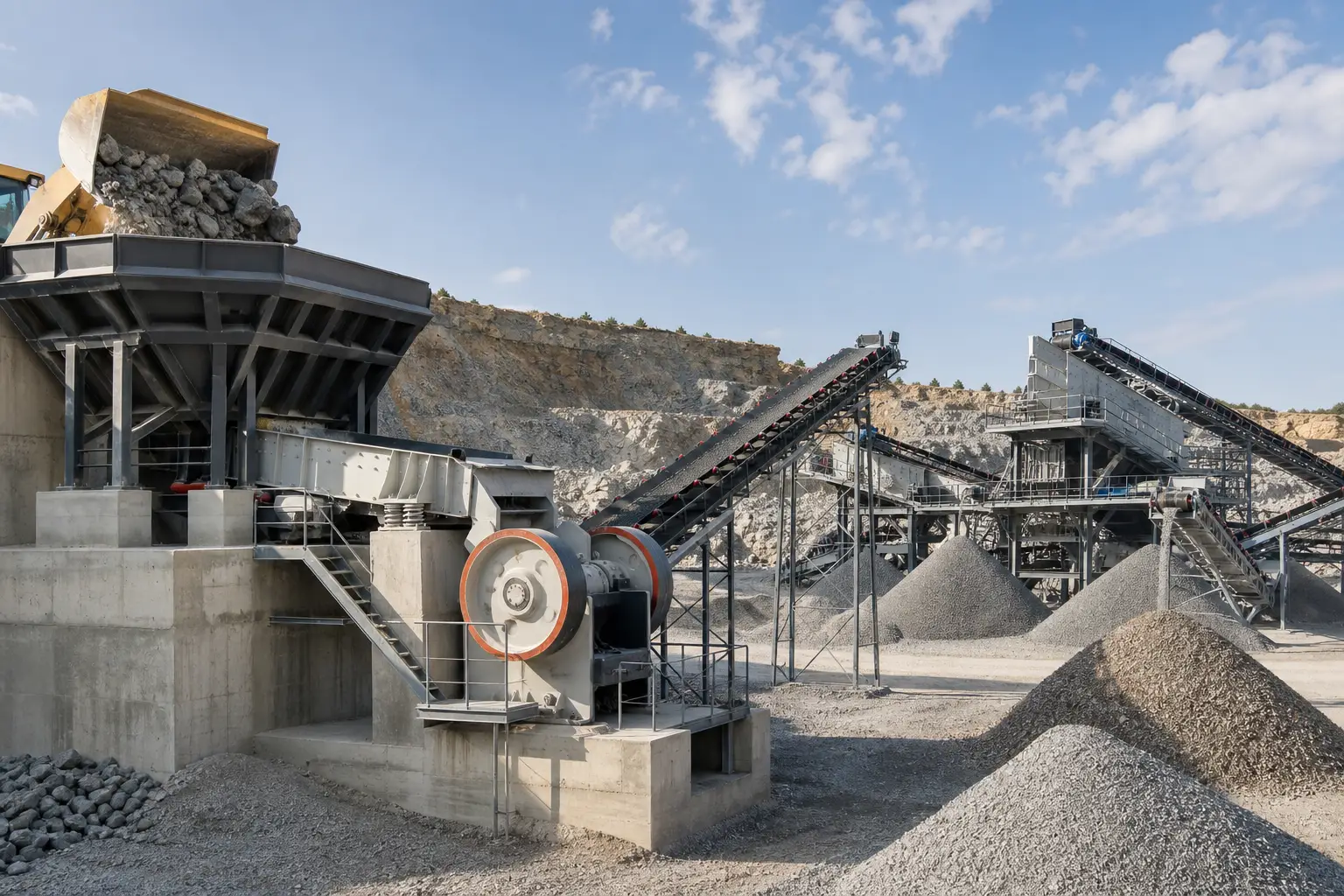
How the Quarry Crushing Plant Process Starts with Feeding
The process begins before the crusher chamber. Raw stone must enter the crushing line at a stable rate, and a vibrating feeder for stone crushing plants helps regulate this flow. Stable feeding protects the primary crusher from sudden load changes and supports smoother production across the downstream equipment.
Feeding equipment also separates oversized impact from the rest of the system by guiding material into the first reduction stage. Portanto, o alimentador, hopper and transfer point layout should match the material size, site space and expected crushing rhythm.
Primary Crushing Reduces Raw Quarry Stone
Primary crushing reduces large quarry stone into a size that secondary crushers and screens can handle. In many fixed plants, um britador de mandíbula para britagem primária works at this stage because its chamber and jaw plate structure are suitable for hard rock, ore and large feed material.
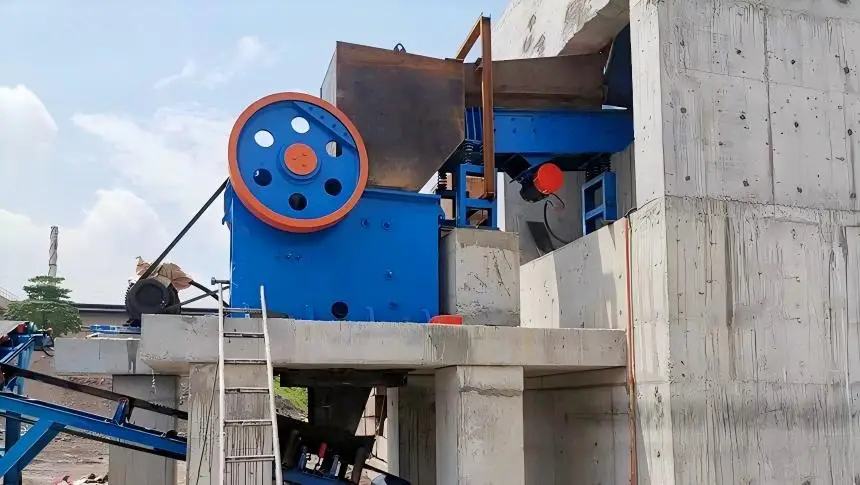
After the first reduction stage, conveyors transfer crushed material toward secondary crushing or screening. At this point, the plant layout should give enough space for access, belt transfer points and dust control equipment. These practical details influence daily operation as much as the crusher model itself.
Secondary Crushing and Screening Build Finished Aggregate Sizes
Secondary crushing reduces the material further for aggregate production, sand making or mineral material preparation. Depending on material hardness and product shape requirements, the plant may use impact crushers, britadores de cone, hammer crushers or VSI crushers. Vanore's stationary crushers for quarry plants cover these fixed crushing roles.
Screening then separates crushed material into finished sizes and return material. UM vibrating screen for aggregate classification helps divide products by size range, while oversized material can return to the crushing stage through conveyors. Como resultado, the screen is not only a sorting machine; it controls the final product path of the whole line.

Why Equipment Matching Matters in Quarry Crushing
A quarry plant works well when feeding, esmagamento, screening and conveying equipment match each other. A powerful crusher cannot stabilize the full process if the feeder, screen or conveyor capacity is poorly matched. Além disso, dureza do material, umidade, tamanho da alimentação, discharge target and stockpile layout all affect how the equipment should connect.
Vanore Mining organizes its crushing equipment by plant role so quarry and mining teams can review the full equipment chain instead of evaluating one machine alone. For a specific line, users can also entre em contato com a Vanore Mining with material and plant stage information for equipment matching discussion.
Perguntas frequentes
What is a quarry crushing plant process?
A quarry crushing plant process is the arranged flow of feeding, britagem primária, britagem secundária, triagem, conveying and finished aggregate handling.
Which equipment starts the quarry crushing process?
A vibrating feeder usually controls raw stone entering the primary crusher, while a jaw crusher often handles the first size reduction stage.
Why is screening important after crushing?
Screening separates crushed material into size ranges, sends oversized material back for further crushing and helps prepare finished aggregate products.