
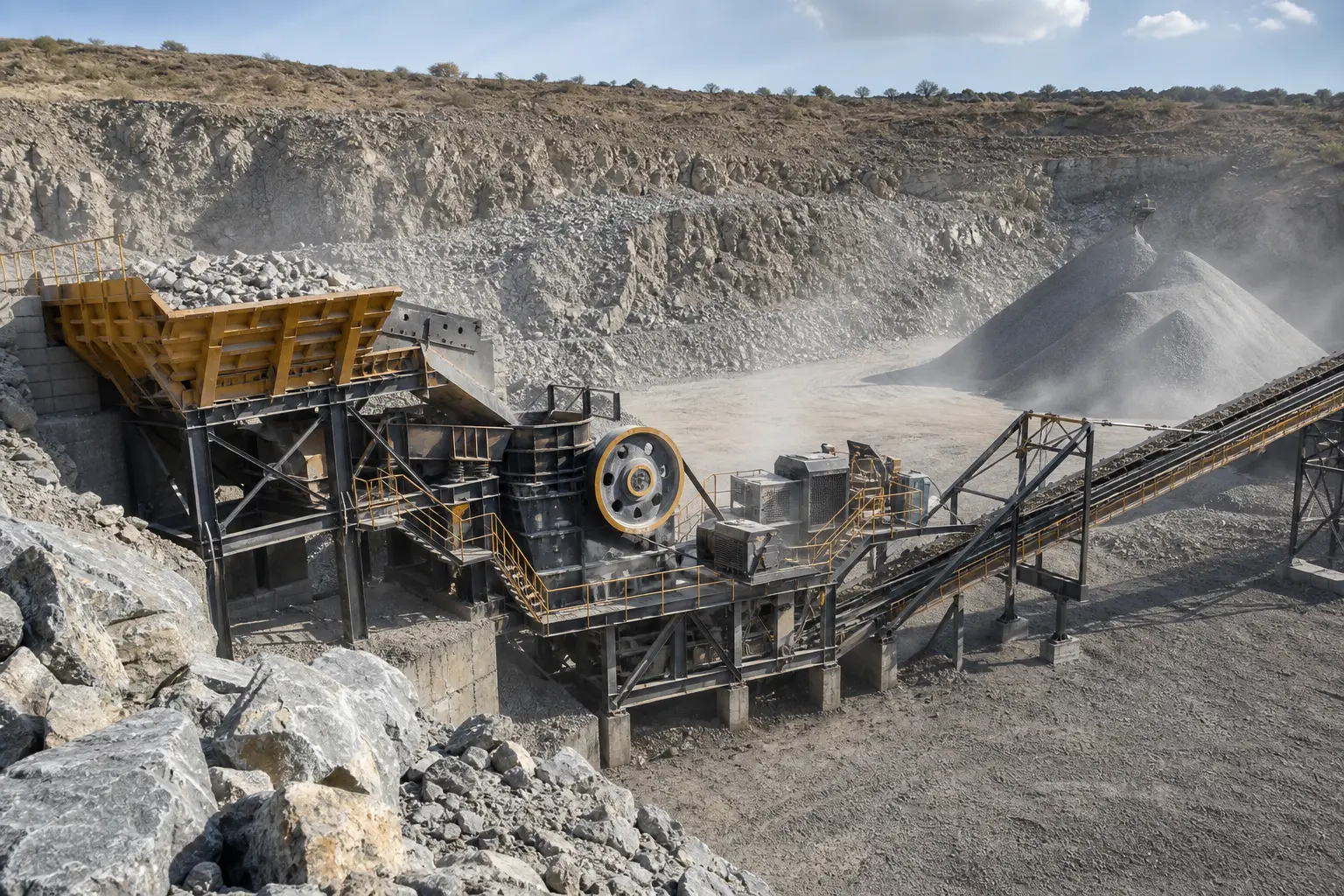
The primary crushing stage is the first major size reduction step in mining and quarry operations. It connects controlled feeding, coarse rock breaking and downstream conveying so the rest of the crushing and screening plant can operate with a more stable material flow.
What the Primary Crushing Stage Does
Primary crushing receives large blasted rock, run-of-mine ore or quarry stone from the feeding section. The equipment reduces the raw material into a smaller discharge size that can move through conveyors, secondary crushers and screening equipment. This stage does not finish the aggregate or ore product; it creates a controlled starting point for the rest of the plant.
In many fixed crushing lines, أ كسارة الفك للتكسير الأولي handles this first reduction duty. Its crushing chamber, frame structure and discharge setting help process hard stone, ore and quarry material before the material moves into the next plant section.
Feeding Control Before Primary Crushing
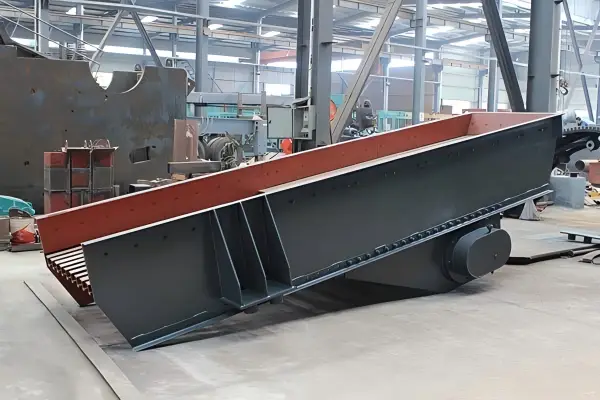
Stable feeding is important because uneven feed can overload the crusher, reduce throughput consistency and increase wear. أ المغذية الاهتزازية controls the material entering the primary crusher and helps separate fine material before coarse crushing when the plant layout includes a grizzly section.
Good feed control supports steady crusher operation, cleaner material transfer and more predictable downstream crushing. For quarry and mining plants, المغذية, hopper and crusher should work as one front-end system instead of separate machines.
Primary Crushing Equipment in Fixed Plants
Fixed quarry and mining plants usually place primary crushing near the raw material receiving area. The crusher foundation, feed hopper, discharge conveyor and maintenance space all affect how well the first crushing section performs. Vanore Mining organizes الكسارات الثابتة by crushing role so each machine can match the plant stage and material duty.
The primary crusher must accept large feed while producing a discharge size suitable for the next stage. When the discharge is too coarse or inconsistent, secondary crushing and screening become harder to control. When it is matched correctly, the whole plant can move material with fewer interruptions.

Primary Crushing in Mobile Plant Applications
Some quarry, construction and mining sites use a mobile jaw crusher plant for the primary crushing stage. This layout is useful when the crushing position needs to move with the working face or when temporary site setup is more practical than a fixed foundation.
Mobile primary crushing still follows the same process logic: feed control, coarse crushing, discharge conveying and downstream size handling. The difference is that the feeder, crusher and conveyor are arranged on a mobile chassis for site movement and faster layout adjustment.
How Primary Crushing Supports Screening and Secondary Crushing
بعد التكسير الأولي, material normally moves to secondary crushing, screening or stockpiling. أ شاشة تهتز may classify crushed material by size, while oversized material can continue to another crushing stage. This connection makes the primary crusher a key control point for the entire crushing flow.
- Feed section: receives raw rock or ore and controls the material flow.
- Primary crusher: reduces large material into a transportable size range.
- ناقل التفريغ: moves crushed material toward secondary crushing or screening.
- قسم الفرز: separates material by size and supports finished aggregate control.
For equipment matching or plant layout discussion, يمكن للمستخدمين اتصل بشركة فانور للتعدين with raw material, حجم التغذية, حجم التفريغ المستهدف وقدرة المصنع المطلوبة.
التعليمات
What is the primary crushing stage?
The primary crushing stage is the first size reduction step after raw rock or ore enters the plant. It reduces large material for conveying, secondary crushing or screening.
Which equipment is commonly used for primary crushing?
Jaw crushers are commonly used because they handle large feed size and hard rock. Vibrating feeders often work before the crusher to control material flow.
How does primary crushing affect downstream operation?
Stable primary crushing improves downstream conveying, secondary crushing and screening because it reduces oversized material and keeps the plant feed flow more consistent.