
Impact crushing for limestone combines secondary size reduction with aggregate shape control in quarry and fixed crushing plants. Хорошо подобранная линия соединяет ударную дробилку с контролируемой подачей., транспортировка и сортировка, чтобы каждый этап получал постоянный поток материала.
Why Limestone Suits Impact Crushing
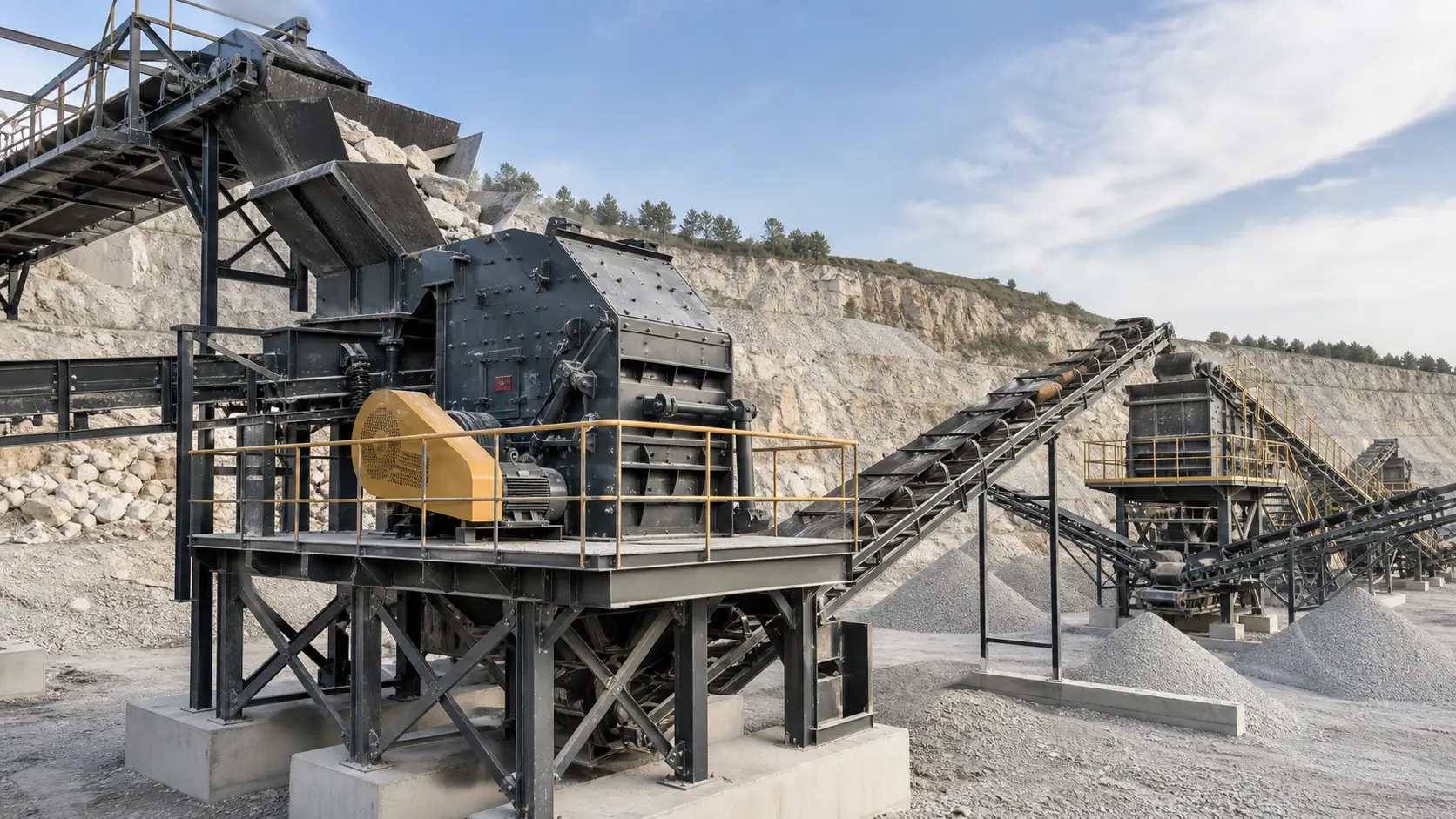
Limestone usually breaks effectively under impact force. Inside an ударная дробилка, the rotor accelerates material toward impact elements and chamber surfaces. This action reduces particle size and can create more regular aggregate shapes than compression alone. Поэтому, quarry plants often place the machine after primary crushing and before final screening.
Однако, material name alone does not determine the equipment arrangement. Влага, содержание глины, абразивность, maximum feed size and the required finished fractions also influence the line. Plant design should consider these properties together because they affect feeding continuity, wear conditions and screen performance.
Impact Crusher Role in a Fixed Crushing Line
In a typical fixed plant, primary crushing first reduces large quarry stone. Следующий, the impact crusher handles the secondary reduction stage. Conveyors then move the crushed material to a screen, where the plant separates saleable aggregate sizes and returns oversize particles when the circuit includes recirculation.
This arrangement makes the impact crusher one component of a complete process rather than an isolated machine. Vanore Mining supplies impact crushers within its стационарная дробилка and supports equipment matching for fixed quarry, заводы по переработке заполнителя и минерального сырья.
Ротор, Chamber and Aggregate Shape
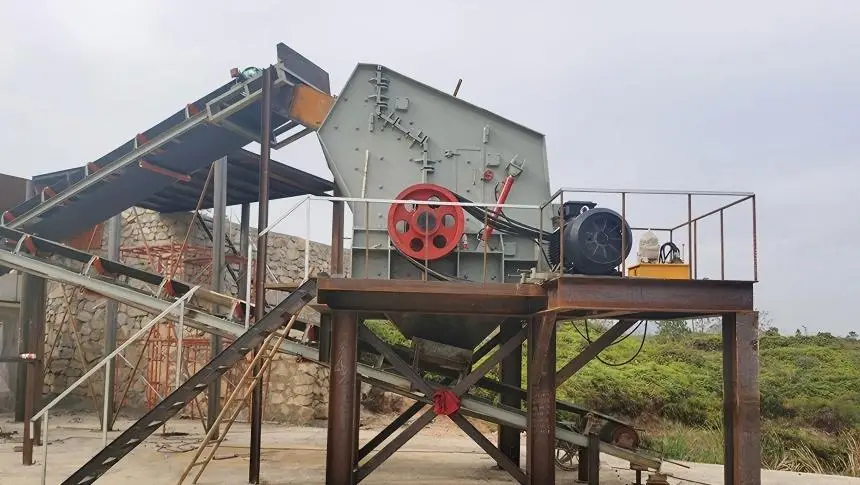
The rotor provides the kinetic energy for impact breakage, while the chamber guides repeated contact between the material and impact surfaces. Вместе, these parts influence reduction behavior and the shape of the discharged aggregate. Stable feed distribution helps the rotor work across its available width instead of concentrating material in one section.
Кроме того, discharge adjustment and wear-part condition affect the finished material. The required product shape should align with the intended application, whether the aggregate will enter concrete production, дорожная база, general construction or another downstream process. Operators should inspect wear parts according to actual material conditions and operating hours.

Key Factors in Impact Crushing for Limestone
Impact crushing for limestone works best when the complete feed condition matches the crusher and screen. The following factors help define that match without relying on one generic configuration.
| Фактор | Почему это важно | Plant Response |
|---|---|---|
| Максимальный размер подачи | Controls inlet loading and the required primary crushing stage. | Match the crusher inlet, feeder and upstream machine. |
| Влага и глина | Can affect material flow through chutes and screens. | Review hopper, кормушка, chute and screening arrangement. |
| Абразивность | Influences wear-part selection and maintenance intervals. | Evaluate actual mineral composition and operating duty. |
| Finished fractions | Defines screen decks, mesh openings and recirculation needs. | Coordinate crusher discharge with the screening circuit. |
| Required plant flow | Connects each machine to the overall production target. | Balance feeding, сокрушительный, conveying and screening capacity. |
Screening After Impact Crushing
А вибрационный экран classifies the crusher discharge into defined size ranges. Finished fractions move toward separate stockpiles, while oversize material can return to the crushing stage in a closed circuit. Как результат, the screen determines whether the line consistently separates the required products.
Screen area, расположение палубы, mesh openings and feed distribution all matter. Moreover, the screen must receive material at a controlled rate. If a conveyor delivers an uneven surge, one section of the screen can carry more load than another, which reduces effective classification area.
Typical Limestone Crushing Flow
- A hopper receives blasted or excavated limestone.
- A feeder controls material entering the primary crusher.
- Primary crushing reduces large stone for the secondary stage.
- The impact crusher performs secondary reduction and shape control.
- The vibrating screen separates the required aggregate fractions.
- Conveyors transfer finished products and return oversize material when required.
The exact sequence changes with raw feed size, target products and site layout. Например, some plants need pre-screening before secondary crushing, while others require more than one finished-product deck. Следовательно, equipment selection should start with material data and the required process output.
Information Needed for Equipment Matching
Clear project data allows Vanore Mining to evaluate the crusher and its surrounding equipment as one system. Useful information includes the material name, максимальный размер корма, состояние влажности, необходимые готовые размеры, ожидаемый почасовой поток, working hours and site power conditions. Photos or laboratory information can provide additional context when the material varies across the deposit.
Проектные команды могут свяжитесь с Ванор Майнинг to discuss an impact crushing and screening arrangement for limestone or medium-hard stone. The review can cover the crusher role, feed path, screen configuration, conveyor connections and space available at the site.
Часто задаваемые вопросы
Why is an impact crusher commonly used for limestone?
Limestone is generally suitable for impact breakage. An impact crusher can provide secondary size reduction while supporting aggregate shape control before screening.
Which materials can follow a similar impact crushing route?
Many medium-hard and non-abrasive materials can follow a similar route, although mineral composition, влага, abrasiveness and feed size must be reviewed for each plant.
Why is screening important after impact crushing?
Screening separates crushed material into required size ranges. Oversize material can return to the crusher, while finished fractions move to stockpiles or the next process stage.